A Newsletter on Campus Events, Research, and Civic Engagement  These are difficult times for administrators, faculty, staff and students as the coronavirus continues to spread. I hope this issue of the RCC Campus Dispatch finds you as safe and well as possible, wherever you have taken shelter. Given the crisis, this issue is slightly delayed, but I hope it will still provide, as always, timely news, resources and ideas for environmental education, civic engagement and advocacy. Our RCC staff has been dispersed and, like you, is working online, learning new ways to educate, communicate and advocate since we needed to close our Washington office in early March. These are difficult times for administrators, faculty, staff and students as the coronavirus continues to spread. I hope this issue of the RCC Campus Dispatch finds you as safe and well as possible, wherever you have taken shelter. Given the crisis, this issue is slightly delayed, but I hope it will still provide, as always, timely news, resources and ideas for environmental education, civic engagement and advocacy. Our RCC staff has been dispersed and, like you, is working online, learning new ways to educate, communicate and advocate since we needed to close our Washington office in early March. We also needed to cancel our March 22-23 Capitol Hill Days, for which we had arranged housing, transportation, events and visits with Congress for about 115 faculty and students from 14 of our RCC campuses. We are working to see whether we can reschedule this critical learning and civic engagement opportunity, find ways to do it online, or need to cancel it altogether until better times. The same is true for my own campus lectures that were scheduled for this spring, including several during the 50th anniversary of Earth Week. But, our RCC campus interns, who are essential to our organization, will be able to work with us remotely this summer. We are grateful to them and to each of you for your teaching, research, service, and leadership when the nation sorely needs it. We hope to see you in the fall whether on campus, here in the Capitol, or remotely. Meanwhile, stay engaged, but safe. With gratitude,
Robert K. Musil, Ph.D., M.P.H.

President & CEO
Rachel Carson Council
bmusil1@yahoo.com
_________________________________________ How Campuses are Responding  Education has been dramatically affected across the country by the coronavirus. With most campuses now empty, students and educators have been working over the past month to adapt to their new remote structure. We are just now beginning to understand the possible effects for our colleges and universities, as well as their students. Education has been dramatically affected across the country by the coronavirus. With most campuses now empty, students and educators have been working over the past month to adapt to their new remote structure. We are just now beginning to understand the possible effects for our colleges and universities, as well as their students. Scholars Remember Those Lost to COVID-19  The coronavirus crisis has given the nation a new appreciation for science, public health, compassion, the arts and justice, as well as the professors who help bring these precious gifts to the next generation. Here are some moving tributes to Maurice Berger and others. Please write us with those you admire who have been struck by COVID-19, as well as faculty still with us from whom others might take inspiration. Read more at Inside Higher Ed The coronavirus crisis has given the nation a new appreciation for science, public health, compassion, the arts and justice, as well as the professors who help bring these precious gifts to the next generation. Here are some moving tributes to Maurice Berger and others. Please write us with those you admire who have been struck by COVID-19, as well as faculty still with us from whom others might take inspiration. Read more at Inside Higher Ed Coronavirus College Closures Will Hurt Poor Students  Colleges are also doing their part to take the fight to the virus, as research universities turn their sights towards a vaccine and other schools prepare to offer their campus facilities as emergency hospitals. Colleges are also doing their part to take the fight to the virus, as research universities turn their sights towards a vaccine and other schools prepare to offer their campus facilities as emergency hospitals.
But for plenty of low-income students, the deluge of colleges that have shut their doors because of COVID-19, the disease caused by the coronavirus, means deep concern for their future. “It’s been really chaotic,” Andrew Perez, a Harvard senior from Los Angeles, told me. “Being a first-generation student, it feels like a gut punch not having my parents see me walk across the stage.” Read more at The Atlantic If Coronavirus Patients Overwhelm Hospitals,
These Colleges Are Offering Their Dorms 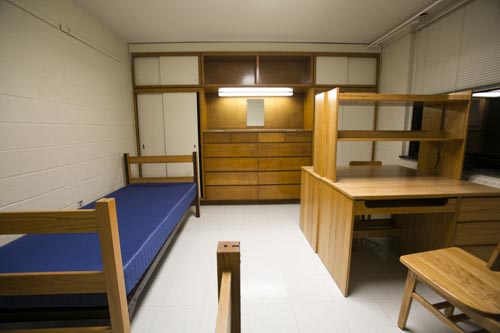 In the midst of an unprecedented pandemic, Tufts University, Middlebury College, and New York University are considering how to donate their dorms and other buildings to local hospitals in case of a surge in patients. In the midst of an unprecedented pandemic, Tufts University, Middlebury College, and New York University are considering how to donate their dorms and other buildings to local hospitals in case of a surge in patients.
If the spread of the new coronavirus in the United States isn’t controlled, the number of Covid-19 patients needing hospital care is expected to far outstrip the number of available beds, according to a recent estimate from researchers at the Harvard Global Health Institute. Meanwhile, colleges have sent hundreds of thousands of students home from their residence halls in an attempt to reduce the number of students living in close proximity. Read more at The Chronicle of Higher Education University Research is Key to COVID-19 Breakthroughs, Serving the Public Good  At the University of North Carolina at Chapel Hill, researchers are in high gear working on a promising antiviral treatment for COVID-19, an immediate need to treat potentially millions of people around the world until a vaccine is developed. At the University of North Carolina at Chapel Hill, researchers are in high gear working on a promising antiviral treatment for COVID-19, an immediate need to treat potentially millions of people around the world until a vaccine is developed.
At Johns Hopkins University, researchers have developed an in-house coronavirus screening test aimed at allowing the health system to test as many as 1,000 people per day. At the Harvard University Medical School, researchers in the Precision Vaccines Program at Boston Children’s Hospital are on the frontlines of developing a vaccine specially targeted toward older populations at the highest risk of developing the acute respiratory symptoms potentially caused by COVID-19. Read more at The Hill How Duke is Contributing to Research on Creating a Coronavirus Vaccine 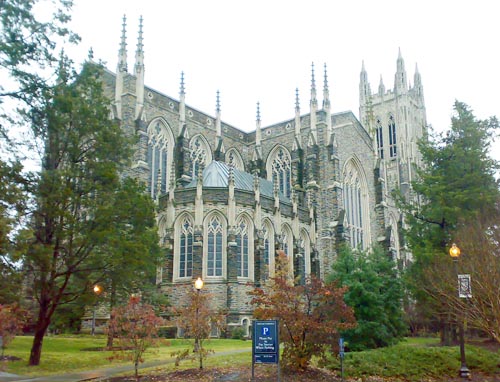 Monday marked the start of clinical trials for a potential COVID-19 vaccine. The Phase 1 trial took place at the Kaiser Permanente Washington Health Research Institute in Seattle. The first of 45 healthy volunteers ages 18 to 55 received the vaccine Mar. 16. An approved vaccination for SARS-CoV-2, known as COVID-19, does not currently exist. Monday marked the start of clinical trials for a potential COVID-19 vaccine. The Phase 1 trial took place at the Kaiser Permanente Washington Health Research Institute in Seattle. The first of 45 healthy volunteers ages 18 to 55 received the vaccine Mar. 16. An approved vaccination for SARS-CoV-2, known as COVID-19, does not currently exist.
Sallie Permar is a Duke professor member of the Duke Human Vaccine Institute. She talked to The Chronicle about some of the features of the new vaccine and how Duke is also contributing to vital COVID-19 research. Read more at The Duke Chronicle University of Pittsburgh School of Medicine
Announces Promising Potential Coronavirus Vaccine 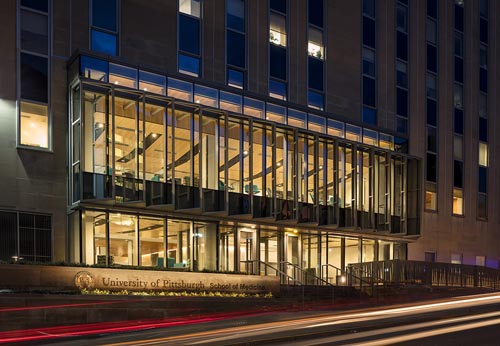 "It’s important to fund vaccine research. You never know where the next pandemic will come from." — Andrea Gambotto, M.D., associate professor of surgery at the Pitt School of Medicine. "It’s important to fund vaccine research. You never know where the next pandemic will come from." — Andrea Gambotto, M.D., associate professor of surgery at the Pitt School of Medicine.
Scientists from the University of Pittsburgh School of Medicine have announced progress with a potential vaccine against SARS-CoV-2, the new coronavirus causing the COVID-19 pandemic. As COVID-19 continues to spread across the United States and the world, scientists and doctors understand the urgent need for a vaccine. Read more at NorthcentraPA.com Civic and Political Engagement Promoting Civic Literacy and Engagement During the COVID-19 Pandemic Developing this generation’s civic literacy is vital to maintaining and strengthening the foundation of democracy. There is an urgent need to improve civic education and promote civic literacy, knowledge, and engagement among today’s college students. 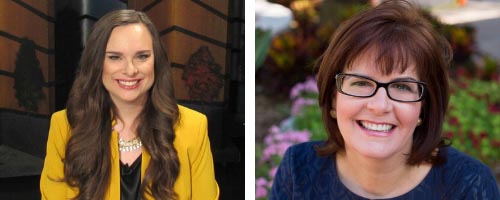 Despite the loss of primaries, voting lines, raucous rallies and the normal party conventions, politics continues. It will shape the nation and our colleges for perhaps decades to come. Professors Elizabeth Bennion and Judithanne Scourfield McLauchlan look at what you can do during the pandemic. Read more at American Political Science Association Despite the loss of primaries, voting lines, raucous rallies and the normal party conventions, politics continues. It will shape the nation and our colleges for perhaps decades to come. Professors Elizabeth Bennion and Judithanne Scourfield McLauchlan look at what you can do during the pandemic. Read more at American Political Science Association Tips for Improving Online Teaching  In case you missed this from the Chronicle of Higher Education. Even though spring semester classes are ending or have ended, the tips and ideas for getting ready for and improving online teaching will still be relevant for fall, when, given the curve of the pandemic in the U.S., many, if not most, campuses will still be online. Read more at The Chronicle of Higher Education In case you missed this from the Chronicle of Higher Education. Even though spring semester classes are ending or have ended, the tips and ideas for getting ready for and improving online teaching will still be relevant for fall, when, given the curve of the pandemic in the U.S., many, if not most, campuses will still be online. Read more at The Chronicle of Higher Education Books and Essays  Rachel Carson was an avid reader, a major piece of whose personal library is in the archives of the Rachel Carson Council. She believed that imagination and the cultivation of feeling and ethical action were critical in perilous times. Rachel Carson was an avid reader, a major piece of whose personal library is in the archives of the Rachel Carson Council. She believed that imagination and the cultivation of feeling and ethical action were critical in perilous times. ‘The Triumph of Doubt’ Digs Into How Dark Money Fuels Mistrust of Science 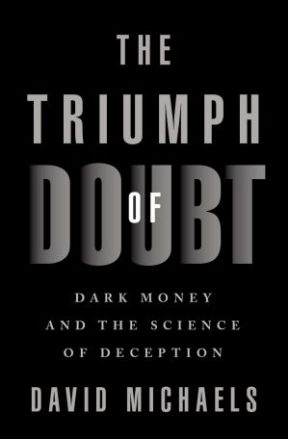 Science is supposed to be impartial. There’s a trusted method for collecting and analyzing data to test hypotheses. Scientific studies are the foundation for public health and environmental policies. But the Trump administration has not heeded the science when it comes to climate change, and the Environmental Protection Agency is moving ahead with a controversial rule to limit the use of scientific studies that don’t make underlying data public, when writing or revising public health and environmental policies. Read more at The Allegheny Front Science is supposed to be impartial. There’s a trusted method for collecting and analyzing data to test hypotheses. Scientific studies are the foundation for public health and environmental policies. But the Trump administration has not heeded the science when it comes to climate change, and the Environmental Protection Agency is moving ahead with a controversial rule to limit the use of scientific studies that don’t make underlying data public, when writing or revising public health and environmental policies. Read more at The Allegheny Front
'A Matter Of Common Decency': What Literature Can Teach Us About Epidemics 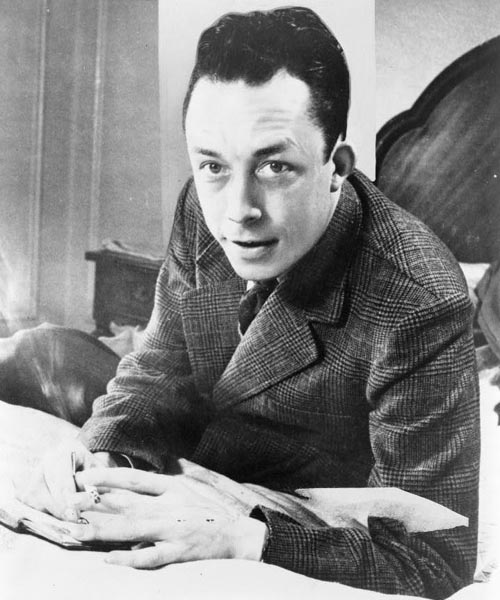 A fine essay, centered around Nobel Prize-winning French author Albert Camus, offers important insights into the relevance of the humanities, as well as science, during the coronavirus crisis. Professor Alice Kaplan has been scrambling to revise her lectures for the French literature class she teaches at Yale University. A fine essay, centered around Nobel Prize-winning French author Albert Camus, offers important insights into the relevance of the humanities, as well as science, during the coronavirus crisis. Professor Alice Kaplan has been scrambling to revise her lectures for the French literature class she teaches at Yale University.
On the syllabus, coincidentally, for her online class is The Plague, Albert Camus' 1947 novel about a plague epidemic that ravages a quarantined city in Algeria. Read more at NPR Resources for Faculty and Students Looking for real-time resources connecting coronavirus and climate change? Our colleagues at Citizen’s Climate Lobby have started this online bibliography listing articles on the two topics and how they are related. Apply to the Rachel Carson Council Fellowship - Deadline May 1st 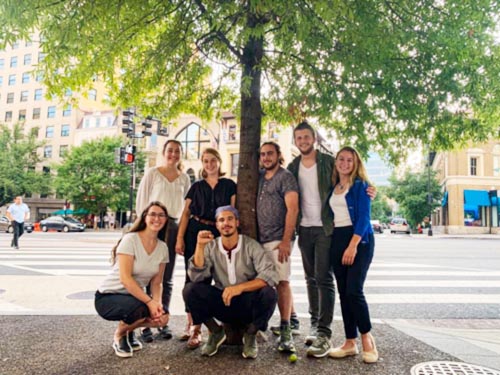 Are you looking for opportunities for students? Are you a student with a passion for sustainability and environmental justice? Do you want to get paid to organize on your campus? Are you looking for opportunities for students? Are you a student with a passion for sustainability and environmental justice? Do you want to get paid to organize on your campus?
The Rachel Carson Council Fellowship is a great option for students. The Fellowship Program is a paid opportunity designed for students who have a passion for sustainability and environmental justice. As part of the program, you will work on a campaign or project on your campus to promote sustainability over the course of the 2020-2021 academic year. Students accepted into the program will receive a $2,000 stipend over the course of the year for their work. Furthermore, they will get to attend grassroots organizing training with the RCC, as well as the opportunity to publish about their work over the course of the year through RCC. Applications for the Rachel Carson Council Fellowship Program are now open! Are you a student with a passion for sustainability and environmental justice? Do you want to get paid to organize on your campus? Are you a professor who knows some students who that sounds like? Applications are due by May 1. Click here to apply now! Online Advocacy Opportunities There are still many opportunities to get involved with your students. Educators and environmental organizers have taken their work online and there are many opportunities for you to engage: Bard CEP Solar Dominance Power Dialog  On Tuesday, April 7, 2020, working with college and university partners across the U.S., the Bard Center for Environmental Policy is coordinating the convening of hundreds of conversations on the potential to solve the energy side of climate change by 2030. The event features 52 simultaneous, university hosted webinars, one in every state, and in DC and Puerto Rico. Read more at Bard Center for Environmental Policy On Tuesday, April 7, 2020, working with college and university partners across the U.S., the Bard Center for Environmental Policy is coordinating the convening of hundreds of conversations on the potential to solve the energy side of climate change by 2030. The event features 52 simultaneous, university hosted webinars, one in every state, and in DC and Puerto Rico. Read more at Bard Center for Environmental Policy Coronavirus Halts Street Protests, but Climate Activists Have a Plan 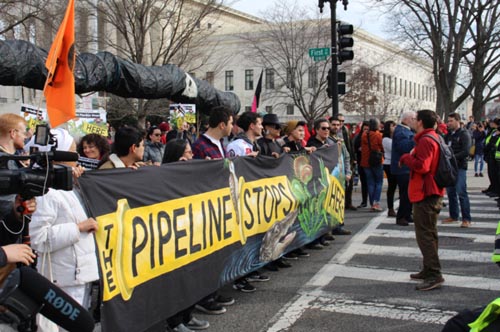 The coronavirus outbreak has prompted climate activists to abandon public demonstrations, one of their most powerful tools for raising public awareness, and shift to online protests. The coronavirus outbreak has prompted climate activists to abandon public demonstrations, one of their most powerful tools for raising public awareness, and shift to online protests.
This week, for example, organizers of the Fridays for Future protests are advising people to stay off the streets and post photos and messages on social media in a wave of digital strikes. Read more at The New York Times Volunteer with Population Connection and spread the population message!  Our friends at Population Connection are presenting a challenge for this upcoming Earth Day. Each day has a new one and they all encourage you to start thinking about sustainability in different ways. Our friends at Population Connection are presenting a challenge for this upcoming Earth Day. Each day has a new one and they all encourage you to start thinking about sustainability in different ways.
Click here to take the challenge. Climate Activists Turn Digital During COVID-19 Outbreak 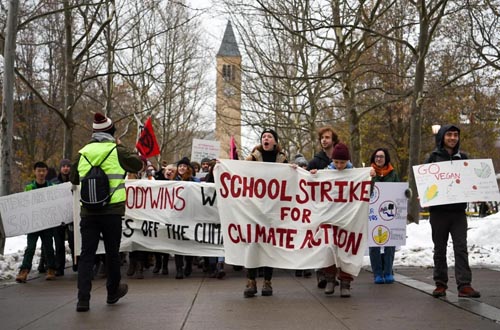 As thousands of students leave campus and classes transition from in-person to online, climate activists are finding ways to maintain social movements in a time of social distancing. As thousands of students leave campus and classes transition from in-person to online, climate activists are finding ways to maintain social movements in a time of social distancing.
“How do you take this movement virtual? How long is this going to last? These are all questions we are asking ourselves,” said Alyssa Marcy, a member of the Ithaca chapter of the Extinction Rebellion, a global environmental movement that uses civil disobedience to advocate against climate change. Read more at The Cornell Daily Sun From the Rachel Carson Council Action Alert: Stop Strip Mining in the Protected Cumberland Plateau! 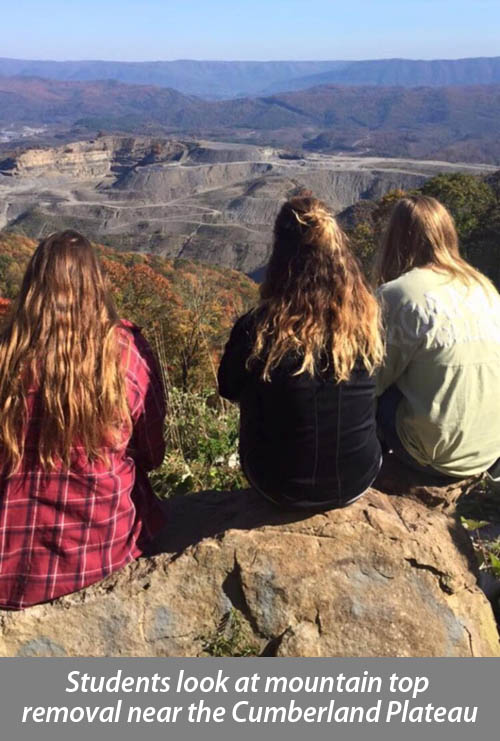 The Trump administration is considering opening 75,000 acres of the pristine, protected Cumberland Plateau in Tennessee to strip mining for coal. The Cumberland Plateau forms a natural break covering three states: Kentucky, Virginia, and Tennessee. It’s filled with forests, waterfalls and wild places. The proposal calls for a ridgetop mine, a form of surface mining. Many terms are used to disguise the impact of surface mining: strip mining, open-pit mining, or mountain top removal. But the end result remains the same: the utter destruction of the pristine waterways and natural spaces, drinking water, and the health of communities in Appalachia. The Trump administration is considering opening 75,000 acres of the pristine, protected Cumberland Plateau in Tennessee to strip mining for coal. The Cumberland Plateau forms a natural break covering three states: Kentucky, Virginia, and Tennessee. It’s filled with forests, waterfalls and wild places. The proposal calls for a ridgetop mine, a form of surface mining. Many terms are used to disguise the impact of surface mining: strip mining, open-pit mining, or mountain top removal. But the end result remains the same: the utter destruction of the pristine waterways and natural spaces, drinking water, and the health of communities in Appalachia.
Contact Michael Castle, head of the Knoxville Office of Surface Mining and Enforcement. Tell him to prevent the destruction of this wonderful part of Appalachia and America! I'm Nobody! Who are you? 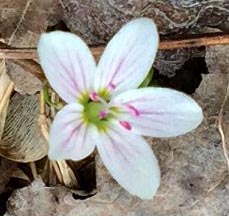 As our world slows down, can we take some time to reconnect with our natural world? As our world slows down, can we take some time to reconnect with our natural world?
A new “Connections” blog from RCC President and CEO, longtime author and faculty member, Dr. Robert K. Musil. Read more at RCC Submissions and RCC Campus Programs The mission of the Rachel Carson Campus Network is to build and deepen critical connections between campuses, communities, and advocates with the goal of advancing environmental health and equitable policy. Since 2014 we have built connections with 57 colleges and universities nationwide. Read more at RCC Do you know about the different programs RCC offers to campuses? Bring an RCC staff member to campus for an advocacy workshop or arrange a campus lecture with President Robert K. Musil, Ph.D., M.P.H. Contact Mackay Pierce, RCC Campus and Communications Manager: mackay@rachelcarsoncouncil.org  Want to create change? Support our work here. Want to create change? Support our work here. | 

