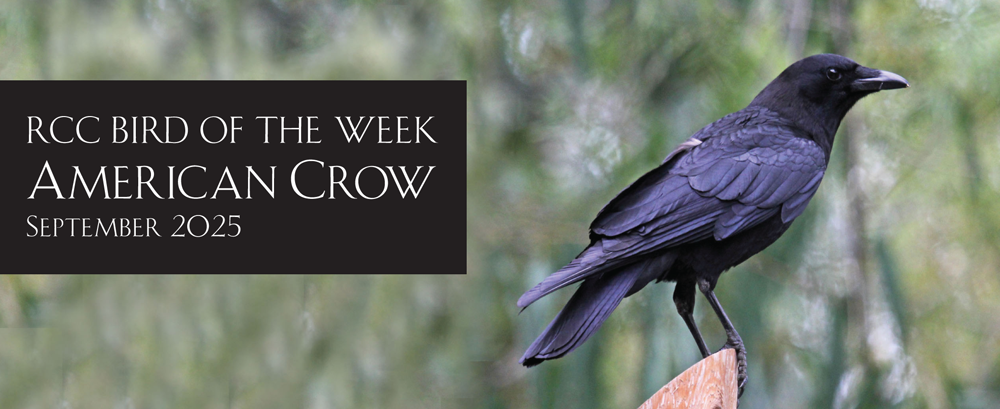
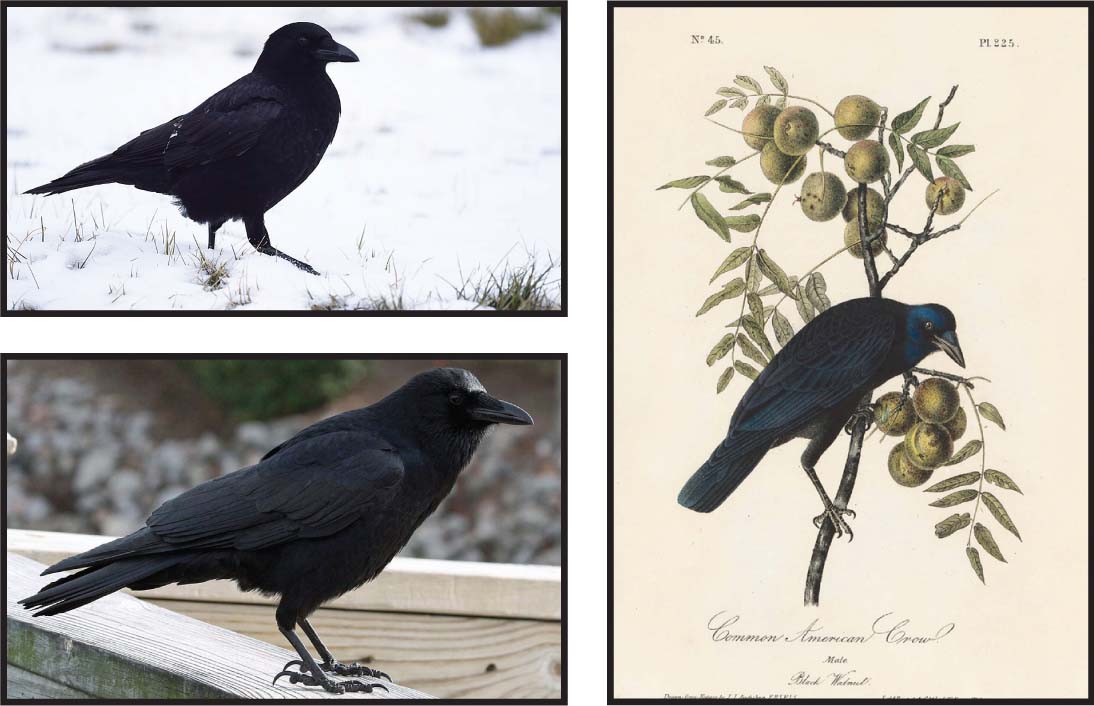
American Crow - Ross Feldner Here a crow, there a crow, almost anywhere you go a crow. The range of this highly adaptable bird covers all of North America east to west and north to south. Crows are considered one of the most intelligent birds and have the same brain-weight-to-body as humans! Studies have shown that crows are self-aware and young crows take time to learn from their parents. The American Crow is omnivorous and will feed on virtually anything. This is one reason why they are such a successful species. They will eat carrion, human food scraps, nuts, fish, eggs, seeds, rodents, frogs and other small animals. American Crows are socially monogamous cooperative breeding birds. Mated pairs form large families of up to 15 individuals from several breeding seasons that remain together for many years. Offspring from a previous nesting season will usually remain with the family to assist in rearing new nestlings. They build bulky nests made from sticks usually in trees. Superstition has surrounded crows throughout history and they are often wrongly associated with death, thieves, graveyards, and bad luck. American Crows, like other corvids, are very cunning, inquisitive and are able to use and modify tools. They are known for stealing food from other species, often in creative ways. A group of crows were seen stealing a fish from a Northern river otter. As one bird pecked the otter's tail to distract it others swooped in and stole the fish. |