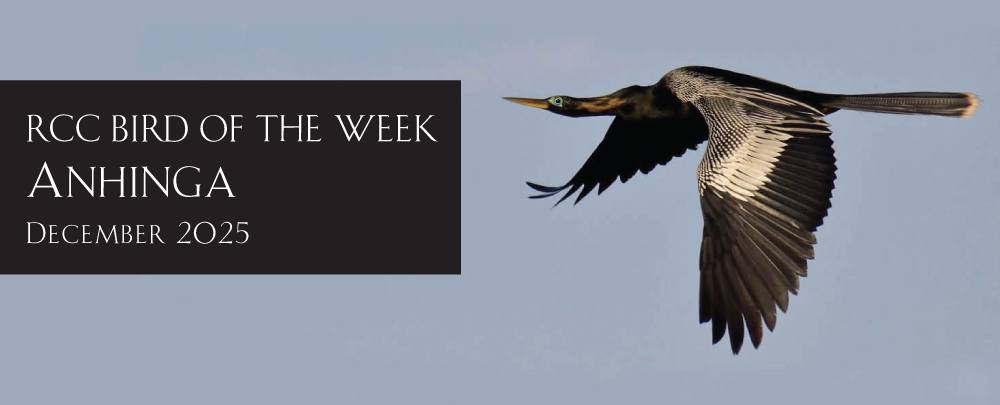
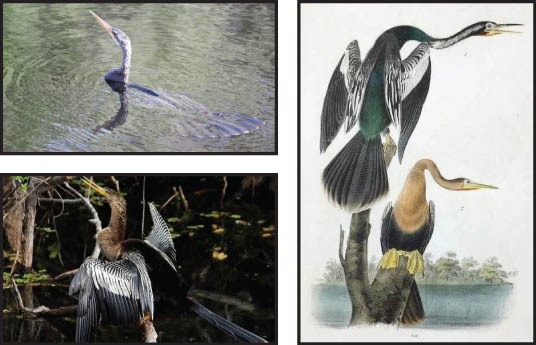
Anhinga - Ross Feldner The Anhinga gets its name from a'ñinga in the Brazilian Tupi language and means "devil bird" or "snake bird". The origin of the name becomes obvious when you see an Anhinga swimming with only its neck above water, which makes it look like a snake ready to strike. It is a water bird that lives in the warmer parts of the United States including the Gulf Coast, the Atlantic Coast from North Carolina to Texas and in the Mississippi Valley north to Kentucky and Missouri. Anhingas live in warm shallow waters and swamplands where they stalk fish underwater including mullet, sunfish, and bass as well as shrimp, crabs, cray fish, tadpoles and water snakes. Once they find their prey they open their bills slightly and stab it quickly. This unique bird is one of a few birds that swims underwater. They propel themselves by kicking their webbed feet. Unlike ducks, pelicans and Ospreys who have feathers coated with oil, the Anhinga does not have this aquatic advantage so they become saturated when immersed and so you will often see them sunning with their wings outstretched to dry off. Anhingas are monogamous and pairs often use the same nest year after year. Courtship begins with the male Anhinga soaring and gliding in display for the female and finally marking a potential nest site with leafy twigs. | |