 | | | "For all at last return to the sea- to Oceanus, the ocean river, like the ever-flowing stream of time, the beginning and the end."
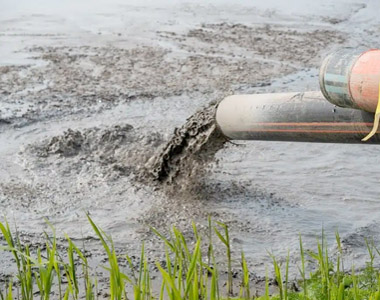
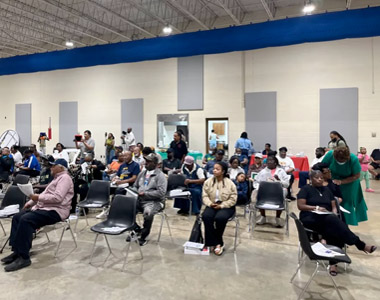
— Rachel Carson | | | | Happy Earth Month! As we celebrate the Earth and everything on it, we are keeping close watch over our oceans, rivers, and coasts. Of course, as Rachel Carson herself put it, “in nature, nothing exists alone.” Our fate is intertwined with that of the sea, and so every change there is a change on land, as well. Like most months now, there is a mixed bag of news. New policy pushes the limits of what ecosystems can manage, while marine life continues to astound scientists and beachgoers alike. Residents in communities across America are taking the fight to polluters and the government on what constitutes a safe living environment. In Mississippi, residents are fighting back against Drax Biomass, a foe RCC members will be familiar with. Their plant emits fine particulates around the community, one where the residents are determined to secure clean water, clean soil, and clean air. The Clean Water Act itself is under threat from the EPA, as the agency restricts what waterways it covers. The proposed change says the CWA will no longer cover standing wetlands or relatively permanent streams. California is suing the Trump Administration to prevent the reopening of a marine oil pipeline, claiming it is not needed on the “national security” grounds the Administration is claiming. 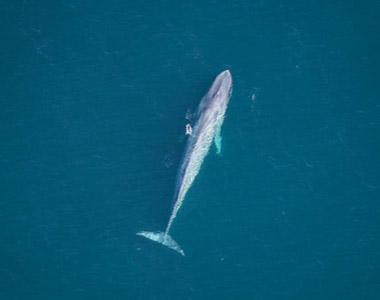 As people coast to coast are fighting against potential negative changes, we see marine life returning to the Eastern Seaboard. Multiple blue whales have been spotted off Southern New England, well south of their normal range in Canada at this time of year. Florida will see a less-welcome phenomenon of sargassum. The seaweed has covered Florida’s beaches in years passed and this year is set to potentially break the record. As people coast to coast are fighting against potential negative changes, we see marine life returning to the Eastern Seaboard. Multiple blue whales have been spotted off Southern New England, well south of their normal range in Canada at this time of year. Florida will see a less-welcome phenomenon of sargassum. The seaweed has covered Florida’s beaches in years passed and this year is set to potentially break the record.
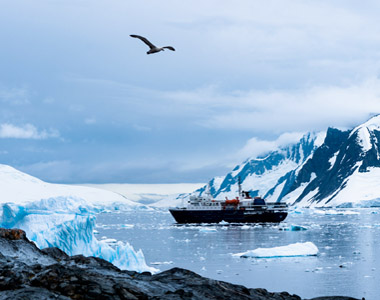
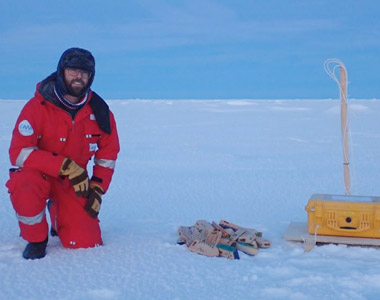
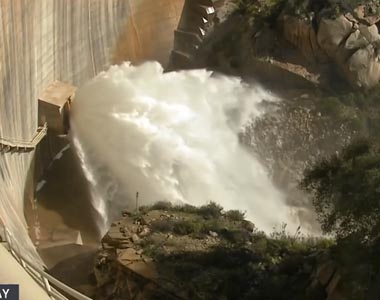
In the Climate and Energy section, find an analysis of a changing Antarctic through the lens of the heroic journey of Ernest Shackleton. As a modern-day journey is coupled with a historical look at Shackleton’s epic across the South Atlantic in Oceanographic Magazine. In news closer to home for the RCC, a study out of Brown University has found that turbulence and currents in the oceans may be measurable off spinning ice sheets at the poles. On the energy side, oil drilling in a deepwater field in the Gulf is taking bidders, with the Shenandoah oil field being explored by different companies. This unfortunate development comes as oil continues to be a national security priority at the expense of marine and terrestrial ecosystems.  Data centers, while staying a scourge on many communities’ water supply, are becoming cleaner. While data centers draw down supplies from water mains, new constructions are trying to use water that can be treated onsite, reducing dependence on potable supplies. Also, by using closed-loop cooling systems, data centers can reduce overall demand. With water, the city of San Diego has reached a remarkable milestone, as instead of demanding water from the Colorado River or worrying about supplies, they have been able to sell water on to other areas from a desalination facility. Data centers, while staying a scourge on many communities’ water supply, are becoming cleaner. While data centers draw down supplies from water mains, new constructions are trying to use water that can be treated onsite, reducing dependence on potable supplies. Also, by using closed-loop cooling systems, data centers can reduce overall demand. With water, the city of San Diego has reached a remarkable milestone, as instead of demanding water from the Colorado River or worrying about supplies, they have been able to sell water on to other areas from a desalination facility.
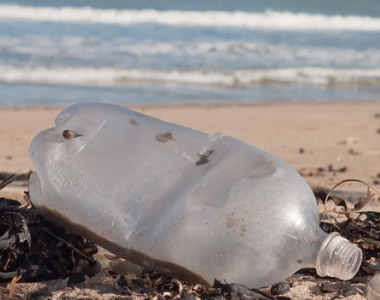
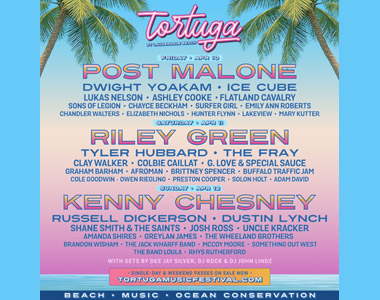
For events, Rock the Ocean is putting on a music festival in Fort Lauderdale with a focus on ocean conservation. At the festival, Kenny Chesney will receive the Ocean Legacy Award for his work protecting the seas. Other acts include Post Malone and Riley Green. If you are looking for a book, consider last year’s Abundance by Ezra Klein and Derek Thompson. The opinion urges readers to “look past” scarcity to a point where we can have abundant resources, including abundant clean energy. To do this, though, Klein and Thompson argue we must cut red tape to get projects moving, so there are drawbacks to the approach. With a critical read, the book stands to be quite interesting. As April showers become May flowers and warm temperatures coax us towards the beach, remember our global oceans. Turbulence and currents mean that the water at your beach could have been sailed on by Ernest Shackleton, or there could be blue whales just over the horizon. With a spirit of adventure and curiosity coupled with a healthy skepticism of policy changes, a generation of ocean stewards support clear and sustainable change. | | | | | | | | RCC Presidential Fellows - MacEva Wright and Ewan Dignon  MacEva Wright is the co-lead of the RCC Coasts and Ocean program with Bob Musil. She is a second-year graduate student at Duke University’s Nicholas School of the Environment working on a Master’s of Environmental Management with an emphasis on Coastal and Marine Systems and Environmental Justice. MacEva Wright is the co-lead of the RCC Coasts and Ocean program with Bob Musil. She is a second-year graduate student at Duke University’s Nicholas School of the Environment working on a Master’s of Environmental Management with an emphasis on Coastal and Marine Systems and Environmental Justice.  Ewan Dignon is the co-lead of the RCC Coasts and Ocean program with Bob Musil. He is an undergraduate at Duke University pursuing two degrees, Public Policy (B.A.) and Economics (B.A.), with a minor in Environmental Sciences and Policy. Ewan Dignon is the co-lead of the RCC Coasts and Ocean program with Bob Musil. He is an undergraduate at Duke University pursuing two degrees, Public Policy (B.A.) and Economics (B.A.), with a minor in Environmental Sciences and Policy. | | | | | | Shackleton’s Endurance: Lessons For a Changing Antarctica Riding the steady easterly winds, our sails are full as we navigate the rugged Western Australia coast. We are heading to the remote offshore reef system of Scott Reef, whose survival is being threatened by the promise of ‘natural’ gas exploitation by Australia’s largest oil and gas company. To pass the time, I am listening to Shackleton’s ‘South’. As I get lost in his heroic story, my mind begins to drift back to my own voyage of Antarctica. | | | | | | | | Movement of Spinning Ice Plates Can Provide Insight Into Ocean Turbulence, Brown Study Finds The study may have important implications for understanding climate change. Although its blues and greens may appear tranquil, the ocean is chaotic in nature — there is perpetual movement across the world’s oceans. The motion, which includes ocean turbulence, ranges from a few centimeters to thousands of kilometers. | | | | | | | | SLB OneSubsea Awarded Contract for Shenandoah Field SLB OneSubsea was awarded a contract by Beacon Offshore Energy (BOE) Exploration and Production LLC to deliver a high‑pressure, high‑temperature (HPHT) multiphase boosting system for the Shenandoah field in the Gulf of Mexico. The award reflects continued investment in deepwater developments, where advanced subsea systems are being applied to improve recovery. | | | | | | | | San Diego Has So Much Water, It's Selling Thousands of Acre-feet Less than a month after cutting a deal with a Riverside County water district, the San Diego County Water Authority's board Thursday approved another agreement with a different water agency from the county to the north. The water authority will supply an annual quantity of 10,000 acre-feet to the Eastern Municipal Water District of Southern California for 21 years at a rate in Year 1 of around $1,350 per acre-foot. Additionally, Eastern will pre-purchase an additional 30,000 acre-feet for $19 million. | | | | | | | | Florida Beaches Brace for Record 'sargassum summer' of Stinky Seaweed It's back, again. Sargassum, the stinky, slimy bane of beachgoers worldwide, is forecast to swarm over Florida's beaches this summer, experts say. "2026 is set to be another major sargassum year, and likely a record year," according to scientists at the University of South Florida. | | | | | | | | Scientists Spot Multiple Endangered Blue Whales in Southern New England Waters Researchers say they spotted three endangered blue whales off the coast of Southern New England in a 24-hour period last month. Observers with New England Aquarium said it's the first time they have documented blue whales in their southern New England survey area. Seeing blue whales outside of their Canadian feeding grounds is rare in the Atlantic, documenting them in two different areas of the ocean just hours apart is a first for Research Scientist Orla O’Brien. | | | | | | | | | | Unifi Launches Fiber Made From Ocean Waste for Greater Sustainability Unifi Inc., makers of Repreve recycled fiber, is introducing a sustainable product that enables customers and consumers to play a role in solving the growing problem of ocean plastic. To tackle the root cause of plastic waste turning up in the world’s oceans, the new Repreve Our Ocean fiber will be made from bottles collected within 50 kilometers of coastlines in countries or areas that lack formal waste or recycling systems. | | | | | | | | AI Data Centers Are Becoming More Eco-friendly. Here's How Artificial intelligence (AI) is ramping up fast. Some 57% of Americans have already used it for personal purposes, and over half of U.S. businesses are putting AI to work, the research organization Brookings reports. AI can spark creativity, enhance communications, and drive new efficiencies. But those benefits come with a steep environmental cost. | | | | | | | | What to Know About the EPA’s Proposed Revision of the Clean Water Act In late 2025, the US Environmental Protection Agency (EPA) announced plans to revise the 2015 Clean Water Rule, which clarifies water resource management in the country under a provision of the Clean Water Act. The rule, also known as the Waters of the United States (WOTUS), defines which waterbodies fall under federal protection. It establishes a baseline of safeguards for the rivers and wetlands critical to human and wildlife health, while providing a framework for states, tribes, and local communities to co-steward these vital resources. | | | | | | | | Opinion | Gloster Residents Are Confronting Environmental Justice Pine forests stretch across the horizon, but the air carries dust and fine particulates. According to residents, much of it comes from the nearby Drax Biomass facility in Amite County. For the people of Gloster, the plant is more than an industrial neighbor; it is a daily presence shaping health, environment and quality of life. On March 25, the community gathered for a forum organized by Greater Greener Gloster, a grassroots initiative led by Jimmy Brown and Dr. Krystal Nicole Martin. | | | | | | | | California Sues Trump to Keep Shut Oil Pipeline on Santa Barbara Coast California sued the Trump administration Monday to block what it says is an unprecedented power grab: using emergency authority to force the restart of an offshore oil operation shut down more than a decade ago. The lawsuit, filed in federal court in San Francisco, argues a March 13 order by U.S. Energy Secretary Chris Wright oversteps his authority under the Defense Production Act, a Cold War-era law. | | | | | | | | Tortuga Music Festival 2026 Returns with Focus on Ocean Conservation and Sustainability Rock The Ocean’s Tortuga Music Festival, produced in partnership with Live Nation, officially kicks off this weekend, returning to the sands of Fort Lauderdale Beach for three unforgettable days of live music and ocean conservation. This year’s festival features powerhouse headline performances from Post Malone, Riley Green, and Kenny Chesney. | | | | | | | | Abundance by Ezra Klein and Derek Thompson Review –
Make America Build Again  Over-regulation has rendered progressive change impossible, argue the authors of this clear and rigorous book. But what about the tradeoffs? Over-regulation has rendered progressive change impossible, argue the authors of this clear and rigorous book. But what about the tradeoffs?
Every political movement has an image of the past that motivates its view of the future. For conservatives, it might be the imaginary suburbia of a 1950s coffee commercial; for liberals, the solidarity of a New Deal-era Works Progress Administration poster. For Ezra Klein and Derek Thompson, it is the techno-optimism of the 1964 New York World’s Fair “Futurama” exhibit: a vision of commuter flights to the moon, desalinisation turning deserts into farmland, hotels on the ocean floor. In their book, Abundance, they argue for a new politics that unlocks the potential of the remarkable technologies that already exist, as well as those yet to be invented.
But that future is behind schedule – and Abundance holds late 20th‑century liberalism responsible. (Klein and Thompson critique the right, too – they are themselves liberals – but this book speaks only to their co-partisans, with the downside of artificially telling just half the story). Liberals, Klein and Thompson say, nobly fought to redistribute what we have to those without, while losing sight of the goal of creating more to redistribute in the first place. Meanwhile, they sought to protect the public from the unchecked consequences of growth: the bulldozers of urban renewal and the pollution of industrialisation. They succeeded, but left the state too constrained to solve the challenges of today. When government rouses itself – as with the breakneck effort to invent, manufacture and deploy a Covid vaccine – it can perform miracles. Too often, it doesn’t. (Their focus is the US, but readers in other developed economies will quickly see analogies in infrastructure projects and opportunities for innovation stymied closer to home.) Read more Purchase here | | | | The April 2026 issue of RCC's Coasts and Ocean Observer was produced by Ross Feldner | | | |  The Rachel Carson Council Depends on Tax-deductible Gifts From Concerned Individuals Like You. Please Help If You Can. The Rachel Carson Council Depends on Tax-deductible Gifts From Concerned Individuals Like You. Please Help If You Can. | | | | | | | |  Sign Up Here to Receive the RCC E-News and Other RCC Newsletters, Information and Alerts. Sign Up Here to Receive the RCC E-News and Other RCC Newsletters, Information and Alerts. | | | | | | RACHEL CARSON COUNCIL
8600 Irvington Avenue
Bethesda, MD 20817
(571) 262-9148
[email protected] | | | | | | | | | | | |