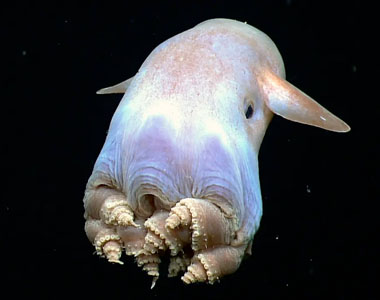
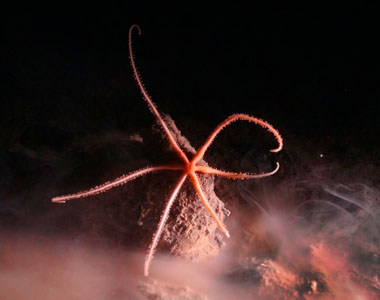
 | | | "Only a few centuries have passed since those pre-Columbian days, yet today our whole earth has become only another shore from which we look out across the dark ocean of space, uncertain what we shall find when we sail out among the stars, but like the Norsemen and the Polynesians of old, lured by the very challenge of the unknown."
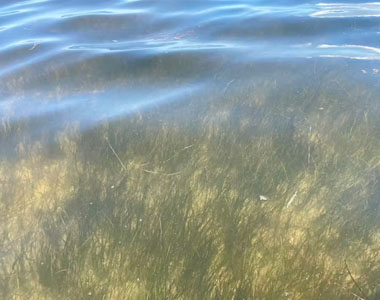
— Rachel Carson | | | | As summer begins in May with longer days, warmer evenings, and weekends spent by the water, the ocean once again becomes a place of connection, adventure, and reflection. This season reminds us how deeply tied our lives are to the health of our oceans. In this issue of RCC’s Coasts and Ocean Observer we explore the challenges and resilience shaping our oceans and our ecosystems. 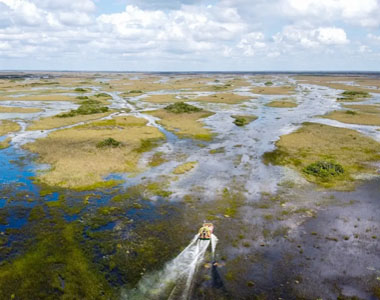 In our “Coasts and Environmental Justice” section, we look at the accelerating climate pressures on coastal ecosystems and communities, but also find good news in the resilience of marine environments and communities that are closely connected. In Florida’s Indian River Lagoon, scientists observed an unexpected seagrass recovery after devastating hurricanes, offering hope for ecosystems damaged by algal blooms and pollution. Further south, restoration efforts in the Everglades reached a major milestone as water flow was returned to 55,000 acres of wetlands, advancing decades-long work to revive the River of Grass. In our “Coasts and Environmental Justice” section, we look at the accelerating climate pressures on coastal ecosystems and communities, but also find good news in the resilience of marine environments and communities that are closely connected. In Florida’s Indian River Lagoon, scientists observed an unexpected seagrass recovery after devastating hurricanes, offering hope for ecosystems damaged by algal blooms and pollution. Further south, restoration efforts in the Everglades reached a major milestone as water flow was returned to 55,000 acres of wetlands, advancing decades-long work to revive the River of Grass.
Meanwhile, Louisiana’s disappearing coastline continues to raise urgent questions about climate adaptation as communities are being affected by land loss on an unprecedented scale. Warming waters in the Gulf of Mexico are also deeply concerning, with researchers documenting sea surface temperatures rising at nearly twice the global average. That means increasing risks for stronger hurricanes and coastal disruption. And, to add to the problem, federal ocean science faces uncertainty as the Trump Administration proposes a $1.1 billion cut to NOAA funding, threatening marine research, fisheries management, and climate monitoring programs that coastal communities rely on for accurate environmental data to prepare for a changing future. 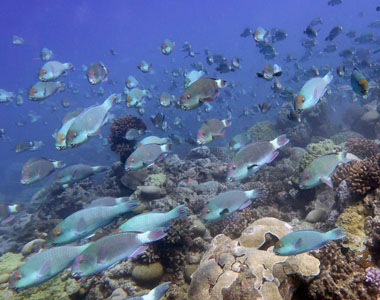 Nevertheless, in “Marine Life and Conservation” you will find that positive developments are still possible. Along the Southern California coast, scientists are documenting a surge in great white shark populations, showing that marine food webs may be recovering as conservation measures improve ocean health. Coral reefs still remain under immense threat from warming waters and climate change, but that has prompted NOAA to release a new National Coral Reef Resilience Strategy that aims to protect reefs which support biodiversity, fisheries, and tourism, across the United States. Nevertheless, in “Marine Life and Conservation” you will find that positive developments are still possible. Along the Southern California coast, scientists are documenting a surge in great white shark populations, showing that marine food webs may be recovering as conservation measures improve ocean health. Coral reefs still remain under immense threat from warming waters and climate change, but that has prompted NOAA to release a new National Coral Reef Resilience Strategy that aims to protect reefs which support biodiversity, fisheries, and tourism, across the United States.
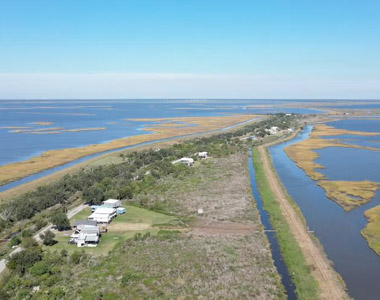
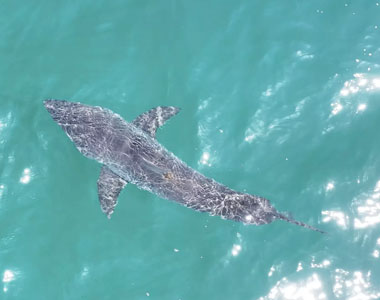
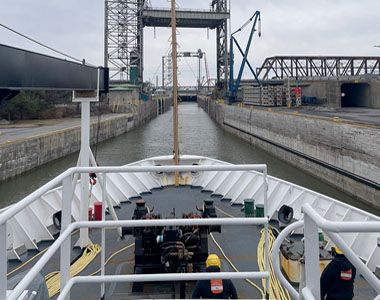
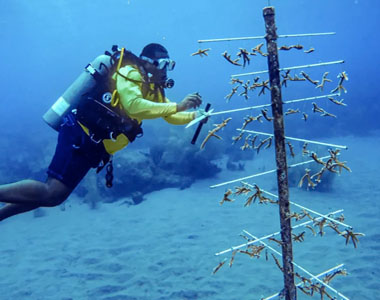
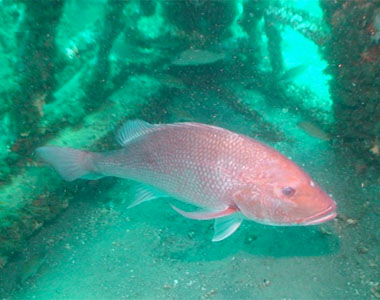
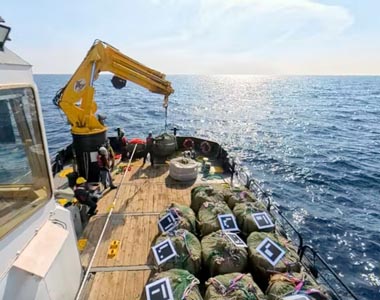
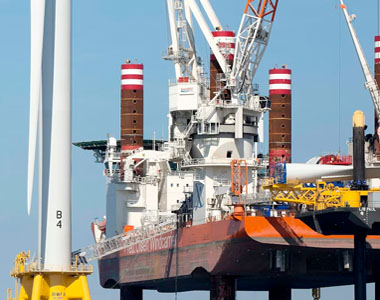
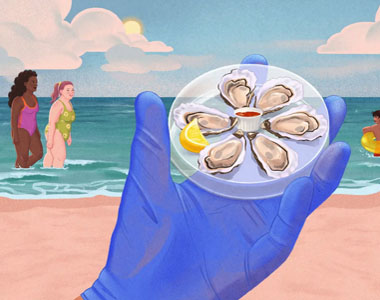
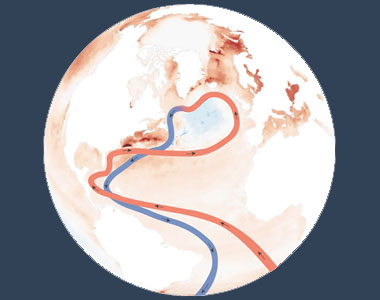
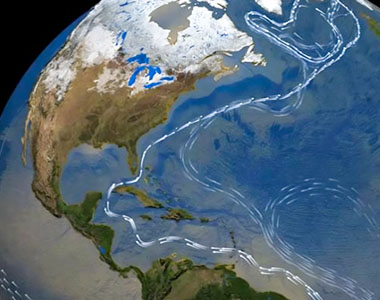
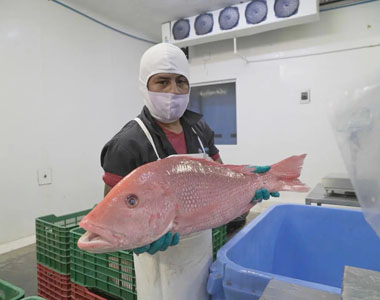
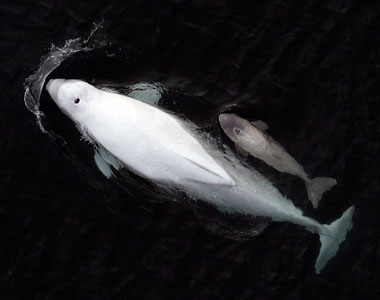
In our “Climate and Energy” section there is at least refreshing news amidst the growing climate crisis and declining coverage of it in the media and discussion or action amongst policy makers. Sen. Sheldon Whitehouse, longtime champion of the climate change movement, took to the Senate floor, as he has repeatedly over the years, in order to break the growing silence about climate. In a short, creative speech, Whitehouse urged his colleagues and the nation to at least agree on one simple, obvious fact – the planet is getting warmer. 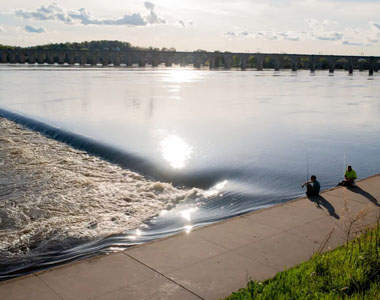 The Trump Administration appears again to have been unamused and unmoved by Whitehouse since the President has offered to pay $2 billion to wind companies to simply cancel offshore wind projects which are vital to increasing renewable energy and mitigating climate change. Even if the president is oddly opposed to renewable energy technology, getting rid of outmoded energy sources and finding new technological solutions to environmental problems remains central to progress. In the Florida Everglades, for example, the aquaculture company Atlantic Sapphire ASA is developing totally indoor salmon farming, avoiding the pollution and health issues related to heavily polluting and unhealthy offshore salmon production -- a $19 billion global industry. For fish living in rivers across the United States, Cara Buckley reports on discovering that the removal of over 100 aging dams is reconnecting thousands of miles of waterways, restoring their habitats and preserving the important ecological services they provide. The Trump Administration appears again to have been unamused and unmoved by Whitehouse since the President has offered to pay $2 billion to wind companies to simply cancel offshore wind projects which are vital to increasing renewable energy and mitigating climate change. Even if the president is oddly opposed to renewable energy technology, getting rid of outmoded energy sources and finding new technological solutions to environmental problems remains central to progress. In the Florida Everglades, for example, the aquaculture company Atlantic Sapphire ASA is developing totally indoor salmon farming, avoiding the pollution and health issues related to heavily polluting and unhealthy offshore salmon production -- a $19 billion global industry. For fish living in rivers across the United States, Cara Buckley reports on discovering that the removal of over 100 aging dams is reconnecting thousands of miles of waterways, restoring their habitats and preserving the important ecological services they provide. For those of you looking for good summer read, check out our “Books” section where you can read about and order Elizabeth Rush’s deeply meditative Rising: Dispatches from the New American Shore. In a world where many are facing inevitable retreat, Rush provides a poetic guide on letting go of the places we love. So, as you prepare your sun-filled itineraries for the summer, we hope this month’s Observer reminds you that the work of restoring our coasts, conserving marine life, and advocating for healthier oceans doesn’t need to slow down when our schedules do. No matter where the season takes you, keep the oceans in mind. | | | | | | | | RCC Stanback Fellows - Jordan Ross and Ashton Bailey 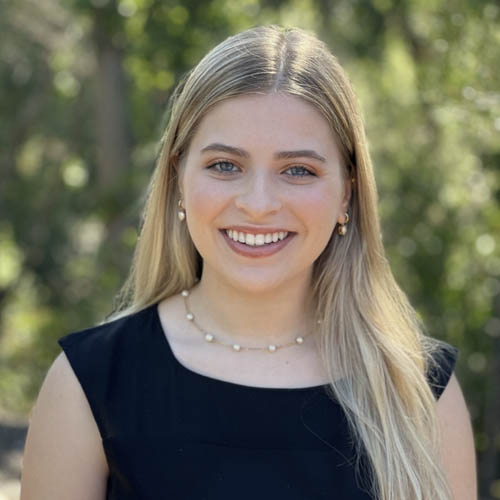 Jordan Ross is a rising junior at Duke University, majoring in Environmental Science and Policy with a minor in Economics. Originally from Los Angeles, California, she is passionate about advancing clean energy solutions and environmental policy, with a particular interest in environmental law and energy regulation. At Duke, Jordan serves as a Green Devil Intern with the Office of Climate and Sustainability, where she mentors first-year students and supports career-focused sustainability programming. She is also involved with the Duke Climate Coalition, contributing to clean energy policy initiatives and advocacy efforts aimed at expanding equitable access to renewable energy. Jordan Ross is a rising junior at Duke University, majoring in Environmental Science and Policy with a minor in Economics. Originally from Los Angeles, California, she is passionate about advancing clean energy solutions and environmental policy, with a particular interest in environmental law and energy regulation. At Duke, Jordan serves as a Green Devil Intern with the Office of Climate and Sustainability, where she mentors first-year students and supports career-focused sustainability programming. She is also involved with the Duke Climate Coalition, contributing to clean energy policy initiatives and advocacy efforts aimed at expanding equitable access to renewable energy.  Ashton Bailey is a junior at Duke University, pursuing a B.S. in Earth and Climate Sciences with a minor in Environmental Science and Policy. A proud Texan, Ashton’s passion for equitable disaster risk reduction and resilience arose after witnessing on numerous occasions the disproportionate impacts of natural disasters on vulnerable communities in Southeast and Central Texas. Prior to his studies at Duke, Ashton was involved in citizen science and advocacy in his hometown of San Marcos, working with the Texas Stream Team to monitor the quality of the San Marcos River. At Duke, he is a member of an interdisciplinary team researching how coastal and marine restoration practitioners define and operationalize equity in their efforts across the United States. Ashton Bailey is a junior at Duke University, pursuing a B.S. in Earth and Climate Sciences with a minor in Environmental Science and Policy. A proud Texan, Ashton’s passion for equitable disaster risk reduction and resilience arose after witnessing on numerous occasions the disproportionate impacts of natural disasters on vulnerable communities in Southeast and Central Texas. Prior to his studies at Duke, Ashton was involved in citizen science and advocacy in his hometown of San Marcos, working with the Texas Stream Team to monitor the quality of the San Marcos River. At Duke, he is a member of an interdisciplinary team researching how coastal and marine restoration practitioners define and operationalize equity in their efforts across the United States. | | | | | | | | | | Restoring the Flow: A Milestone in the Revival of the Everglades The campaign to restore the Everglades has received a boost with completion of a key project that returns the flow of water to 55,000 acres that had once been drained for development. Patterson Boulevard looks like a road to nowhere. In fact, it’s hardly a road at all, just two dirt tracks into the Florida swampland, hemmed in by willow thickets, pine flatwoods, and cypress forests, passable only in the dry season, and then just barely. | | | | | | | | Louisiana’s Shrinking Coast Offers a Narrowing Window for Managed Retreat Louisiana is losing its coast faster than anywhere else in the U.S. What happens next could become a blueprint — or a warning — for vulnerable communities around the globe. Louisiana's coast is disappearing, and its population has already started to retreat. The shoreline, the most exposed in the world, is projected to move more than 30 miles inland of New Orleans and by 2070, it will lose about 75% of its remaining wetlands. | | | | | | | | Something Startling is Happening in the Gulf of Mexico In 2012, the temperature of the Gulf of Mexico began rising along a shocking upward trajectory. Climate change is causing oceans worldwide to warm. But that year, summertime sea surface temperatures in the Gulf of Mexico began heating up at about twice the rate seen in the global oceans. The trend has continued into the 2020s, with sea surface temperatures hitting record highs in both 2024 and 2025. | | | | | | | | Trump Administration Seeks to Slash NOAA Funding by $1.1 Billion US federal ocean management is facing a precarious financial future as the Trump administration proposes a 17% reduction to the National Oceanic and Atmospheric Administration (NOAA) budget. The $1.1 billion cut targets critical research on marine wildlife, ocean currents, and fish populations, endangering approximately 1,450 federal positions. | | | | | | | | Great White Sharks Are Surging Off Southern California. It’s Actually Good For the Ocean As the early morning breeze tickles the top of the Santa Monica Bay, three scientists pack into a small whaler boat and push out to sea in pursuit of great white sharks. Armed with a set of drones, a GoPro camera on a stick and a tracking device atop a spear, the team from the Cal State Long Beach Shark Lab has many questions they are seeking to answer about this sharp-toothed species. | | | | | | | | | | NOAA Releases New National Coral Reef Resilience Strategy Coral reefs are national treasures that support coastal communities, protect shorelines, sustain fisheries, and draw visitors from around the world. From the beautiful reefs of Florida and the Caribbean to the vibrant atolls of the western Pacific and Hawai’i, the United States is home to some of the planet’s most biodiverse and productive coral reef ecosystems. Coral reefs contribute over $3.4 billion each year to the U.S. economy, supporting more than 70,000 jobs in tourism and recreation in SE Florida alone. | | | | | | | | NOAA Ship Thomas Jefferson Returns to the Great Lakes For the first time since 2022, the NOAA Ship Thomas Jefferson is underway in the Great Lakes. The vessel and its crew of NOAA Corps officers and professional mariners are working with NOAA scientists to map the waters of western and central Lake Erie and eastern Lake Ontario this year to improve navigation safety. Survey work will also occur within Lake Ontario National Marine Sanctuary to identify critical habitats located within the area. | | | | | | | | Indonesia to Conserve Coral Reefs in ‘debt-for-nature’ Deal The agreement allows Indonesia to spend $35 million protecting and restoring critical ecosystems. Two years ago, Indonesia announced a plan to spend millions of dollars protecting and restoring coral reefs. Indonesia’s reefs are some of the most extraordinary ecosystems on Earth. And this new conservation effort was made possible by something called a debt-for-nature swap. Most countries spend a lot paying off debt to banks, institutions, or other countries. | | | | | | | | Ocean Conservancy Opposes Shortsighted Red Snapper Exemptions Today, President Trump announced on Truth Social the approval of Exempted Fishing Permits (EFPs) for Florida, Georgia, North Carolina and South Carolina. These exemptions dramatically extend recreational fishing seasons for red snapper in the South Atlantic. Overfishing drove the red snapper spawning population to just 11% of its historical levels in the 90s and early 2000s. In response, seasons were reduced as part of a rebuilding plan set to last through 2044. | | | | | | | | Oceans Are Warming? Senate Republicans Disagree. Senator Whitehouse takes to the Senate Floor to ask if his colleagues can agree on this one, simple truth: oceans are warming. The reality of climate change is made up of many, many simple truths. Today’s simple truth: our oceans are warming. We should all be able to agree on that. Sheldon Whitehouse represents Rhode Island in the U.S. Senate, where he champions policies to uphold American leadership in the world, protect our planet in a changing climate, and hold the powerful accountable. | | | | | | | | | | | | Why Trump’s $2 Billion Buyoff to Cancel Offshore Wind Farms is a Bad Deal For American Taxpayers and the US Energy Supply The U.S. is in a bizarre situation in 2026: It’s facing a looming energy shortage, yet the Trump administration is making deals to pay offshore wind developers nearly US$2 billion in taxpayer money to walk away from energy projects. These politically motivated moves are costing Americans far more than just the buyouts. | | | | | | | | A Deadly Bacterium is Creeping Up the US East Coast. How Worried Should We Be? Bailey Magers and Sunil Kumar cut strange figures on Pensacola Beach. Bags of disinfectant solution surrounded them on the white sand; their gloved hands juggled test tubes while layers of rubber and plastic shielded their skin from the elements. As the two organized their seawater samples on the popular Florida shoreline last August, an older woman wearing a swimsuit walked over to ask what they were doing. | | | | | | | | Why Fears Are Growing Over the Fate of a Key Atlantic Current Scientists are increasingly worried that a vast system of ocean circulation, which delivers warmth to northern Europe and impacts climate globally, is at risk of collapse. Mounting evidence suggests it may be nearing a tipping point, though the research is far from certain. As the world careens past our hoped-for target of 1.5 degrees Celsius warming, scientists are growing increasingly alarmed that we may be nearing a dramatic, long-feared “tipping point.” | | | | | | | | Scientists Say a Critical Atlantic Ocean Current is Weakening and the World Could Feel the Impact A crucial Atlantic Ocean current that helps stabilize Earth’s climate is slowing down — and scientists say the effects could ripple across the globe. Scientists have uncovered strong evidence that a major Atlantic Ocean current system tied to global climate is weakening. The slowdown has been detected across a vast region of the North Atlantic over nearly two decades. | | | | | | | | This Seafood Comes With a Backstory You Can Verify Digital traceability for fish helps buyers and small-scale fishers, too. A fish can travel a long way from ocean to market while shedding almost every fact about itself. Its name can change. Its origin can blur. By the time it lands on a plate, the diner may have no real way to know who caught it, where it came from or whether the fishery behind it is taking care of the ocean it depends on. | | | | | | | | Salmon Farms on Land Take Aim at a $19 Billion Industry Standing on a palatial salmon farm next to the Florida Everglades, Damien Claire isn’t bothered by the water dripping from the pipes and ducts overhead, even as it soaks his company-issued button-up and shaggy brown hair. Instead, the 47-year-old chief marketing officer for aquaculture company Atlantic Sapphire ASA is focused on the 450,000-gallon tank before him swirling with some 30,000 fully grown salmon. When one, a 10-pounder, leaps from the water, Claire yelps, “She says hi!” | | | | | | | | Why America Is Removing So Many ‘Deadbeat’ Dams States are recognizing the ecological benefits of ripping out dams and reconnecting rivers. Today, I published an article that surprised me as I was reporting it out. We often hear about the sorry state of U.S. waterways. But thanks to the removal of dams, more sections of rivers across the U.S. were reconnected last year than at any other point in history, according to the nonprofit group American Rivers. | | | | | | | | Is Cook Inlet's Industrial Noise Costing Beluga's Their Young? New strides made towards decoding the calls of one of the world’s most endangered beluga populations has found that industrial noise is likely to be disrupting the communications that whales around Alaska’s Cook Inlet rely on for survival. In the late 1970s, nearly 1,300 beluga whales moved through the waters of Alaska’s Cook Inlet. Today, fewer than 300 remain. Despite almost two decades of recovery efforts, the population has refused to rebound, indicating a web of pressures still to be understood. | | | | | | | | Will U.S. Push on Seabed Mining End Global Consensus on Oceans? President Trump’s recent order to expedite permits to begin deep-sea mining bypasses international agreements that protect oceans. By moving unilaterally, says the Ocean Conservancy’s Jeff Watters, the U.S. could endanger fragile marine ecosystems and set a troubling precedent. In April, President Trump issued an executive order that would allow, for the first time, deep-sea mining to take place in international waters, a move that has alarmed environmentalists and scientists who fear that mining the seafloor could irreparably harm marine food chains. | | | | | | | | Impacts of Deep-Sea Mining Review The deep sea contains a wealth of mineral resources which have been explored for potential commercial use since the 1970s. As demand and technology make the mining of the seafloor a real possibility, a new review looks at over 50 years of data to assess the real effect such activity might have. The review is co-authored by Prof. Daniel Jones and Dr. Guadalupe Bribiesca-Contreras at the National Oceanography Centre (NOC) and led by Prof. Adrian Glover, Merit Researcher Natural History Museum, London. | | | | | | | | Rising: Dispatches from the New American Shore by Elizabeth Rush 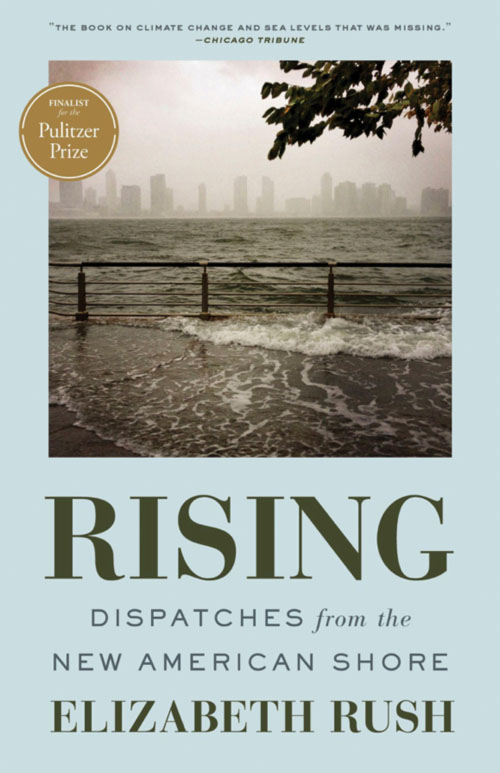 Hailed as “deeply felt” (New York Times), “a revelation” (Pacific Standard), and “the book on climate change and sea levels that was missing” (Chicago Tribune), Rising is both a highly original work of lyric reportage and a haunting meditation on how to let go of the places we love. Hailed as “deeply felt” (New York Times), “a revelation” (Pacific Standard), and “the book on climate change and sea levels that was missing” (Chicago Tribune), Rising is both a highly original work of lyric reportage and a haunting meditation on how to let go of the places we love.
With every passing day, and every record-breaking hurricane, it grows clearer that climate change is neither imagined nor distant―and that rising seas are transforming the coastline of the United States in irrevocable ways. In Rising, Elizabeth Rush guides readers through some of the places where this change has been most dramatic, from the Gulf Coast to Miami, and from New York City to the Bay Area. For many of the plants, animals, and humans in these places, the options are stark: retreat or perish in place.
Weaving firsthand testimonials from those facing this choice―a Staten Islander who lost her father during Sandy, the remaining holdouts of a Native American community on a drowning Isle de Jean Charles, a neighborhood in Pensacola settled by escaped slaves hundreds of years ago―with profiles of wildlife biologists, activists, and other members of these vulnerable communities, Rising privileges the voices of those too often kept at the margins. “A rigorously reported story about American vulnerability to rising seas, particularly disenfranchised people with limited access to the tools of rebuilding.” ––Pulitzer Prize Jury Citation “Lovely and thoughtful . . . Reading [Rush’s] book is like learning ecology at the feet of a poet.”―Minneapolis Star Tribune Click here to purchase | | | | The May 2026 issue of RCC's Coasts and Ocean Observer was produced by Ross Feldner | | | |  The Rachel Carson Council Depends on Tax-deductible Gifts From Concerned Individuals Like You. Please Help If You Can. The Rachel Carson Council Depends on Tax-deductible Gifts From Concerned Individuals Like You. Please Help If You Can. | | | | | | | |  Sign Up Here to Receive the RCC E-News and Other RCC Newsletters, Information and Alerts. Sign Up Here to Receive the RCC E-News and Other RCC Newsletters, Information and Alerts. | | | | | | RACHEL CARSON COUNCIL
8600 Irvington Avenue
Bethesda, MD 20817
(571) 262-9148
[email protected] | | | | | | | | | | | |