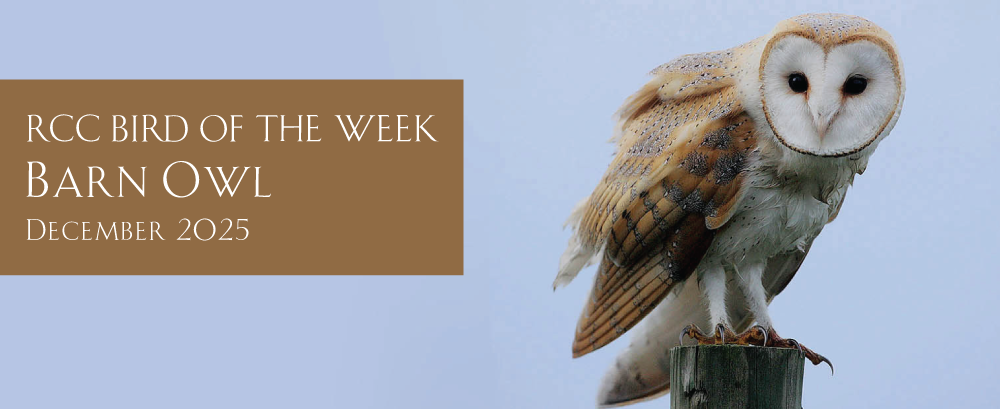
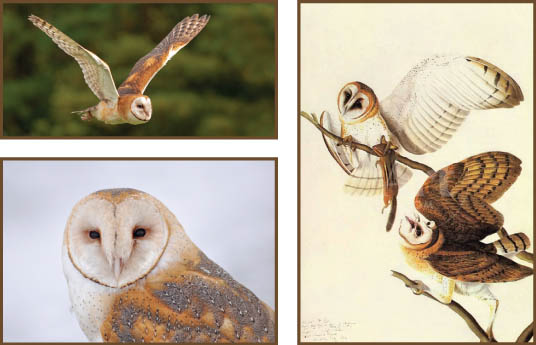
Barn Owl - Ross Feldner The Barn Owl is well-known for its ghost-like appearance and eerie screeches, rather than hoots, and can be found on every continent except Antarctica. Barn Owls are excellent nocturnal hunters, using their exceptional hearing and broad wings to locate prey in open habitats like fields and farmlands, often nesting in (you guessed it) barns and other rural structures. They are birds of prey, hunting and catching small mammals, particularly voles and shrews, using extraordinary adaptations to help them hunt at night, such as incredibly sensitive hearing and the ability to spot movement in very low light. It prefers to hunt along the edges of woods or in rough grass strips adjoining pasture and uses an effortless wavering flight while staying alert to the sounds made by potential prey. Like most owls, the Barn Owl flies silently; tiny serrations on the leading edges of its flight feathers and a hairlike fringe to the trailing edges help to break up the flow of air over the wings, thereby reducing turbulence and the noise that accompanies it. Weight for weight, they consume more rodents—often regarded as pests by humans—than possibly any other creature. This makes the Barn Owl one of the most economically valuable wildlife animals for agriculture. Farmers often find these owls more effective than poison in keeping down rodent pests. | |