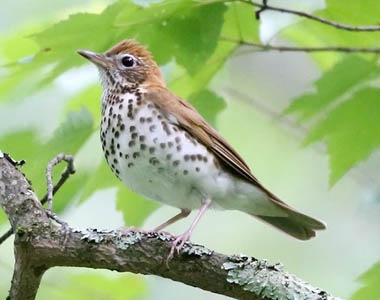
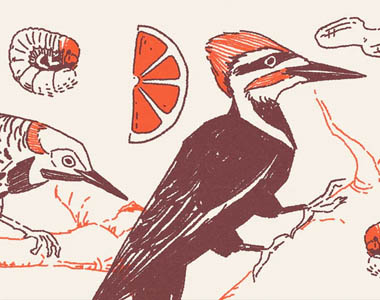
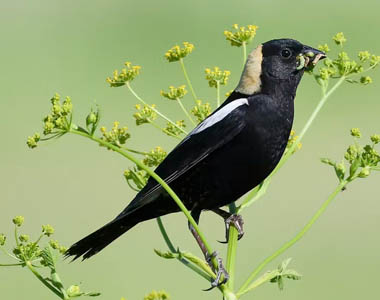
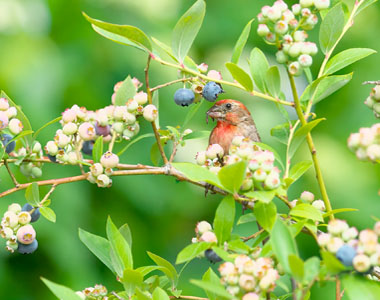
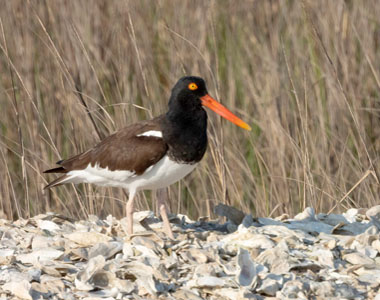
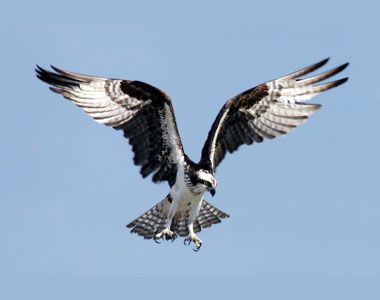
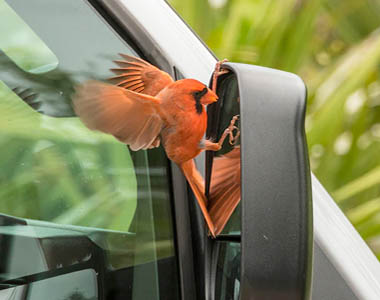
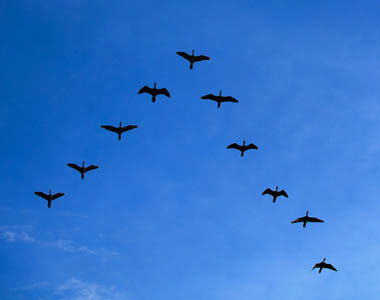
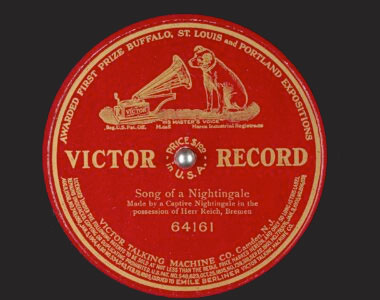
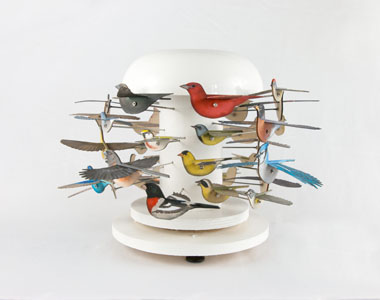
| | | | “To many of us, this sudden silencing of the song of birds, this obliteration of the color and beauty and interest of bird life, is sufficient cause for sharp regret.” —Rachel Carson | | | | | | 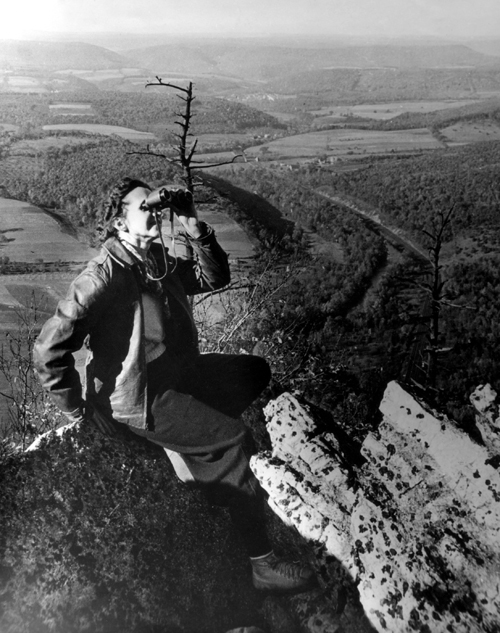 As we head into autumn, birds are on the move. Thousands of hawks will soon pour across the ridges of Hawk Mountain in Pennsylvania and Hawk Hill in San Francisco. To see and understand all about these magnificent birds of prey before you go, RCC’s birdmeister, Ross Feldner, offers his usual comprehensive and close look at them in “Raptors on Top of their Game.” Such avian appreciation marks the main theme of this August issue of RCC’s Bird Watch and Wonder. As we head into autumn, birds are on the move. Thousands of hawks will soon pour across the ridges of Hawk Mountain in Pennsylvania and Hawk Hill in San Francisco. To see and understand all about these magnificent birds of prey before you go, RCC’s birdmeister, Ross Feldner, offers his usual comprehensive and close look at them in “Raptors on Top of their Game.” Such avian appreciation marks the main theme of this August issue of RCC’s Bird Watch and Wonder.
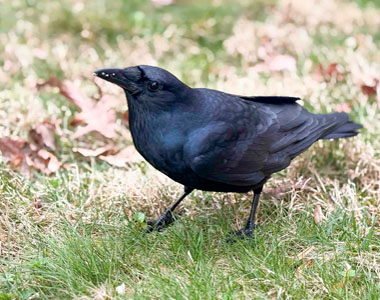
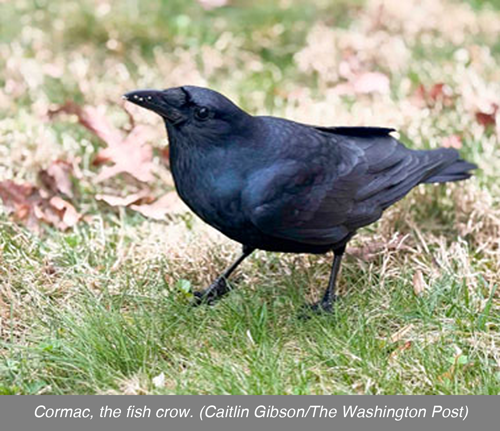 Among my favorites is our opening story about the Wood Thrush and how you can help prevent the decline of its entrancing flute-like song. If you are just back from vacation or a staycation, you will take joy in Caitlin Gibson’s story of how she befriended a Fish Crow who visits her backyard and whom she soon named “Cormac.” Among my favorites is our opening story about the Wood Thrush and how you can help prevent the decline of its entrancing flute-like song. If you are just back from vacation or a staycation, you will take joy in Caitlin Gibson’s story of how she befriended a Fish Crow who visits her backyard and whom she soon named “Cormac.”
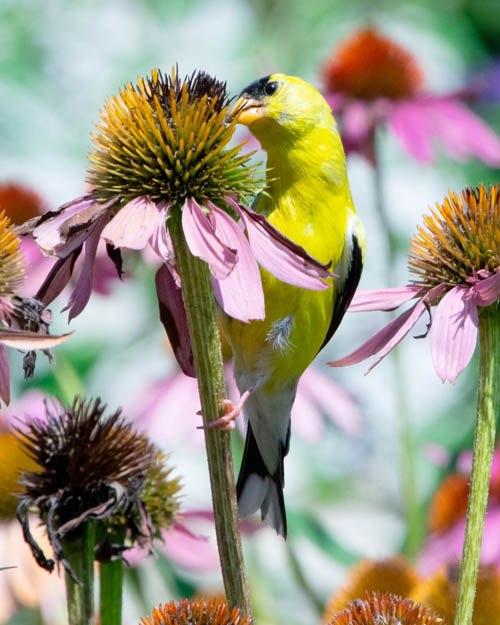 But you don’t have to wait for a lonely crow to land in your yard. In “Advocacy and Action” you can find tips to attract woodpeckers to your yard. And, while you are at it, see the piece from Country Living on 12 native plants that will attract birds to your yard throughout the year. Among the best is the beautiful cone flower (Echinacea) which right now holds goldfinches eating their seeds while bobbing in the breeze. But you don’t have to wait for a lonely crow to land in your yard. In “Advocacy and Action” you can find tips to attract woodpeckers to your yard. And, while you are at it, see the piece from Country Living on 12 native plants that will attract birds to your yard throughout the year. Among the best is the beautiful cone flower (Echinacea) which right now holds goldfinches eating their seeds while bobbing in the breeze.
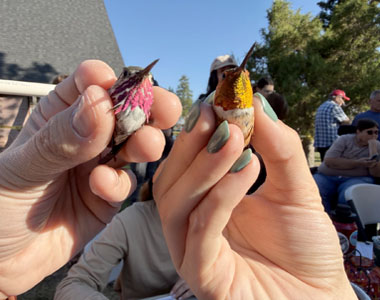
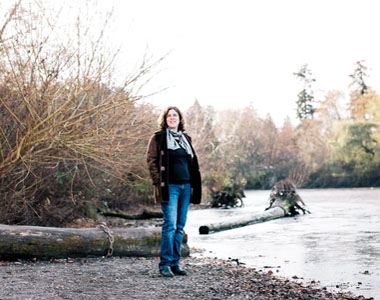
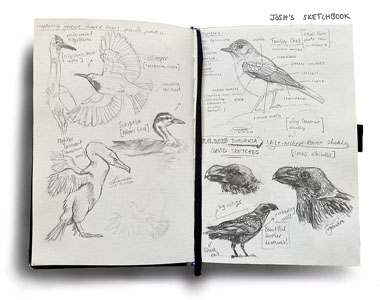
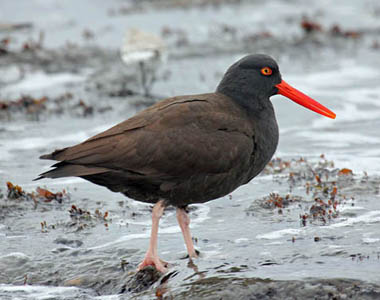
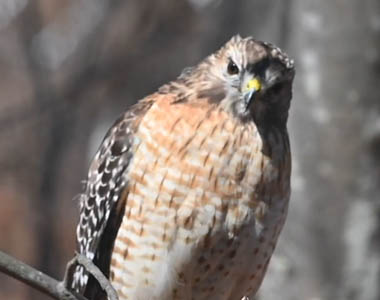
Of course, your own yard is only a small piece of the larger picture for birds. If we want to protect them and prevent their decline, we need to work on larger issues like climate change, loss of habitat, pesticides and more. In addition to well-know groups like the Rachel Carson Council, Audubon, American Bird Conservancy, and the Cornell Labs, I recommend checking out our story on “Campaigning to Protect Birds and Their Habitat.” We appreciate birds for their beauty, their amazing feats of migration and memory, and what Rachel Carson called the “dawn chorus” of birdsong. This month’s section on “The Art of Birds” is replete with stories on bird music and a complete list of collecting and recording birdsong. And, as you listen, you can also prop up your legs on the patio as the weather cools and read about our connection to cuteness of puffins in The Atlas of Kinship, with words by Alice Hotopp and art by CoCo Faber, that is featured in our “Books” section. | | | | | | 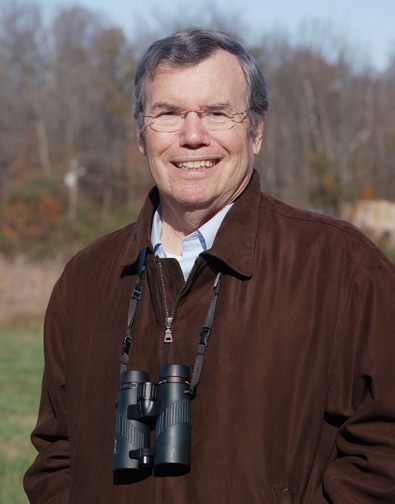 Bob Musil, an avid birder, is the President & CEO of the Rachel Carson Council and author of Rachel Carson and Her Sisters: Extraordinary Women Who Have Shaped America’s Environment (Rutgers, 2016), Washington in Spring: A Nature Journal for a Changing Capital (Bartleby, 2016), and his latest book, Becoming Rachel Carson: The Origin and Legacy of a Legend (Rachel Carson Council, 2026). Bob Musil, an avid birder, is the President & CEO of the Rachel Carson Council and author of Rachel Carson and Her Sisters: Extraordinary Women Who Have Shaped America’s Environment (Rutgers, 2016), Washington in Spring: A Nature Journal for a Changing Capital (Bartleby, 2016), and his latest book, Becoming Rachel Carson: The Origin and Legacy of a Legend (Rachel Carson Council, 2026). | | | | | | The Song of a Wood Thrush is Good News for Landowners Who Love Birds The flute-like song of a Wood Thrush is one of the signature sounds of summer forests in the Northeast. But that familiar song is becoming less common as forests become increasingly fragmented and habitat conditions change. Many forest-dependent birds need a minimum of 200 acres of contiguous forest for suitable breeding habitat. This creates an opportunity for landowners large and small to make decisions that help sustain birds across the landscape. | | | | | | | | How Utah's Smallest Birds Help Uncover Their Own Mysterious Life Every summer, Utah hums with life, in no small part because of hummingbirds. One moment a flower hangs quietly; the next, there's the unmistakable buzz of wings moving so fast they're almost invisible. A hummingbird hovers for only a few seconds before darting away to the next bloom. That brief visit is part of a remarkable journey unfolding across Utah. | | | | | | | | I Befriended My Neighborhood Crow. You Can, Too. By the time the crow showed up literally at my doorstep, I had been trying and mostly failing to befriend one for several years. A pair of American crows had largely ignored my persistent attempts to lure them with unshelled peanuts; they fled the moment I was anywhere in the vicinity. After a while, I resigned myself to admiring the birds from afar. But in summer 2024, I started noticing a fish crow (his nasal, staccato vocalizations set him apart from his American comrades) who often seemed to hang around. | | | | | | | | How to Attract Woodpeckers: Easy Tips to Bring These Birds to Your Yard Woodpeckers are a common and beloved group of birds, but they’re often overlooked when people think about their backyards. Many people put out seed to attract finches, sparrows, doves, and other common backyard birds, but few realize that woodpeckers are just as easy to attract. It’s worth a little effort. There are multiple species of woodpeckers in America, and though they’re all different they share characteristics such as beautiful plumage and loud, charismatic vocalizations. | | | | | | | | More Than Half of Earth’s Migratory Bird Species Are Declining – Here’s How We Can Still Save Them Every year, billions of migratory birds connect the world’s continents, oceans and ecosystems as they undertake epic journeys between their foraging habitats and their breeding grounds. A bobolink (Dolichonyx oryzivorus) leaves its breeding grasslands of North America for the Pampas of South America. A Newell’s shearwater (Puffinus newelli) spends months soaring across the North Pacific before returning to the Hawaiian Islands to breed. | | | | | | | | 12 Native Plants That Will Turn Your Yard Into a Year-Round Bird Haven If bird-watching is your favorite hobby or you just want to help your local ecosystem, adding native plants to your garden is a great way to attract winged creatures and keep them thriving. You can start small with a few blooms, like asters or echinacea, which provide seeds in the winter. Or you can transform your outdoor space with specific trees, shrubs, grasses, and flowers that will support a wide variety of birds throughout the year. | | | | | | | | From Truth to Fake: The Threat of AI to Media Archives Community-driven science projects such as eBird, the Macaulay Library, and iNaturalist are seeing a rapid uptick in AI-manipulated and AI-generated photos. A new publication in Nature has recently highlighted the threat of AI photos to these projects, leading to some popular news articles. We want to raise awareness and inform the community of how AI reduces the scientific value of photos. | | | | | | | | Campaigns to Protect Birds and Their Habitats With the accelerated growth of human development within the last century, threats to the survival of birds and other wildlife have increased significantly. According to a 2019 study published in the journal Science, North America has nearly 3 billion fewer birds today compared to 1970 – that’s a loss of more than one quarter of North American birds in the last 50 years! Causes include habitat loss due to development, insect declines due to widespread pesticide use, changes in climate cycles that affect food availability, and threats such as window strikes and outdoor cats. | | | | | | | | Raptors: On Top of Their Game Raptors are some of the most impressive birds found in North America. The word "raptor" refers to birds of prey that hunt other animals using their sharp talons, hooked beaks, and excellent eyesight. The term raptor comes from the Latin rapere, meaning "to seize and carry off." Common American raptors include Bald Eagles, Red-tailed Hawks, Peregrine Falcons, Osprey, vultures and Great Horned Owls. These apex predators play an important role in the environment by helping control populations of rodents, fish, rabbits, and other small animals. | | | | | | | | | | Why Birds Do That: Strange Bird Behaviors Explained Birds aren’t just pretty to look at – their behavior is also endlessly fascinating. By “fascinating,” what we really mean is strange. If you’ve been a birdwatcher for any length of time, you’ve probably seen birds doing things that gave you pause. Perhaps it was a cardinal attacking a car mirror, or a downy woodpecker drumming on your home’s siding, or a gull dropping a clam dangerously close to your head. These and other seemingly strange behaviors are a mixture of instinct and adaptation, grounded in the drive to survive and reproduce. | | | | | | | | Birds’ Flying ‘V’ Formation Saves Energy With Flatter Flaps, New Research Shows Scientists have known for years that birds like geese and ibises get an aerodynamic advantage from flying in a “V” formation. Now, researchers from Brown University have provided new insights into the nature of that advantage. In a study published in Proceedings of the National Academy of Sciences, Brown researchers Olivia Pomerenk and Kenny Breuer developed an aerodynamic model that simulates the forces at play when one flapping bird — specifically a northern bald ibis — follows another behind and off to the side, the classic V formation sweet spot. | | | | | | | | Some Birds Defy Overall Plunge in Bird Numbers Bird multitudes are slipping away on a global scale, but a new study offers hope for how we can be better neighbors to feathered friends. Researchers at Cal Poly San Luis Obispo knew, like everyone else in the bird world, that 3 billion birds have been lost in the last half century, but they wanted to know more about why. So they looked at changes in air pollution, light pollution, summer heat and eight other environmental and demographic conditions that affect birds. | | | | | | | | Dr. Emily Doolittle on the Music of Birds As a composer and zoomusicologist, Emily Doolittle combines two loves by studying the links between human and animal music at the Cornish College of the Arts in Seattle. In October she and biologists at the Max Planck Institute for Ornithology in Seewiesen, Germany, published an analysis of the musician wren—whose song sounds eerily human—in the Journal of Interdisciplinary Music Studies. We caught up with her by phone at her home in Seattle. | | | | | | | | A Complete History of Collecting and Imitating Birdsong From field recordings to bird box automata and clocks, humans have been reproducing and utilizing bird sound for centuries. Since literature began, poets and naturalists have coined words and phrases which attempt to replicate the sounds birds make. Their legacy is a glorious vocabulary of thousands of unique words, from the aaaaw of the black skimmer to the zzzzzd of the lazuli bunting. | | | | | | | | Macaulay Library the Muse: An Exploration of Bird Song in Art Birds and their sounds have been a part of the arts for centuries. In 1924 Ottorino Respighi requested that a recording of a nightingale be played in his composition The Pines of Rome. Respighi’s artistic choice was controversial at the time; his contemporaries thought it more appropriate to use the orchestra to imitate bird song than an actual recording. Respighi, however, was determined to use a real bird’s vocalizations—his bird had to speak for itself. | | | | | | | | Birds Through the Lens of Art I struggle to recall the exact moment in my childhood when I started drawing. Making art has always just been something that I do as part of who I am. Some of my earliest memories are of myself drawing. A common theme could be found in most of my drawings: creatures. I remember vividly how my best childhood friend and I would pour over books filled with photos and illustrations of wild animals to find one that we wanted to draw. Ocelots, nightjars and dinosaurs, they all made their way onto the many pages of paper.. | | | | | | | | Black Oystercatcher So here we have another bird naming conundrum. Despite its name, the Black Oystercatcher rarely eats oysters! It might better be named the mussel catcher. Mussels and limpets are their primary food. They locate open mussels and disable them with a quick jab to the adductor muscle. With the mussel stuck in the open position, the oystercatcher can pull out the contents with the tip of its chisel-like bill. Oystercatchers often forage in the wave zone, because mussels that are splashed by waves open more frequently. | | | | | | | | Momentary Meditations are published every Monday to awaken what Rachel Carson called “the sense of wonder” and what Albert Schweitzer called “a reverence for life.” Looking deeply into our interdependence with all life on earth helps us know what we must do. In our harried world, these meditations are meant to serve as a renewable resource for compassion and love. Morning Stillness - What a surprise. There, only a few feet outside my window, on a low tree branch, a Cooper’s Hawk perched. Its alert stillness and beauty drew me into a wonderfully quiet moment. | | | | | | | | Atlas of Kinship: Stories of Connection Between Seabirds, People & Place Words by Alice Hotopp. Art by Coco Faber. 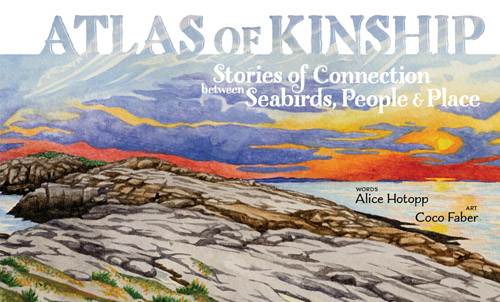 In this collection of short essays, Alice Hotopp tells the story of Atlantic Puffins and other seabirds who breed on desolate rocks along the Maine coast, and the heroic efforts of generations of biologists whose dedication has kept their nesting colonies safe and flourishing ever since the young biologist Steve Kress brought the first puffins back to Eastern Egg Rock in 1969. Interwoven with this story are personal stories of individuals who spend years of their lives on desolate rocks in the middle of the sea in order to maintain and protect breeding colonies of seabirds. Filled with insight, information and inspiration, Atlas of Kinship is a celebration of human effort and resolve, and an affirmation of hope in the face of ecological fear. In this collection of short essays, Alice Hotopp tells the story of Atlantic Puffins and other seabirds who breed on desolate rocks along the Maine coast, and the heroic efforts of generations of biologists whose dedication has kept their nesting colonies safe and flourishing ever since the young biologist Steve Kress brought the first puffins back to Eastern Egg Rock in 1969. Interwoven with this story are personal stories of individuals who spend years of their lives on desolate rocks in the middle of the sea in order to maintain and protect breeding colonies of seabirds. Filled with insight, information and inspiration, Atlas of Kinship is a celebration of human effort and resolve, and an affirmation of hope in the face of ecological fear. Hotopp transports the reader to islands where dedicated biologists live with the rhythm of tide and season as faithful seabird stewards. The book is graced by Coco Faber’s stunningly authentic portraits of seabirds and island life. – Steve Kress, Founder of Project Puffin Reading Atlas of Kinship is nearly as good as stepping right onto a rocky Maine island. Witness the remarkable interconnection of humans, seabirds, and island life in this celebration of hope. ~Elisabeth Tova Bailey, author of The Sound of a Wild Snail Eating A beautiful and important book. – Elizabeth Grey, author of Migrations Soft cover, 77 pages with maps, charts and color illustrations. Read more and purchase | | | | | | | | | | The August 2026 issue of Bird Watch and Wonder was produced by Ross Feldner | | | |  The Rachel Carson Council Depends on Tax-deductible Gifts From Concerned Individuals Like You. Please Help If You can. The Rachel Carson Council Depends on Tax-deductible Gifts From Concerned Individuals Like You. Please Help If You can. | | | |  Sign Up Here to Receive the RCC E-News and Other RCC Newsletters, Information and Alerts. Sign Up Here to Receive the RCC E-News and Other RCC Newsletters, Information and Alerts. | | | | | | RACHEL CARSON COUNCIL
8600 Irvington Avenue
Bethesda, MD 20817
(571) 262-9148
[email protected] | | | | | | | | | | | |