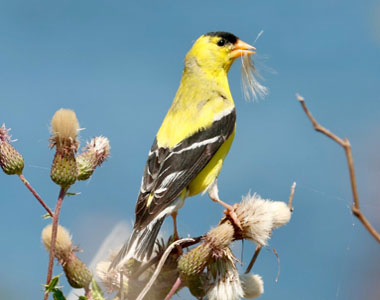
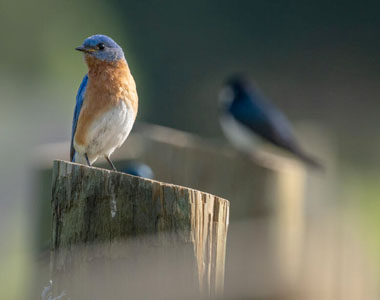
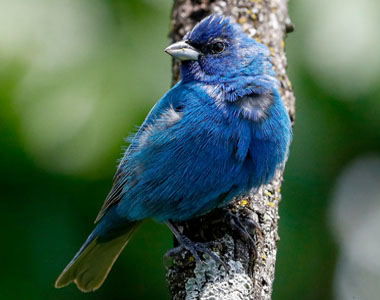
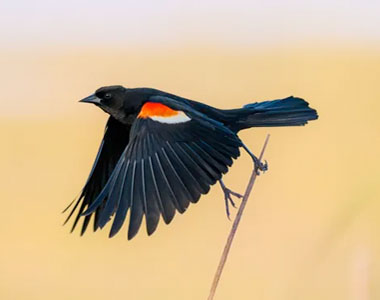
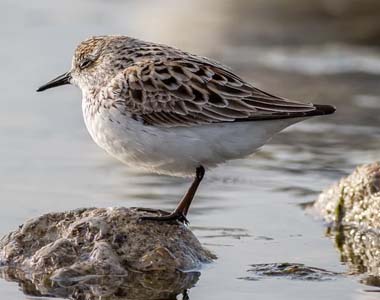
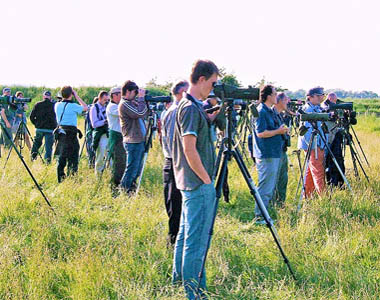
 | "There is symbolic as well as actual beauty in the migration of birds, in the ebb and flow of the tides; in the folded bud ready for the spring. There is something infinitely healing in these repeated refrains of nature-the assurance that dawn comes after night, and spring after winter." – Rachel Carson | | | | | | | | 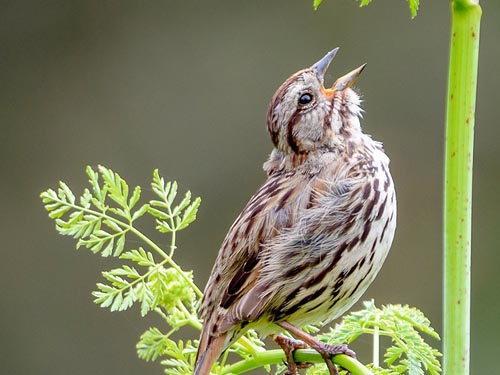 It’s been a long, hard winter. My backyard winter birds – juncos and White-throated sparrows – are still here, hopping backwards in the leaf litter, but the heralds of spring have finally sounded. I hear flickers whooping loudly, calling to their mates. Outside my windows, chickadees, titmice, cardinals, wrens, show up in pairs. The Song Sparrows throw back their heads and whistle “Hip, hip, hooray boys, spring is here again!” It’s been a long, hard winter. My backyard winter birds – juncos and White-throated sparrows – are still here, hopping backwards in the leaf litter, but the heralds of spring have finally sounded. I hear flickers whooping loudly, calling to their mates. Outside my windows, chickadees, titmice, cardinals, wrens, show up in pairs. The Song Sparrows throw back their heads and whistle “Hip, hip, hooray boys, spring is here again!”
Yesterday around my home, a sunny, balmy 70 degree-day brought out neighbors, too, in shorts and tee shirts. Some, with gardening gloves and trowels, were already digging in their gardens as robins cocked their heads and probed the unfrozen ground. 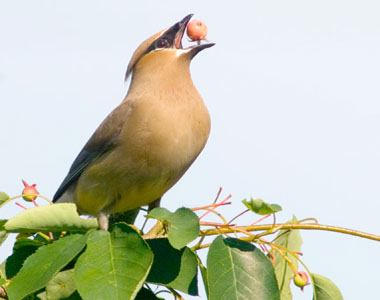 In this March issue of RCC’s Bird Watch and Wonder, as you emerge outdoors with a smile and eyes squinting in the sun, we offer tips on how to make your yard a welcoming and nourishing place for birds. Take a look at Charlyne Mattox’s “Birds in Early Spring” to see what bird and pollinator-friendly trees, shrubs, and other plantings you could put in this spring. In this March issue of RCC’s Bird Watch and Wonder, as you emerge outdoors with a smile and eyes squinting in the sun, we offer tips on how to make your yard a welcoming and nourishing place for birds. Take a look at Charlyne Mattox’s “Birds in Early Spring” to see what bird and pollinator-friendly trees, shrubs, and other plantings you could put in this spring.
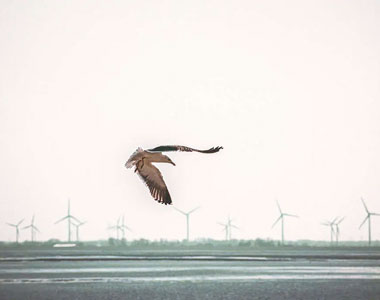
Then, with more birds arriving at your home, you’ll want to make sure they are protected from the many hazards from our human habitations like window collisions, night lighting, and, of course, cats. Birds have even bigger problems collectively caused by us humans with the development and poisoning of their breeding and feeding grounds high among them. But, fortunately, despite the myths still being perpetuated by those in high places, wind farms are not among them. In our “Bird Lore” section, Mihai Andrei from ZME Science offers hard data showing that cats, automobiles, lighted buildings and power lines are far, far larger killers than wind turbines. 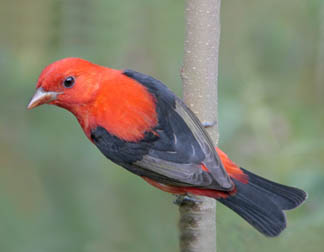 But why should we care about all these birds anyhow? We are surrounded by them, but some folks barely notice or care, as spring means getting the lawn mower and RoundUp out of the garage or cutting down that holly tree whose prickly leaves hurt your hands when you are cleaning up the yard. Well, there are a million reasons to care about birds, and our RCC “Bird Guy,” Ross Feldner, has once again gathered a compelling compendium of most of those reasons so you can share them (or argue) with your neighbor or your favorite benighted uncle. His “Patuxent, Rachel Carson and the Bird Guy,” will get you outside immediately and have you singing the praises of our avian friends as if you were a Song Sparrow. But why should we care about all these birds anyhow? We are surrounded by them, but some folks barely notice or care, as spring means getting the lawn mower and RoundUp out of the garage or cutting down that holly tree whose prickly leaves hurt your hands when you are cleaning up the yard. Well, there are a million reasons to care about birds, and our RCC “Bird Guy,” Ross Feldner, has once again gathered a compelling compendium of most of those reasons so you can share them (or argue) with your neighbor or your favorite benighted uncle. His “Patuxent, Rachel Carson and the Bird Guy,” will get you outside immediately and have you singing the praises of our avian friends as if you were a Song Sparrow. 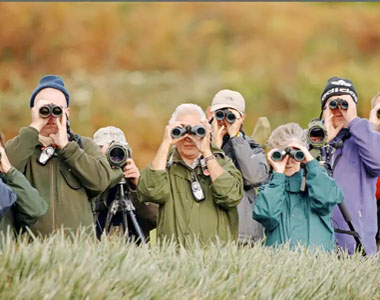 And, if you needed any more reasons to watch the birds, make your yard welcome them, and tell your neighbors, be sure to take a close look at the latest findings that show that becoming an expert bird watcher develops and enhances your brain (neuroplasticity) and slows aging. And, if you needed any more reasons to watch the birds, make your yard welcome them, and tell your neighbors, be sure to take a close look at the latest findings that show that becoming an expert bird watcher develops and enhances your brain (neuroplasticity) and slows aging.
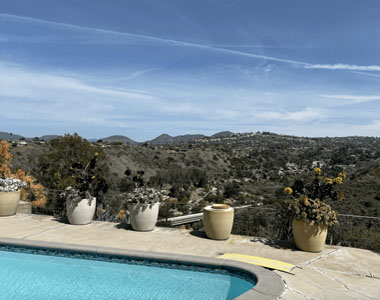
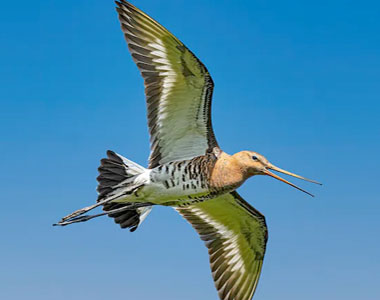
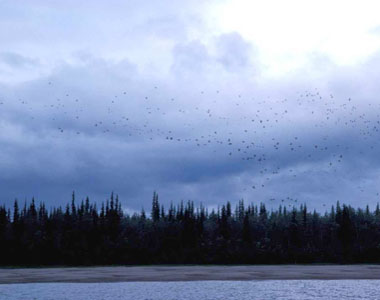
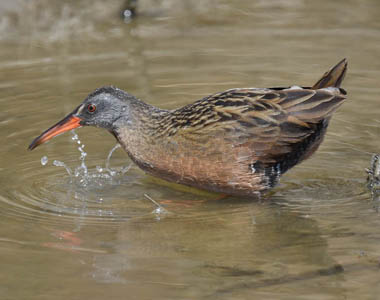
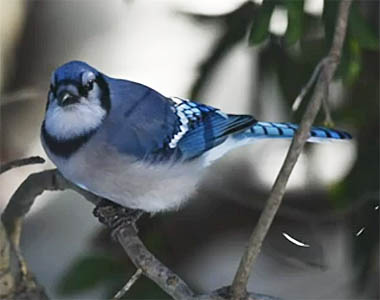
There is far more in this March issue, but it’s spring! Now close your computer and get outside with the birds! | | | | | | 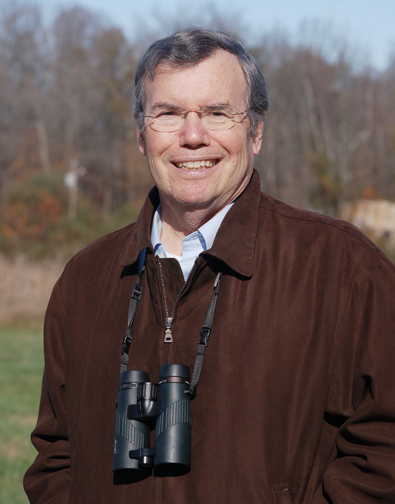 Bob Musil, an avid birder, is the President & CEO of the Rachel Carson Council and author of Rachel Carson and Her Sisters: Extraordinary Women Who Have Shaped America’s Environment (Rutgers, 2016) and Washington in Spring: A Nature Journal for a Changing Capital (Bartleby, 2016). Bob Musil, an avid birder, is the President & CEO of the Rachel Carson Council and author of Rachel Carson and Her Sisters: Extraordinary Women Who Have Shaped America’s Environment (Rutgers, 2016) and Washington in Spring: A Nature Journal for a Changing Capital (Bartleby, 2016). | | | | | | 5 Plants That Help Migrating Birds in Early Spring The going is easier for birds when they start traveling south for the winter. Many plants and trees are fruiting and bugs are active, so there are typically abundant food sources. But when they head back north during spring, things can look quite different. The trees are still bare, insects aren’t flitting about, and nectar and seeds are in short supply. While you can and should put out a bird feeder to help them along the way, there are also trees and perennials you can plant that will offer birds food and shelter during their journey north. | | | | | | | | Bird-Friendly Action We inspire and support bird-friendly action at scale The Center for Engagement in Science and Nature’s bird-friendly team focuses on understanding the most significant human-caused threats to birds and giving people the information and tools they need to help mitigate these threats. We use programming informed by social science research to find ways to minimize barriers and empower people from all backgrounds to take bird-friendly actions. | | | | | | | | Container-suitable Native Plants Container gardening can be a great way to get started with growing plants. If a balcony, deck, or doorstep is the only outdoors space you have, container gardening allows you to bring a spot of nature close to your home. Containers can also increase the number of plants you can grow, allowing you to bridge the gap between your home and garden. | | | | | | | | Light & Landscape Guidelines Reduce lighting during March-June and August-November when birds are migrating. Although collisions occur year-round, the highest numbers of collisions occur during migration. Artificial light attracts birds, disrupting their migrations and drawing them close to the hazards of buildings and glass. Turn off nonessential lighting, draw shades at night, angle exterior lights away from windows, and shield or cover outdoor lights to direct light downward and out of the night sky. | | | | | | | | The Myth That Wind Farms Are a Guillotine for Birds Is Being Debunked by Hard Data The harm caused by wind turbines isn't nearly as bad as you think. In the late 1980s, the Altamont Pass in California became the “Ground Zero” of a PR nightmare for renewable energy. Thousands of small, fast-spinning turbines were erected directly in the flight paths of golden eagles. It was one of the earliest large-scale renewable projects, and the result was a tragic, high-profile disaster that cemented wind energy as a guillotine for birds. | | | | | | | | No Food, Sleep: How Migratory Birds Fly For Days Non-Stop Birds like godwits temporarily shrink parts of their body, which frees up space and energy, making them lighter and more efficient for flying long distances. A young shorebird stunned scientists after it completed one of the longest non-stop migratory flights ever recorded. The four-month old bird flew an astonishing 8,425 miles from Alaska to Tasmania without stopping for food, water or rest, setting a new record in 2022. | | | | | | | | Patuxent, Rachel Carson and the Bird Guy As the “bird guy,” as one RCC Fellow called me at a Rachel Carson Council Fellowship retreat, I have a calling. Caw Caw Caw! And just the other day someone else asked me, “why do you like birds so much.” Well… how long do you have? Birds are vital to ecosystems and human well-being, acting as key pollinators, seed dispersers, and natural pest controllers that protect crops and manage insect populations. They maintain ecological balance through scavenging, nutrient cycling, and acting as indicators of environmental health. | | | | | | | | Birdwatching May Reshape the Brain and Build its Buffer Against Aging Expert birdwatchers have changes in their brain structure compared with novices, which probably help them better identify birds and may even protect against age-related cognitive decline. Expert birdwatchers have brain differences that may underlie their remarkable ability to identify unfamiliar birds and suggest that birdwatching can reshape the brain in much the same way as learning a language or a musical instrument does. | | | | | | | | Following Flight Paths: Tracking Grassland Birds Not long ago, scientists could only imagine the secret journeys of many small birds. Even with binoculars and field notebooks, most of their movements went unseen. Today, new tracking technologies are unveiling these mysteries. Researchers with Virginia Working Landscapes, a program of the Smithsonian’s National Zoo and Conservation Biology Institute, are leveraging this technology to better understand birds' movements and the conservation challenges they face throughout their journeys. | | | | | | | | Study Reveals New Technique to Identify Individual Night-flying Birds For the First Time Millions of birds invisibly migrate through the night sky each autumn, most flying in near silence toward their wintering grounds. Now, scientists have developed a way to see and identify many of those birds for the first time. In a study published today in Ornithology, researchers describe how they used thermal imaging optics, flashlights, and high-speed photography to detect and photograph birds in flight after dark. | | | | | | | | | | Artist Profile: Clover Ajamie Clover Ajamie is a cartoonist and illustrator from Vermont, as well as a recent graduate from the Center for Cartoon Studies. They grew up on stories and are excited to be telling their own. What do you seek to communicate with your work? I strive to draw attention to the small miracles that surround us—grasses, flowers, the creatures we share this beautiful planet with. | | | | | | | | Perspectives That Take Flight: Women Capturing the Lives of Birds in the Audubon Photography Awards Patience, empathy, and observation—qualities that transform moments in birds’ lives into visual stories of nature and conservation. Birds rarely stay still. A sudden wingbeat, a fleeting interaction, or a flash of color can disappear in seconds. Capturing those moments requires patience, careful observation, and a deep connection with the natural world. | | | | | | | | North American Birds Are Dying Off Faster. It Signals a Human Crisis, Too. With every passing year, the springtime chorus grows quieter. There are fewer song sparrows cheeping amid the shrubs and grasses. The high-pitched trill of the indigo bunting is muted. Even the raucous calls of American crows are fewer and further between. Decades of observations collected from all corners of the continent show that many of North America’s birds are in a state of accelerating decline, according to a new study in the journal Science. | | | | | | | | Birds Are Declining Faster and Faster in 3 US Hotspots, New Study Finds Researchers have revealed that North American birds are declining at an accelerating rate in three regional hotspots associated with intense agriculture. Bird populations are in free fall across North America. And in some hotspots their decline is accelerating, a new study reveals. Wild bird numbers declined at an accelerating rate in California, the Midwest and the Mid-Atlantic between 1987 and 2021. Across these hotspots, losses were associated with high-intensity agriculture, according to the study. | | | | | | | | What Happens in the Arctic, Doesn’t Stay in the Arctic How bird migration connects us all. I recently spent some time on the Bird Migration Explorer website, and it got me thinking about some of the interesting connections between bird breeding habitat in the Arctic and the far-off locations that birds travel to across the hemisphere. One that comes to mind involves the Semipalmated Sandpiper, a small shorebird with brownish-tan upperparts, white underparts, and black bill and legs. | | | | | | | | Birding Festivals and Events A great way to enjoy birdwatching is by going to festivals—they’re organized to get you to well-known birding spots at the right time of year, and they’re a perfect way to meet people. Experts and locals help you see more birds, and you’ll meet other visitors who share your hobby. While you’re there, keep an eye out for Cornell Lab representatives, as we do attend several festivals each year. | | | | | | | | Virginia Rail This famously secretive bird is about the size of a robin, and spends most of its time hidden in dense march vegetation. You may get a clue to its location from its loud grunting noise. Virginia Rails are well adapted to move through thick almost impenetrable habitat with their long toes, flexible back bone and laterally compressed body. Virginia Rails have special forehead feathers that are adapted to the wear and tear of sharp marsh plants and pushing through extremely dense vegetation. Read more | | | | | | | | Momentary Meditations are published every Monday to awaken what Rachel Carson called “the sense of wonder” and what Albert Schweitzer called “a reverence for life.” Looking deeply into our interdependence with all life on earth helps us know what we must do. In our harried world, these meditations are meant to serve as a renewable resource for compassion and love. Revealing Beauty - My father loved to watch birds as they gathered at the feeder he placed outside our kitchen window. He disliked, however, the noise and bold Blue Jays that sometimes commanded that space. For years, I carried his dislike for Jays, until I finally looked beyond my prejudice. | | | | | | | | Six Essential Books About Birds 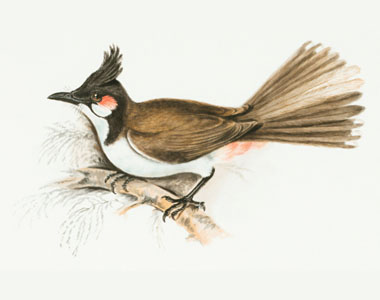 A few years ago, more or less on a whim, I started following a group of scientists who were studying a small seabird on an island off the coast of Washington State. The bird, called the rhinoceros auklet, was gray and had a funny little horn sprouting from the base of its bill—hence its common name. The auklets only visited the island at night, so we never saw them all that well. When they did arrive they were quick to scuttle into their deep burrows. Not the world’s most charismatic creature, in other words. At least not outwardly. A few years ago, more or less on a whim, I started following a group of scientists who were studying a small seabird on an island off the coast of Washington State. The bird, called the rhinoceros auklet, was gray and had a funny little horn sprouting from the base of its bill—hence its common name. The auklets only visited the island at night, so we never saw them all that well. When they did arrive they were quick to scuttle into their deep burrows. Not the world’s most charismatic creature, in other words. At least not outwardly.
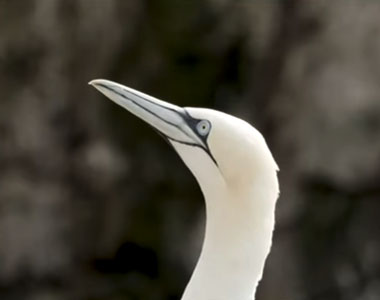
Still, there was something about the auklets that kept me coming back for years to learn more about them. I loved the way their story, so seemingly modest, joined with other stories about climate change, the fate of the world’s oceans, and the history of land, people, colonial power, and Indigenous resilience. To look at the rhinoceros auklet even briefly was to see these countless threads gathered into blurred shadows flying over my head at twilight. People have been writing about birds for almost as long as they have been writing anything. One anonymous Old English poet, for example, called the sea “the gannet’s bath” (referring to the large expert divers of the North Atlantic), and after reading that I have not looked at it in any other way. While working on my auklet tale, Seabirds as Sentinels, I turned to these essential books about birds. Read more | | | | | | Delight in the Glorious Gannets at Bird Rock Travel to easternmost Canada and revel in the raucous spectacle of 20,000 breeding Northern Gannets. Watch these graceful seabirds soar effortlessly above the gray waters—and admire the speckled youngsters as they learn their parents' style. It's 9 minutes of loveliness. | | | | | | | | | | | | The March 2026 issue of Bird Watch and Wonder was produced by Ross Feldner | | | |  The Rachel Carson Council Depends on Tax-deductible Gifts From Concerned Individuals Like You. Please Help If You can. The Rachel Carson Council Depends on Tax-deductible Gifts From Concerned Individuals Like You. Please Help If You can. | | | |  Sign Up Here to Receive the RCC E-News and Other RCC Newsletters, Information and Alerts. Sign Up Here to Receive the RCC E-News and Other RCC Newsletters, Information and Alerts. | | | | | | RACHEL CARSON COUNCIL
8600 Irvington Avenue
Bethesda, MD 20817
(571) 262-9148
[email protected] | | | | | | | | | | | |