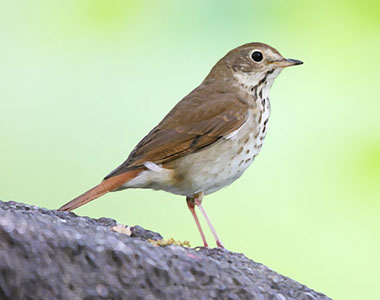
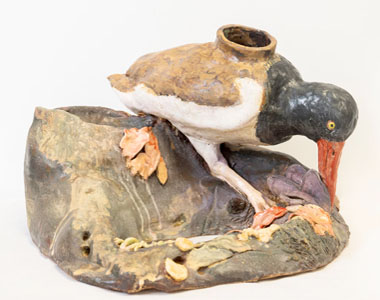
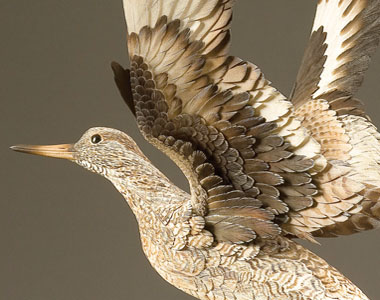
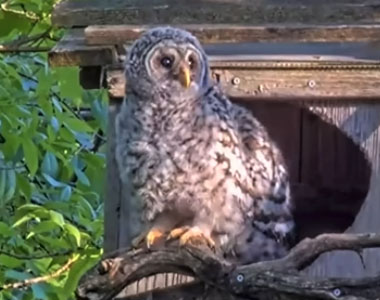
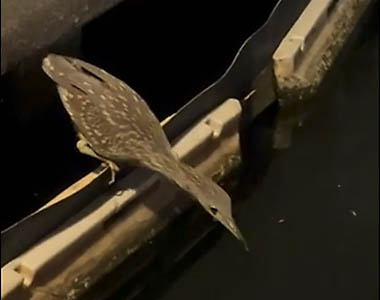
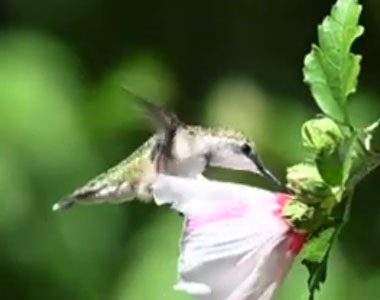
| | 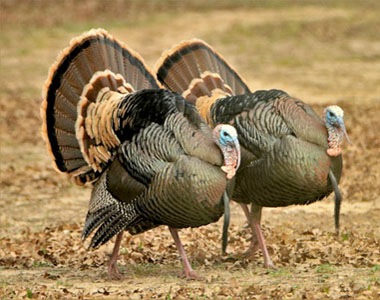 Yes. Our November issue of Bird Watch and Wonder features that iconic bird of Thanksgiving, the Wild Turkey in “The Best of Bird of the Week.” In fact, gratitude, appreciation, wonder are themes that jump from the pages this month. That sense of wonder is obvious in a remarkable short video by a non-birder, RCC’s Director of Campus and Civic Engagement, Diego Tovar. On the Baltimore waterfront, a “strange, interesting bird” catches his eye. Curious about and fascinated by what he is seeing, Tovar pulls out his iPhone just as the juvenile Green Heron that has captured his attention plunges in, nabs a fish, and proceeds to devour it. The result? A Cornell Lab worthy video you must watch and a beginning birder who has been captivated by a heron. Yes. Our November issue of Bird Watch and Wonder features that iconic bird of Thanksgiving, the Wild Turkey in “The Best of Bird of the Week.” In fact, gratitude, appreciation, wonder are themes that jump from the pages this month. That sense of wonder is obvious in a remarkable short video by a non-birder, RCC’s Director of Campus and Civic Engagement, Diego Tovar. On the Baltimore waterfront, a “strange, interesting bird” catches his eye. Curious about and fascinated by what he is seeing, Tovar pulls out his iPhone just as the juvenile Green Heron that has captured his attention plunges in, nabs a fish, and proceeds to devour it. The result? A Cornell Lab worthy video you must watch and a beginning birder who has been captivated by a heron. 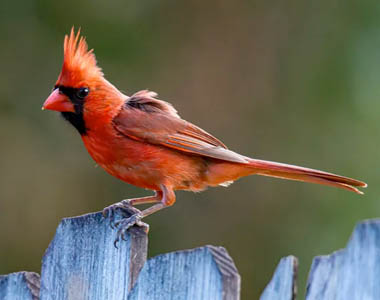 Tovar is about to join over 100,000,000 birdwatchers in the United States who love and care for birds. That is, they are thankful for them. That’s why our Thanksgiving issue starts off with stories in “Action and Advocacy” about how to attract that other iconic bird of the winter holidays, the cardinal, to your backyard. Tovar is about to join over 100,000,000 birdwatchers in the United States who love and care for birds. That is, they are thankful for them. That’s why our Thanksgiving issue starts off with stories in “Action and Advocacy” about how to attract that other iconic bird of the winter holidays, the cardinal, to your backyard.
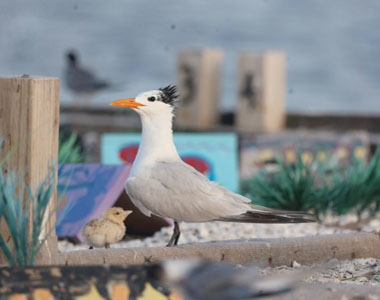
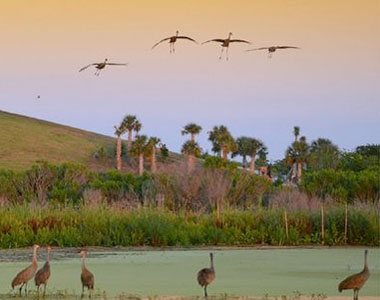
In Maryland, we humans have created a floating raft that hosts nesting terns who hatched over 500 chicks. And, best of all, bird lovers from Sarasota Audubon in Florida have defeated plans by developers to destroy the Celery Fields Bird Sanctuary for housing with a view of water without wildlife.
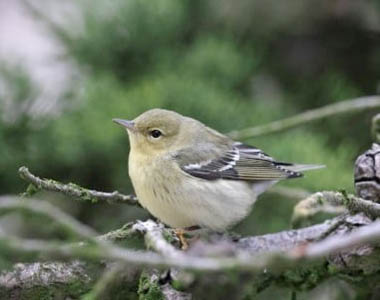
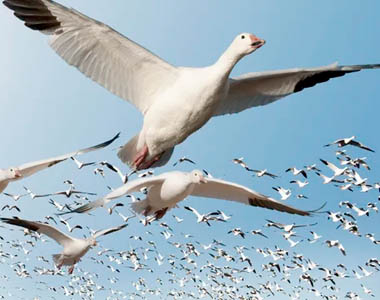
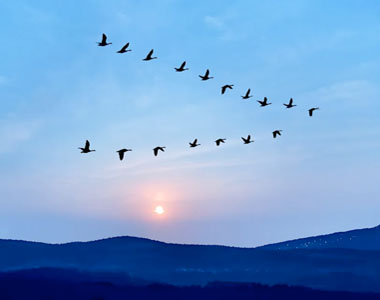
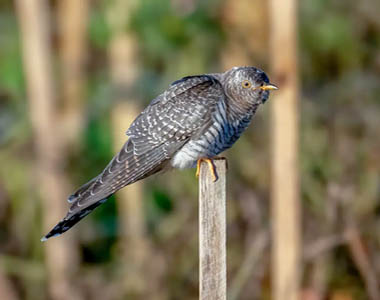
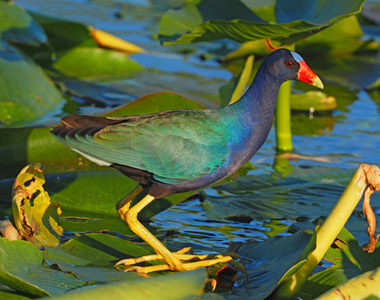 As you travel for the holidays, you can be jealous of the birds you see winging overhead as you are stuck in traffic. We have GPS, but how to birds manage to migrate without any electronic gear at all? As you wonder about it, you will be joining our ancient ancestors who made up marvelous myths (See “Bird Lore”) about how birds get from one place to another. In our time, scientists (bird watchers with satellites, drones and data..) have figured out how our avian aviators actually manage to get from the Arctic to South America and back without our help. But we need help to figure out where to go see the birds we love. Ross Feldner, our endlessly curious avian addict, lays it all out for you with his bird travel guide “Where the Birds Are.” As you travel for the holidays, you can be jealous of the birds you see winging overhead as you are stuck in traffic. We have GPS, but how to birds manage to migrate without any electronic gear at all? As you wonder about it, you will be joining our ancient ancestors who made up marvelous myths (See “Bird Lore”) about how birds get from one place to another. In our time, scientists (bird watchers with satellites, drones and data..) have figured out how our avian aviators actually manage to get from the Arctic to South America and back without our help. But we need help to figure out where to go see the birds we love. Ross Feldner, our endlessly curious avian addict, lays it all out for you with his bird travel guide “Where the Birds Are.” There’s even more to see and appreciate in our November issue — from live bird cams of Barred Owls jumping from nest boxes, to bird sculptures, bird carvings, and even a Western Cattle Egret that somehow made its way from Africa all the way to Arizona. To grasp that and other movements and migrations of the birds, you’ll need to get and read, Helmut Satz’s, How Birds Find Their Way: Avian Orientation and Navigation from Springer Books. Neither you or the birds will be alone. Happy Thanksgiving. | | | | | | 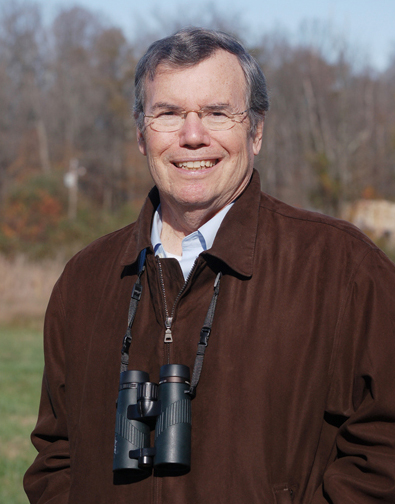 Bob Musil is the President & CEO of the Rachel Carson Council and author of Rachel Carson and Her Sisters: Extraordinary Women Who Have Shaped America’s Environment (Rutgers, 2016) and Washington in Spring: A Nature Journal for a Changing Capital (Bartleby, 2016). Bob Musil is the President & CEO of the Rachel Carson Council and author of Rachel Carson and Her Sisters: Extraordinary Women Who Have Shaped America’s Environment (Rutgers, 2016) and Washington in Spring: A Nature Journal for a Changing Capital (Bartleby, 2016). | | | | | | How to Attract Cardinals to Your Yard As one of the most popular birds in America, it's easy to see why birdwatchers love their brilliant red plumage. Attracting birds with flowing fountains and homemade suet cakes are easy ways to invite feathered species of all kinds to your homestead. And this is true for attracting one of North America's most recognized birds: the Northern cardinal. It's should come as no surprise that the cardinal is the official state bird of seven eastern states; after all, cardinals are commonly seen in diverse landscapes across the eastern half of the United States. | | | | | | | | Shorebirds Flock to Restored Pond at Pine Island Sanctuary There’s a pond at the Donal C. O’Brien, Jr. Sanctuary and Audubon Center, the Pine Island Club, just to the west of the clubhouse, with a troubled past. Sometime in the 1940s, when the Pine Island Club was a hunting club, the membership dug out an existing pond, put in what was perhaps a 3 inches in diameter pipe to carry water from a canal off Currituck Sound and then bulkheaded the shore. | | | | | | | | Habitats WatchList Identifies Most Threatened Bird Habitats Throughout North America For the First Time, Bird Habitats Are Evaluated and Formally Ranked in Detail. Developed by American Bird Conservancy (ABC) in partnership with NatureServe and Habitats of North America authors Iain Campbell and Philip Chaon, The WatchList of Terrestrial and Freshwater Bird Habitats of the U.S. and Canada — the Habitats WatchList — offers a new way to categorize, map, and assess risk for bird habitats. | | | | | | | | Los Angeles Bird Rescue Center Experiencing "acute influx" of Oiled Birds A Los Angeles bird rescue center is asking beachgoers to be on the lookout for beached, oiled birds, as a suspected natural oil seepage in the Ventura area is primarily affecting a specific waterbird. So far, the International Bird Rescue center in San Pedro has taken in 97 oiled birds in the last three days from the Ventura, Santa Barbara area. | | | | | | | | Maryland’s Tern Raft Celebrates Five Successful Years of Hosting Nesting Waterbirds Maryland’s tern raft hosted hundreds of terns again this year—including nesting pairs of two different state-listed-endangered species—and saw more than 350 tern chicks fledge during the island habitat’s fifth year in operation. The wooden-framed artificial island has floated in Chincoteague Bay in Worcester County since 2021 and serves as a breeding habitat for colonial nesting waterbirds that are listed as endangered in Maryland. | | | | | | | | Bird-defending Audubon Chapter Defeats Florida Development Planned by Nation’s Largest Homebuilder Since the 1880s we’ve referred to dopey people as birdbrains. I contend it’s a misnomer. Birds are actually pretty smart – think about how far they migrate without any access to maps or GPS! I think the people who like birds are pretty smart too. Exhibit A of my argument would be what the Sarasota Audubon Society has accomplished in defending a bird sanctuary called the Celery Fields. | | | | | | | | Lost or Leading the Way? Rare Birds May Signal Shifting Migration Routes On a 2009 hike in the Huachuca Mountains of southeastern Arizona, a group of birders heard an otherworldly, ethereal bird song floating, flute-like, through the canyon. The hikers identified the singer as a brown-backed solitaire, recognizing immediately that the bird was very far from home. The brown-backed solitaire spends its life in the mountain forests of Mexico and Central America — what was it doing in Arizona? | | | | | | | | How Do Migrating Birds Know Where They're Going? To navigate the skies, birds rely on a complex sensory tool kit. Every year, billions of birds migrate in and out of the United States. And across the world, birds fly thousands of miles to reach their seasonal destinations. Some birds, like the Arctic tern (Sterna paradisaea), even rack up enough miles over their lifetime to fly to the moon and back. But when birds embark on these epic journeys, how do they know where they're going? | | | | | | | | Studies: Extreme Weather Fueled by Climate Change Is Adding to Bird Declines Scientists have typically pointed to habitat loss as the key factor behind the worldwide drop in bird populations worldwide, but climate change poses a second, closely linked threat. Bird populations across the globe have been decreasing sharply for decades. A landmark study published in 2019 estimated that the total number of breeding birds in North America had dropped by almost 30% since 1970. (This story was originally published by The Revelator.) | | | | | | | | | | | | | | Experts Issue Warning About Concerning Threat Impacting 60 Percent of World's Birds: 'An Alarm Bell We Can't Afford to Ignore' A new wildlife assessment is spelling disaster for Arctic seals and a wealth of bird species, according to the Associated Press. What's happening? The International Union for Conservation of Nature's Red List's annual update reported a higher risk of extinction for harp, hooded, and bearded seals. Sea ice has been diminishing rapidly, which has created vital habitat loss and the steep decline of seal populations. | | | | | | | | Where the Birds Are “Birding shifts your perceptions, adding new layers of meaning and brokering connections: between sounds and seasons, across far-flung places, and between who we are as people and a wild world that both transcends and embraces us,” writes NYC-based birder Christian Cooper in his 2023 memoir Better Living Through Birding (a New York Times Bestseller). “In my life, it has been a window into the wondrous.” The famous real estate adage “Location, location, location” is also true for birds and birding. | | | | | | | | A Rare Visitor to Long Island Is Driving Birders Cuckoo A common cuckoo, a species native to Europe and Asia, made several recent appearances in Riverhead, N.Y. The birds have been spotted in a handful of places in the lower 48 states, experts said. Their rare cameos have become quite the spectacle, drawing birders across state lines, telephoto lenses and binoculars in tow. | | | | | | | | Remarkable Sightings The southward migration winds down in November, as most, but not all, migrants have gone further south. The southbound migration continues into early January. We are now more likely to get birds that are out of their normal range. Four of the birds seen this week are in this category. Ray Ewing found a western cattle-egret at Slough Farm on Oct. 24. The species originated in Africa but is well established in the Americas, especially in the warm southern states, preferring agricultural areas near wetlands. Numerous observers have seen it. | | | | | | | | Study Shows 1 in 4 Birds Gone Since 1970 This is the first study to undertake an accounting of the net population changes across a total of 529 breeding bird species in the United States and Canada. The researchers analyzed birds on a group-by-group basis, allowing them to identify declines among species that use similar habitats. The data included 48 yrs. of data from multiple independent sources, including the North American Breeding Bird Survey and the Christmas Bird Count. A analysis of 11 yrs. of data from 143 NEXRAD radar stations showed a similarly steep decline in migration. | | | | | | | | Migration Myths: How Our Ancestors Made Sense of the Natural World Dark-bellied brent geese, dunlins, godwits and many other migratory birds spend the winter on our coastlines then start to disappear in March, then reappear in the autumn. We now know they’ve flown to northerly breeding grounds thousands of miles away. But it’s not surprising that our ancestors tried to make sense of this extraordinary natural phenomena. | | | | | | | | Do American Robins Migrate? Springtime singer or snowy sentinel? The American Robin may be one of North America's most familiar songbirds, yet its wintering patterns raise a common question: Do robins migrate? The answer is yes and no. We associate robins with spring for good reason: In many places, they arrive with the warm weather. But that doesn't mean all of these birds escape winter's bite. | | | | | | | | The Legend of the Hermit Thrush The legend of the hermit thrush was told by parents to teach their children the value of honesty. Long, long ago the birds had no song. It was a time when only humans had this melodious gift. Each day, the people would sing a song of greeting to the sun as it rose, and one of farewell as it set. The birds admired the songs and would often stop their flight and listen to the beautiful voices. In their hearts they wished they too could be endowed with this gift. | | | | | | | | The Hidden World of the American Oystercatcher Inspired by ancient offering vessels, Rachel Frank’s sculpture captures the delicate cycle of a shorebird’s life in the intertidal zone. Sculptors often spend a lot of time with their subjects, but Rachel Frank takes that connection to another level. As a rehabilitator at the Wild Bird Fund in Manhattan, she’s cared for an array of creatures that live in or pass through the city, including rodenticide-poisoned owls, kestrels injured by cats, and diseased hawks. | | | | | | | | Grainger McKoy: The Bird Artist Feather by feather, sculptor Grainger McKoy captures the beauty of birds as few artists ever have. Grainger McKoy is an artist. He also carves birds out of wood. These may or may not be two different things, and to Grainger McKoy it doesn’t seem to matter. It doesn’t take long in his presence to feel like you’re with someone who has fallen through a hole in the pocket of time and somehow landed to live with the rest of us sad, contemporary people, here in the twenty-first century. He really doesn’t belong. | | | | | | | | Barred Owls Branch Out And Explore The Forest Moss and Maple have officially graduated to their next stage of development! The owlets from the 2025 Wild Birds Unlimited Barred Owl Cam took their first steps out of the nest box on May 11. One adventurous owlet leapt to a nearby tree to begin exploring, and the second joined its sibling on May 12 as they ventured out together. | | | | | | | | Young Green Heron’s Lightning Strike Taken by RCC’s Director of Campus and Civic Engagement, Diego Tover, this remarkable video demonstrates the lightning speed of an immature Green Heron spearing a fish with astounding accuracy. It then hauls it out of the water and enjoys a well-earned meal. Green Herons are typically hard to spot since they move slowly or stand stock still. | | | | | | | | Wild Turkey Contrary to popular lore, Benjamin Franklin never publicly voiced opposition to the bald eagle as a national symbol, nor did he ever publicly suggest the turkey as a national symbol. The Wild turkey is an upland ground bird and a United States native. It’s the heaviest member of the diverse Galliformes (a group of game birds which includes grouse, pheasants, and partridges) and is the same species as the domestic turkey, which was originally derived from a southern Mexican subspecies of Wild turkey. | | | | | | | | Momentary Meditations are published every Monday to awaken what Rachel Carson called “the sense of wonder” and what Albert Schweitzer called “a reverence for life.” Looking deeply into our interdependence with all life on earth helps us know what we must do. In our harried world, these meditations are meant to serve as a renewable resource for compassion and love. Focused Attention - Mysterious and agile, this female Ruby-throated hummingbird delights in open flowers. Perfectly positioned by powerful tiny wings, it probes blossom after blossom with its long bill, combining beauty with life-sustaining intention. | | | | | | | | How Birds Find Their Way: Avian Orientation and Navigation
Helmut Satz 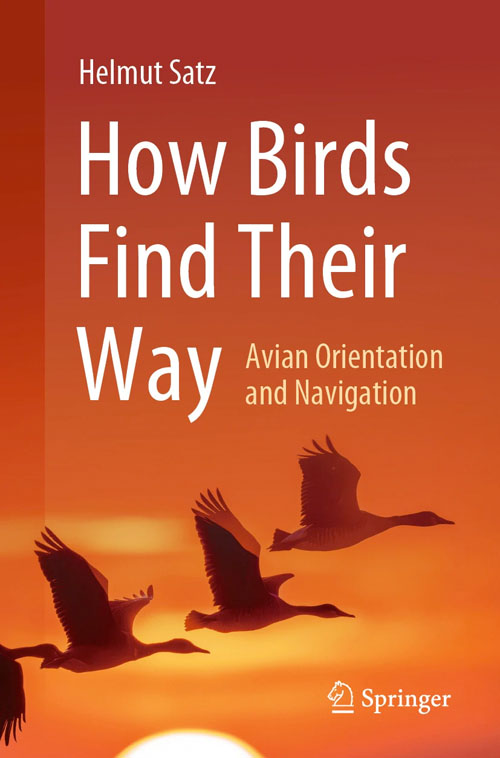 This book describes our current understanding of the navigation of birds, their methods, capabilities, and achievements. Our knowledge of this field has progressed immensely in the last fifty years, due to the availability of miniaturized tracking and positioning devices, which now allow us to know when and where a specific bird is located and where it is flying. The book is written for a general readership and requires no more of the reader than a true interest in the topic. The text provides accessible overview of the relevant geographic and geophysical basics (latitudes and longitudes, geomagnetism) and of the neural faculties that allow birds to identify these features. The author surveys a variety of striking avian achievements, ranging from trans-ocean and pole-to-pole flights to circumnavigations of the earth. Readers will also learn how the required knowledge is provided and passed on to future generations, through instinct as well as through experience. Our understanding of such information transfer is today much deeper than it was fifty years ago. Nevertheless, many open questions remain. How an albatross leaving the coast of Brazil can find the way to its nest on a rock off the coast of New Zealand—this is a question still waiting to be answered. Thus, a further purpose of the book is to stimulate additional interest and new research into the fascinating and challenging world of avian navigation. This book describes our current understanding of the navigation of birds, their methods, capabilities, and achievements. Our knowledge of this field has progressed immensely in the last fifty years, due to the availability of miniaturized tracking and positioning devices, which now allow us to know when and where a specific bird is located and where it is flying. The book is written for a general readership and requires no more of the reader than a true interest in the topic. The text provides accessible overview of the relevant geographic and geophysical basics (latitudes and longitudes, geomagnetism) and of the neural faculties that allow birds to identify these features. The author surveys a variety of striking avian achievements, ranging from trans-ocean and pole-to-pole flights to circumnavigations of the earth. Readers will also learn how the required knowledge is provided and passed on to future generations, through instinct as well as through experience. Our understanding of such information transfer is today much deeper than it was fifty years ago. Nevertheless, many open questions remain. How an albatross leaving the coast of Brazil can find the way to its nest on a rock off the coast of New Zealand—this is a question still waiting to be answered. Thus, a further purpose of the book is to stimulate additional interest and new research into the fascinating and challenging world of avian navigation. Purchase here | | | | | | | | | | The November 2025 issue of Bird Watch and Wonder was produced by Ross Feldner | | | |  The Rachel Carson Council Depends on Tax-deductible Gifts From Concerned Individuals Like You. Please Help If You can. The Rachel Carson Council Depends on Tax-deductible Gifts From Concerned Individuals Like You. Please Help If You can. | | | |  Sign Up Here to Receive the RCC E-News and Other RCC Newsletters, Information and Alerts. Sign Up Here to Receive the RCC E-News and Other RCC Newsletters, Information and Alerts. | | | | | | RACHEL CARSON COUNCIL
8600 Irvington Avenue
Bethesda, MD 20817
(571) 262-9148
[email protected] | | | | | | | | | | | |