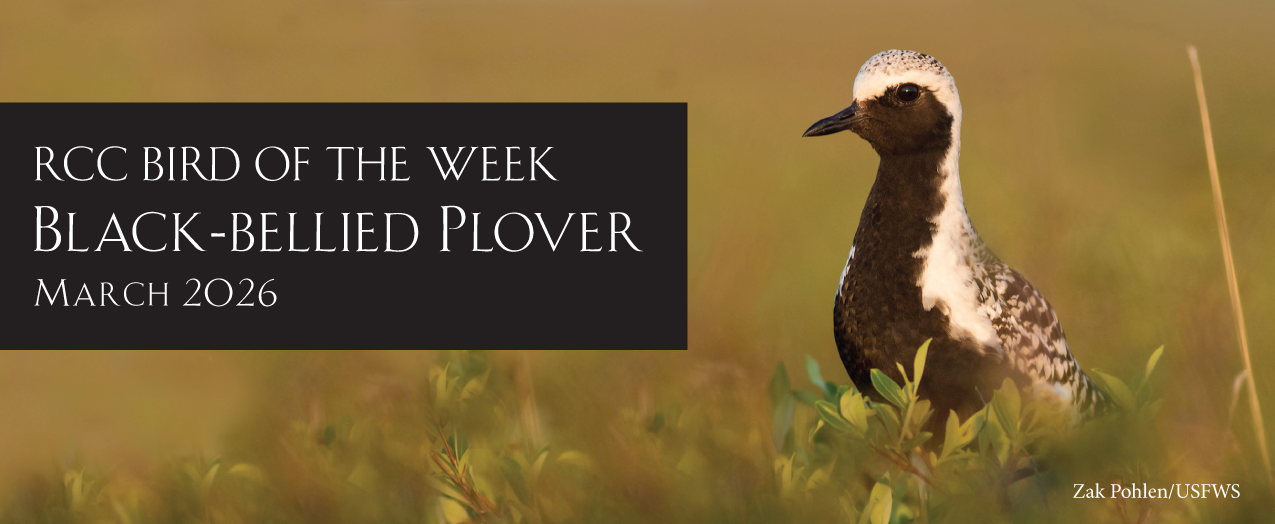
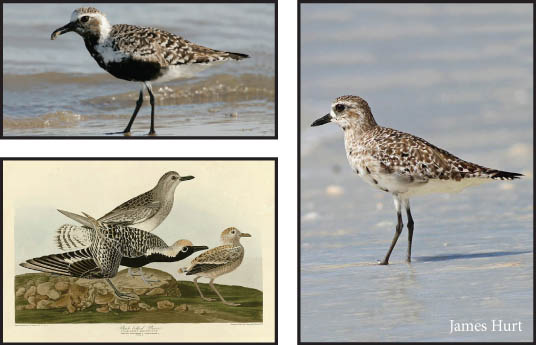
Black-bellied Plover - Ross Feldner Also known as the Grey Plover, this long-distance migrant travels from its breeding grounds in the arctic tundra to the coasts of Mexico, Central and South America. This amazing journey covers more than 10,000 miles over 6 days with only a few stopovers! Black-bellied Plovers nest on the ground in open tundra where there’s good visibility. The nest is a shallow scrape where generally four eggs are laid. The parents take turns incubating the eggs. One sits on the nest while the other searches for food. They look for food on beaches and tidal flats in search of mollusks, worms, insects and crustaceans. Black-bellied Plovers do not feed in dense flocks. They feed while widely dispersed. During the summer months they benefit from large swarms of insects that congregate in shallow pools as the ice and snow melt. Although they are the largest and heaviest of North America plovers, they are swift and agile flyers with a unique mournful whistle. Their breeding plumage is quite plain with a dappled gray and tan back, a streaked breast, and a white belly. The plumage changes radically during the breeding season, when they show their namesake black belly, along with vivid white stripes on either side of their head. | |