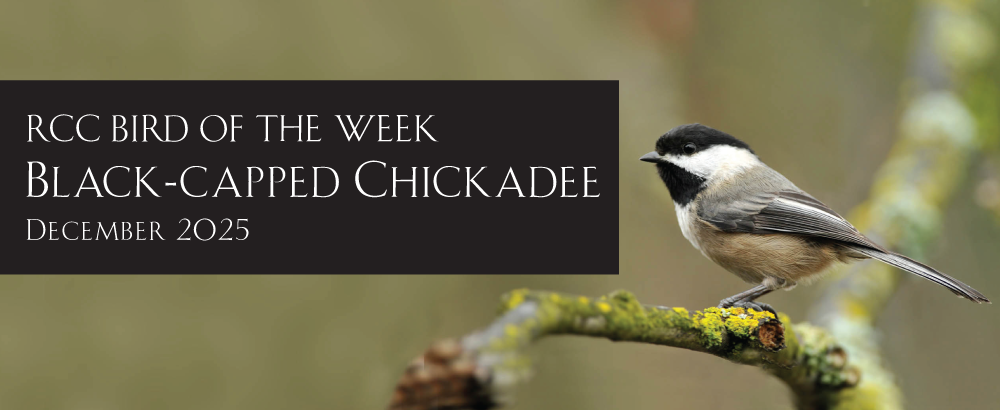
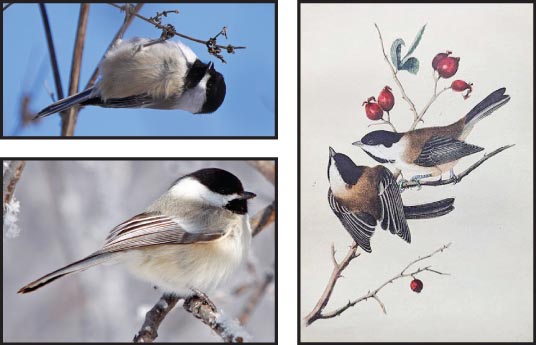
Black-capped Chickadee - Ross Feldner This vivacious little bird lives all across North America in deciduous and mixed forests and is well known for it vocalizations, including its fee-bee song and its chick-a-dee-dee-dee call, from which it derives its name. Black-capped Chickadees feed primarily on insects and seeds, and are known for their ability to cache food for later use during winter. The hippocampus (a major section of the brain) of the Black-capped Chickadee actually grows during the caching season, which is believed to help it better remember its cache locations! It is a very social bird that forms strict dominance hierarchies within its flock. They nest in cavities, either excavating their own in dead trees or using existing ones. A pair either excavates the hole together, uses a natural cavity, or reuses an old woodpecker nest. They also will use a nest box. Nest sites are typically chosen by females, but excavation of the cavity is done by both sexes. During the winter, chickadees often flock together. Many other species of birds, including titmice, nuthatches, and warblers, are also found foraging in these flocks. These species stay with the flock because the chickadees call out whenever they find a good source of food. This calling-out forms cohesion for the group, allowing the other birds to find food more efficiently. Top threats to Black-capped Chickadees include window collisions, dying from ingesting pesticides, and of course, cats. |