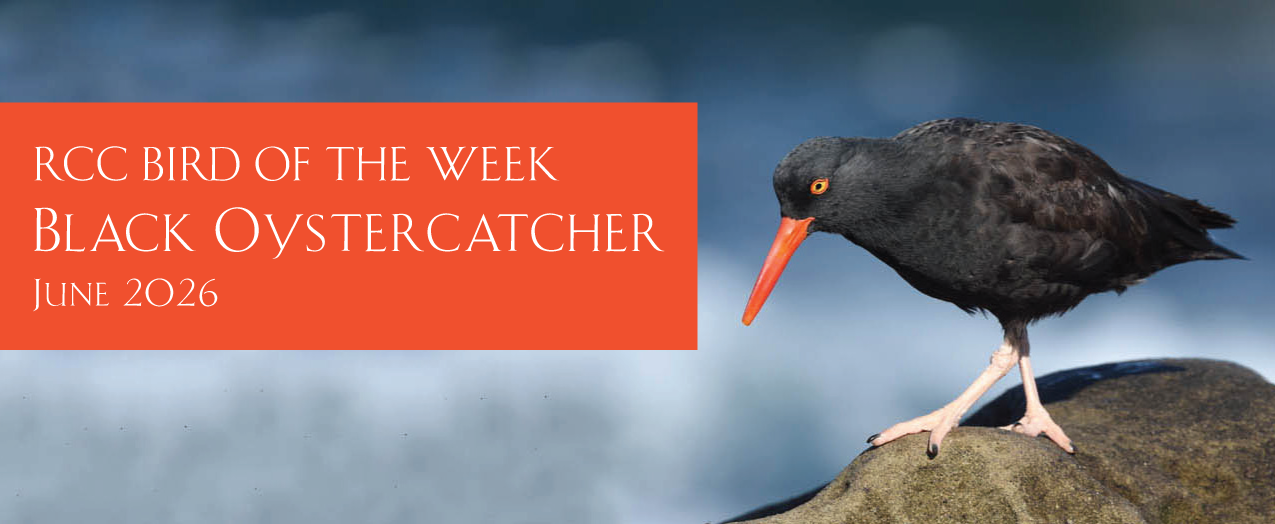
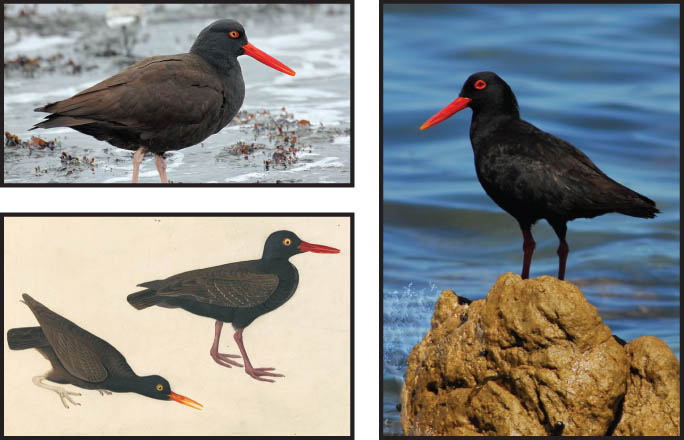
Black Oystercatcher - Ross Feldner So here we have another bird naming conundrum. Despite its name, the Black Oystercatcher rarely eats oysters! It might better be named the mussel catcher. Mussels and limpets are their primary food. They locate open mussels and disable them with a quick jab to the adductor muscle. With the mussel stuck in the open position, the oystercatcher can pull out the contents with the tip of its chisel-like bill. Oystercatchers often forage in the wave zone, because mussels that are splashed by waves open more frequently. The Black Oystercatcher is a conspicuous black bird found on the shoreline of western North America, from the Aleutian Islands to the coast of Baja California. Their nests are small bowls or depressions close to the shore into which small pebbles and shell fragments are tossed with a sideward or backward flick of the bill. Around two to three eggs are laid in this nest; they are very hard, and can even survive being submerged by a high tide or very high water levels. Incubation takes around 26–28 days. The chicks are capable of leaving the nest after one day, but stay in the territory for a long time after fledging. Black Oystercatchers are highly territorial, especially during the nesting season and can readily be detected by their loud vocalizations while flying, actively defending a foraging and nesting area in one territory. | |