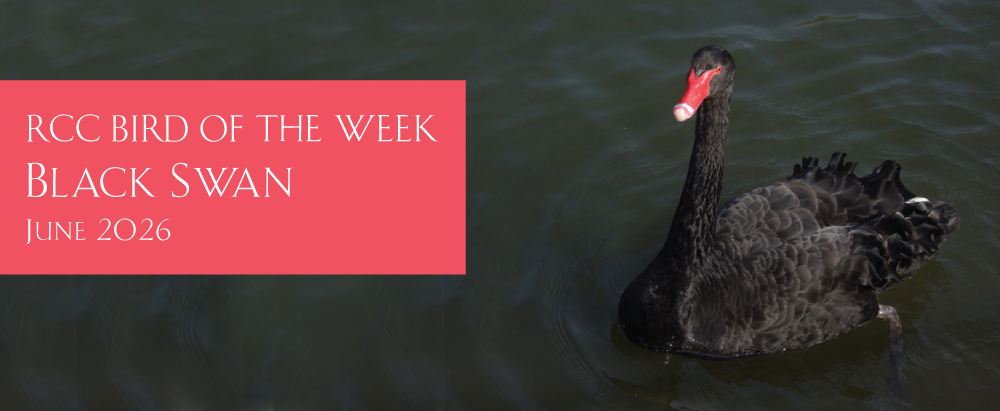
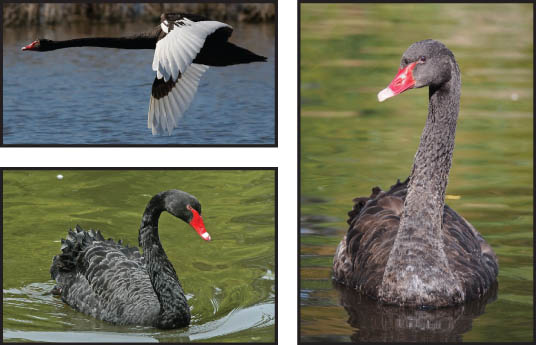
Black Swan - Ross Feldner The explorer story of the Black Swan is a historical, scientific, and philosophical tale about how a single observation can destroy a universally accepted "truth." For over 1,600 years, Western civilization considered a Black Swan to be a metaphor for something that could not exist, because every known swan was white. But then, in 1697, Dutch explorer Willem de Vlamingh was navigating a river on the western coast of Australia—when his group became the first Europeans to see Black Swans. The discovery was a shock to European scientific knowledge. It invalidated the old, dogmatic belief that all swans were white. Following this discovery, the Black Swan's story became a powerful metaphor, which now describes a rare, high-impact event that is completely unexpected, often rationalized after the fact with hindsight, but previously considered impossible. The Black Swan was once thought to be sedentary, but is now known to be highly nomadic. The Black Swan was introduced to various countries including the United States as an ornamental bird in the 1800s, but has managed to escape and form stable populations. They have been seen in Florida, California and North Carolina. Their diet is generally aquatic and marshland plants. When feeding in shallow water they will filter feed at the water’s surface. | |