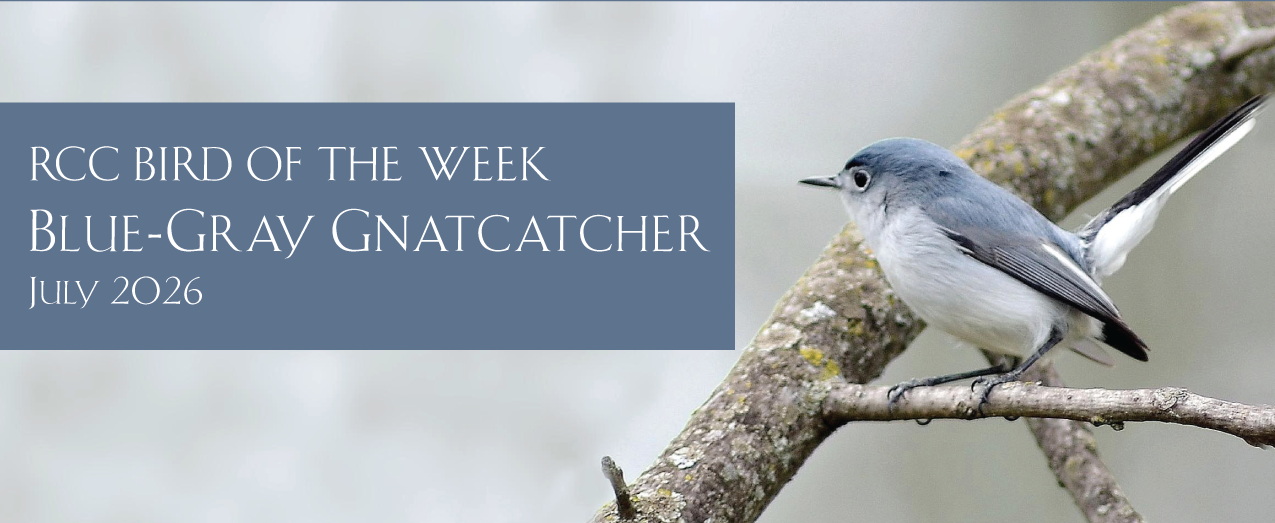
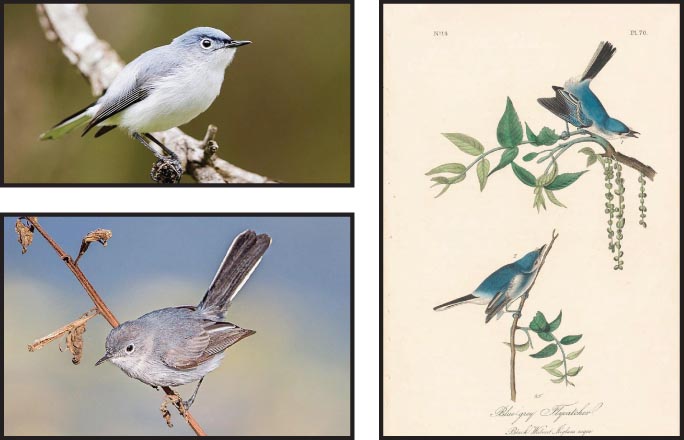
Blue-gray Gnatcatcher - Ross Feldner Despite its name, gnats are not its primary source of food. The Blue-gray Gnatcatcher lives from coast to coast in North America and is one our smallest birds, weighing roughly as much as a nickel! It is notoriously difficult to see because of both its size and its constant motion searching for food. Blue-gray Gnatcatchers have an extensive repertoire of songs and their playlist includes samples of songs from many of its feathered neighbors, including the Rufous-sided Towhee, Blue Jay, warblers and vireos. They mate for life and nest twice annually. The male attracts his mate to potential nesting locations with his songs. The nest looks like a large hummingbird nest or a bump on a tree and is usually constructed on the end of a branch or a fork in the tree between 12-40 feet above the ground. The nest is constructed with twigs and grass held together with spider webs. The diet of Blue-gray Gnatcatchers is mainly small insects and their eggs, including flies, small wasps, leafhoppers, caterpillars and spiders. They catch their prey by snatching them out of the air, gleaning them from leaves and branches, and even pilfering spider webs. Blue-gray Gnatcatchers have to contend with predators that threaten their eggs as well as their nestlings. Domestic or feral cats and snakes are significant predators. Predation sometimes forces the birds to build up to 10 nests in a single nesting season! | |