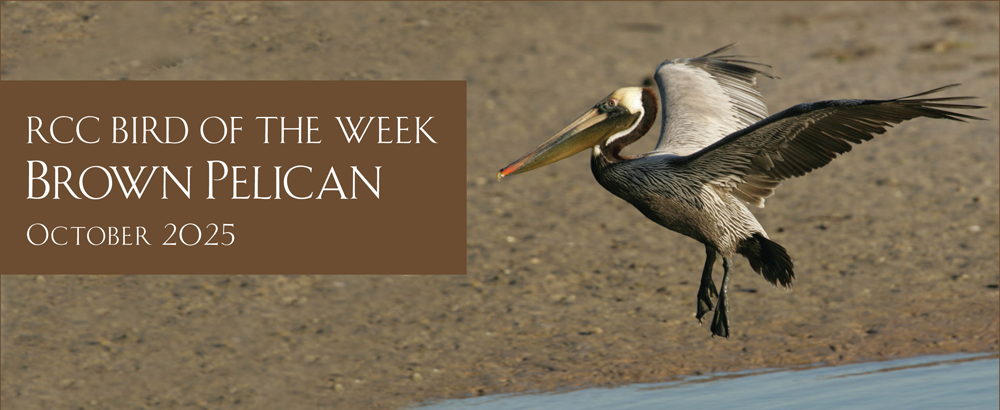
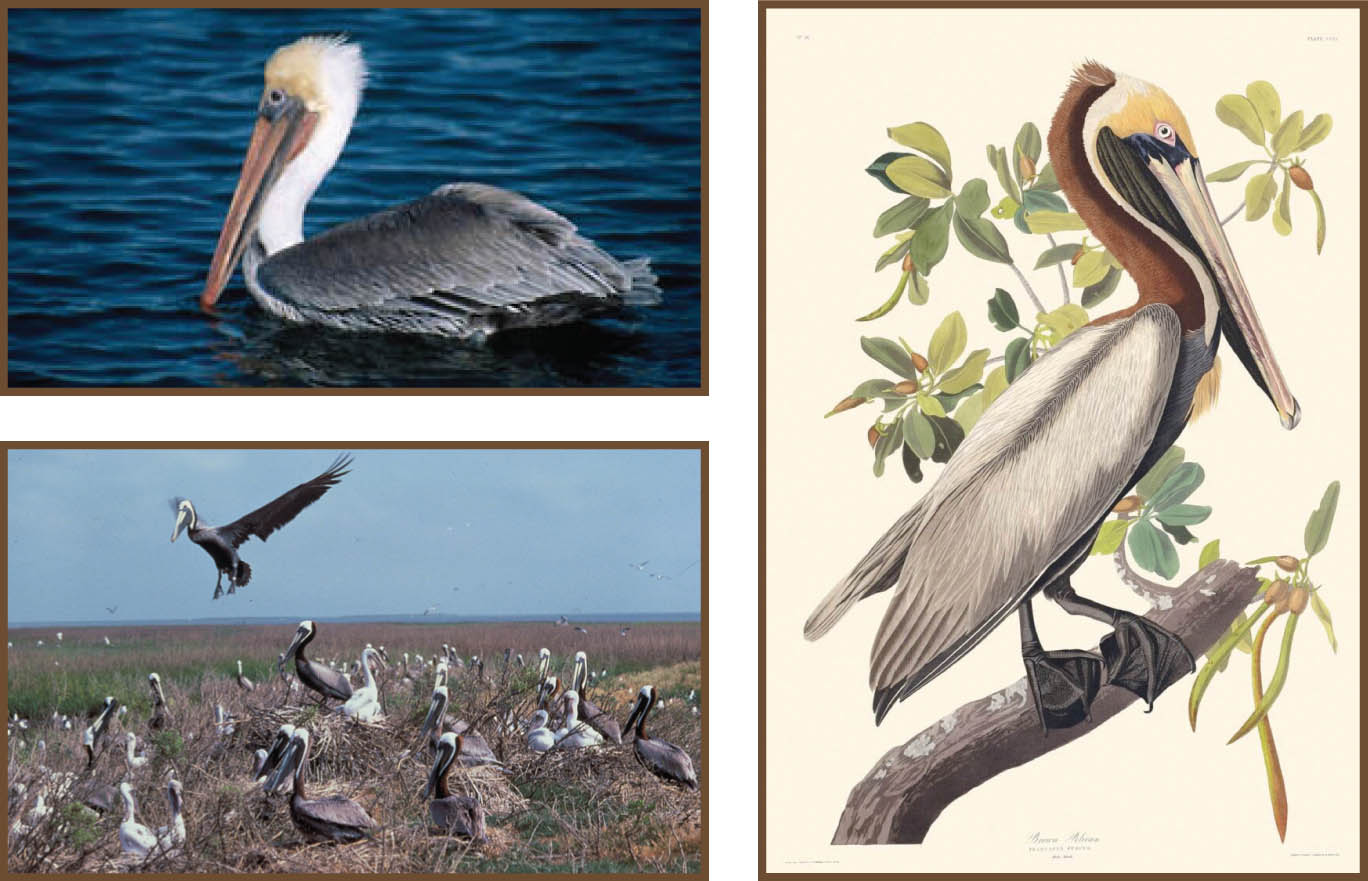
Brown Pelican - Ross Feldner The Brown Pelican was formerly listed under the US Endangered Species Act from 1970 to 2009 as its numbers dwindled primarily due to the use of pesticides like DDT. After 1972 when the use of DDT was banned in Florida, followed by the rest of the US, they quickly recovered. Brown Pelicans are found along the Atlantic Coast from New Jersey to Florida feeding mainly on fish but will also eat amphibians and crustaceans. They use a feeding strategy of diving from great heights to plunge into the water and trap fish in their large pouches. Usually flying at heights of 60 to 70 feet above the water gives them a strategic view to spot schools of fish. They plunge bill first like kingfishers snapping up prey, primarily Menhaden, which account for 90% of its diet. Eating anchovies is particularly important to the Brown Pelican's nesting success. Brown Pelicans serve as an important indicator species for fisheries. The Brown Pelican is a strictly marine species, mostly inhabiting marine subtidal, marine pelagic waters and estuaries. They are often found in mangrove swamps, and prefer shallow waters, especially near salty bays and beaches. They avoid the open sea, seldom venturing more than 20 miles from the coast. Brown Pelicans nest in secluded area, often on islands, vegetated spots among sand dunes, thickets of shrubs and trees, and in mangroves, although sometimes on cliffs. Nesting territories are clumped, as individual territories may be at a distance of only 3 feet from each other. They are usually built by the female from reeds, leaves, pebbles, and sticks. Brown Pelicans are often featured in movies including Storm Boy, The Pelican Brief, Jurassic Park and Finding Nemo. | |