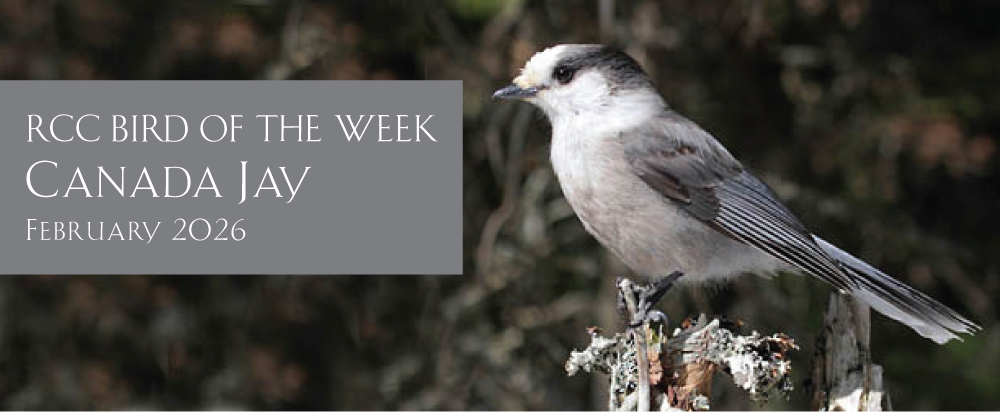
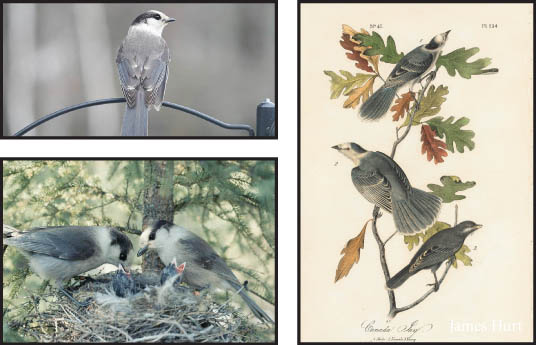
Canada Jay - Ross Feldner Found year-round in boreal forests in North America, the Canada Jay boasts many colorful nicknames including camp robber, lumberjack, moose bird, gorby, grey jay and whisky jack. This last moniker refers to an anglicization of the Cree and Algonquian name, Wisakedjak. Wisakedjak is a mythological figure, a clever and benevolent trickster in First Nations folklore. It does not refer to any adult beverage. Canada Jays adapt well to human activity in their territories and are even known to approach humans for food! This may be where the nickname camp robber comes from. Like other corvids, it has a variety of vocalizations and will mimic other bird species, especially predators. Calls include a whistled quee-oo, and various clicks and chuckles. When predators are spotted, the bird announces a series of harsh clicks to signal a threat on the ground, or a series of repeated whistles to indicate a predator in the air. Canada Jays build nests and lay eggs in March or even February, when snow is deep in the boreal forest. The male will choose a nest site in a mature conifer tree, typically black spruce, white spruce or balsam fir. Nests are constructed with brittle dead twigs pulled off of trees, as well as bark strips and lichens. They are omnivorous, eating arthropods, worms, small mammals, eggs and even juvenile bats as well as fruit and seeds. The highly intelligent Canada Jay is a "scatter hoarder", caching thousands of food items during the summer which it's able to locate from memory for use the following winter. |