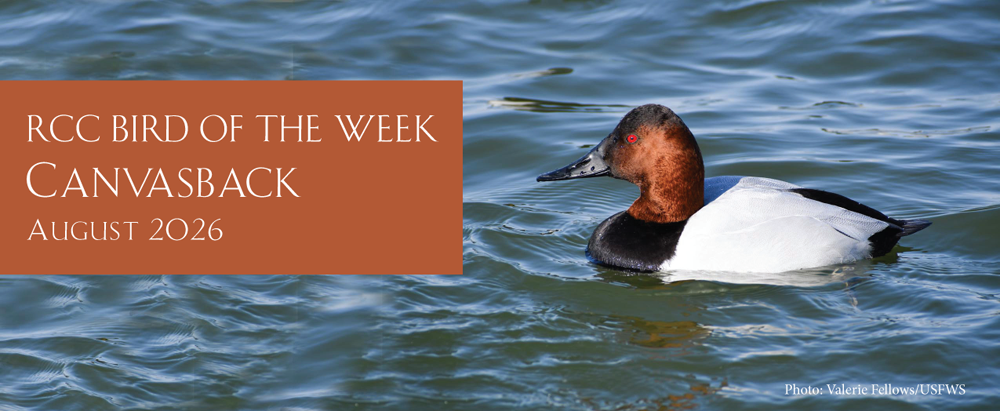
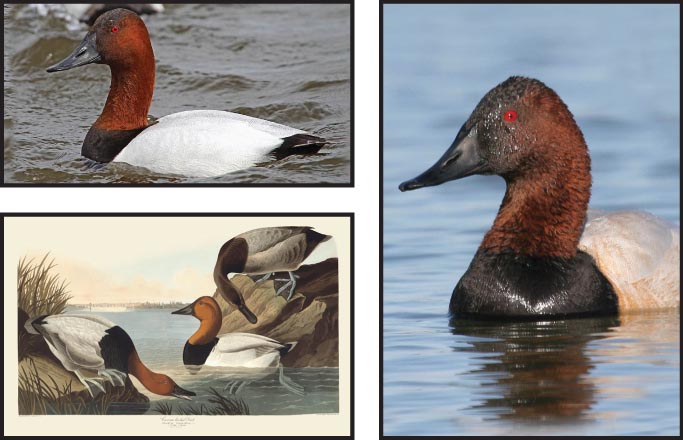
Canvasback - Ross Feldner This diving duck has the distinction of being the largest duck in North America with a length of almost two feet. Canvasbacks breed in North American prairie potholes where they build a bulky nest from march vegetation and line it with down. They usually take a new mate each year, pairing off in late winter in bays. They prefer to nest over water on permanent prairie marshes surrounded by emergent vegetation, such as cattails and bulrushes, which provide protective cover. Canvasbacks feed mainly by diving, sometimes dabbling, mostly eating seeds, buds, leaves, tubers, roots, snails, and insect larvae. In the early 1950s it was estimated that there were 225,000 Canvasbacks wintering in the Chesapeake Bay; this represented one-half of the entire North American population. By 1985, there were only 50,000 ducks wintering there, or one-tenth of the population. Canvasbacks were extensively hunted around the start of the 20th century, but federal hunting regulations now restrict their harvest. The Canvasback has large webbed feet adapted for diving and its bill helps it dig tubers from the substrate. Many species of ducks, including the Canvasback, are highly migratory, but are effectively conserved by protecting the places where they nest, even though they may be hunted away from their breeding grounds. | |