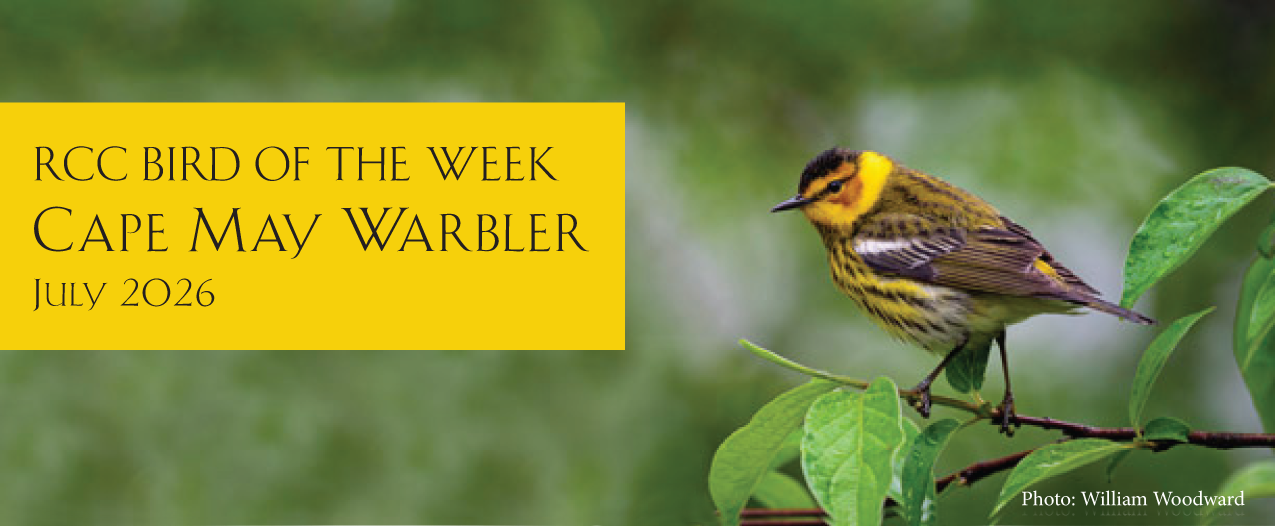
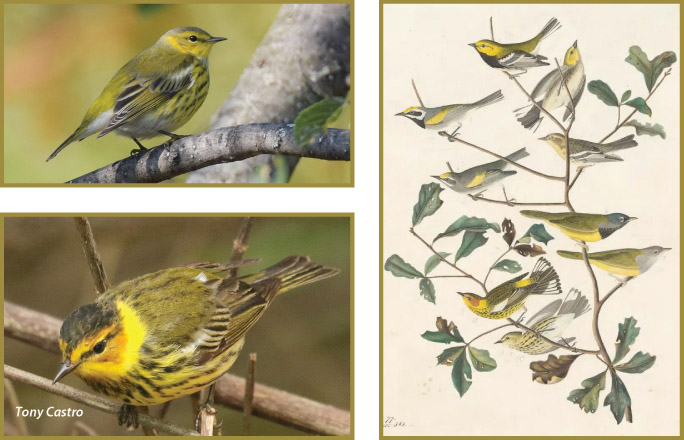
Cape May Warbler - Ross Feldner The Cape May Warbler get its common name from Cape May, New Jersey where it was first described in 1812 by ornithologist Alexander Wilson. It was not spotted again in Cape May for another 100 years! It sports fancy coloration unlike any other warbler with a striped breast, moss green back and rusty-brown cheek patches. During the breeding season, this species resides in remote areas, primarily in northern spruce-fir forests far away from human observers. Its nesting success is closely linked to its primary food source, the spruce budworm caterpillar. These unique warblers possess specially adapted tongues that enable them to extract nectar from tropical flowers, and occasionally from hummingbird feeders, during the winter months. Cape May Warblers are insectivorous and lay larger clutches in years when their preferred food, the spruce budworm, is abundant. They pick insects from the tips of conifer branches or fly out to catch insects. Cape May warblers also feed on berry juice and nectar in winter. Their breeding habitat is the edges of coniferous woodland. Cape May warblers nest in dense foliage near the trunk of the tree, commonly the black spruce. | |