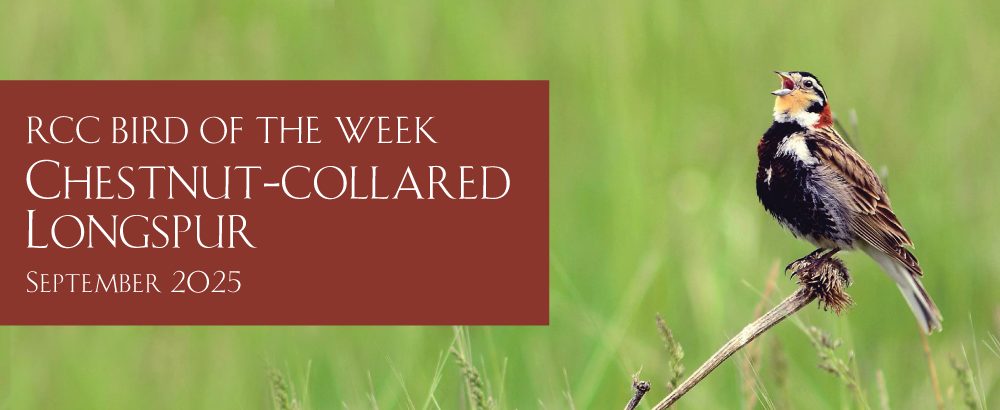
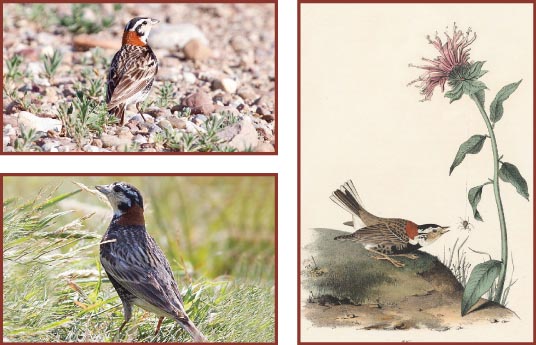
Chestnut-collared Longspur - Ross Feldner Chestnut-collared Longspurs are named for the long, slender claw (spur) on their hind toe and the rusty color on the nape of their neck. They prefer native prairie lands with short grass and open vegetation. They forage on the ground eating mainly seeds but add insects such as grasshoppers and spiders to their diet in summer. Like many prairie birds their numbers have diminished due to habitat loss. Chestnut-collared Longspurs are known to take to the skies to proclaim territory and attract mates. They will sing from fence posts or the top of brush but when things heat up they take flight and then slowly flutter down to the ground with their wings outstretched all the while holding their heads up singing. Throughout the nesting period from May to August, Chestnut-collared Longspurs are found in shortgrass and mixed-grass areas of the northern Great Plains. Their preference for short grasses means they benefit from cattle grazing on native pastures. In the non-breeding season, they migrate southward to the southern Great Plains, reaching as far as the Chihuahuan Desert in Mexico. After a pair have mated, the female excavates a shallow hole in the ground usually near a clump of grass. After the hole is dug she builds a grass nest and typically lays 3 to 5 eggs. | |