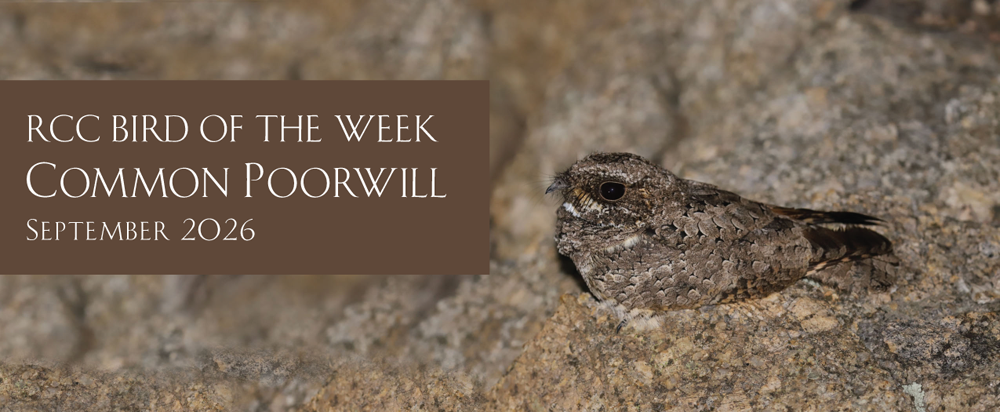
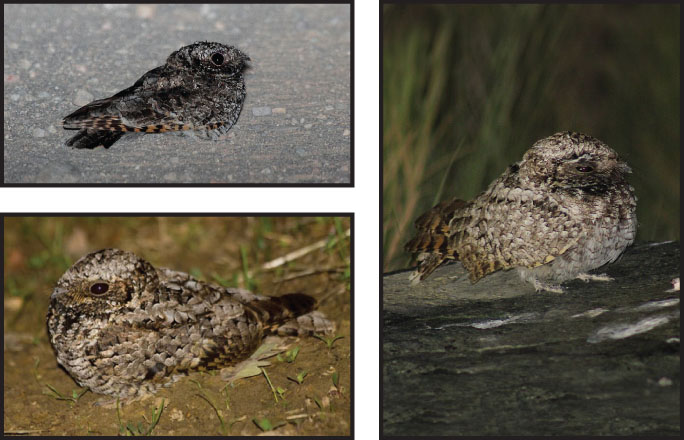
Common Poorwill - Ross Feldner When you hear the phrase get a good night’s sleep this nocturnal bird takes this advice very seriously. It is the only bird known to go into torpor for extended periods of weeks to months! Torpor is a state of decreased physiological activity in an animal where they reduce their body temperature and metabolic rate often to survive periods of reduced food availability. Scientists have learned they can lower their body temperature to 41ºF. That’s a cool bird! It gets its common name, like many other nightjars, from its call, a monotonous poor-will repeated from dusk to dawn. Common Poorwill’s are found through the western United States to northern Mexico where the habitat is dry with open areas with grasses or shrubs, and even stony desert slopes with very little vegetation. The poorwill feeds on nocturnal insects such as moths, beetles, and grasshoppers often catching them on the wing with its large mouth, swallowing them whole. During the day the Common Poorwill will sit camouflaged on the ground making it extremely hard to see. Eggs are usually laid on bare ground, occasionally on a hard gravel surface, flat rock, or a bed of pine needles, often partially shaded. Both parents take turns incubating the eggs and caring for the chicks. A member of the nightjar family, they are highly active at dusk and dawn, earning them the prefix "night." The suffix "jar" describes the loud, mechanical "churring" or trilling sound they make. | |