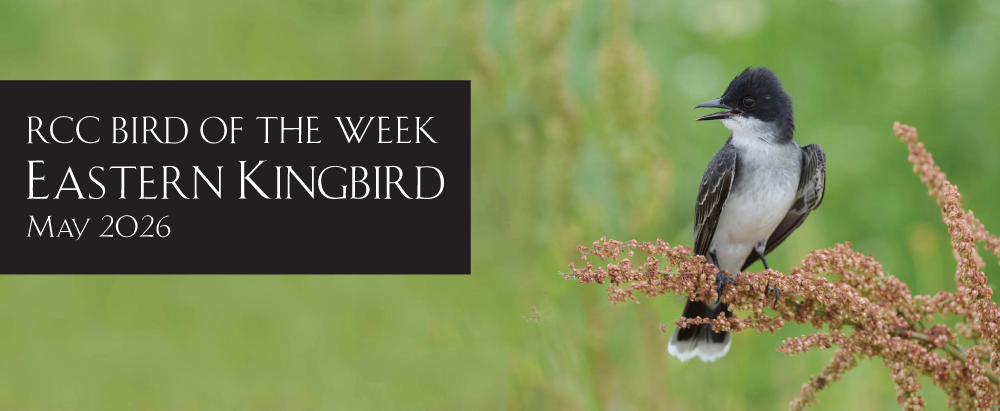
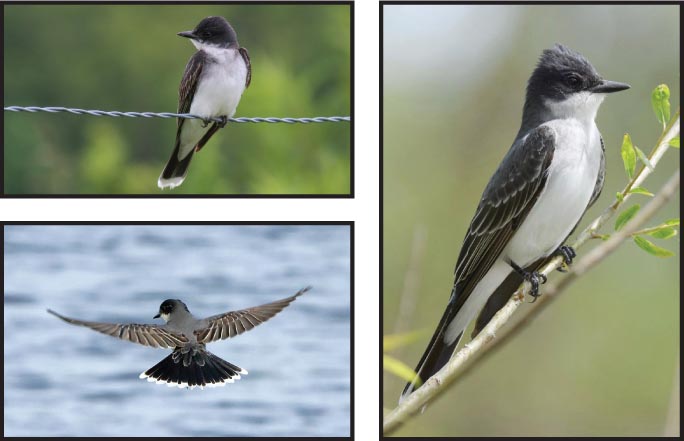
Eastern Kingbird - Ross Feldner This native to the eastern United States is bold and conspicuous while foraging for insects in open areas with scattered trees and bushes, where it waits on an open perch and flies out to catch insects in flight. It will sometimes hover to pick prey off of plants. Prey includes wasps, bees, beetles, flying ants, grasshoppers and flies. While in its wintering area it also eats berries and fruit. The Eastern Kingbird is common around the edges of marshes, farmland, and native prairie grasslands. It winters in tropical forests, especially around edges and rivers. Their nest is a sturdy cup built with weed stalks, twigs, and grass and then lined with fine grass and animal hair. Some Eastern Kingbirds take care to hide their nest in a tree or shrub and others build theirs out in the open on the top of a pole or stump. Those that nest in the open can see predators coming sooner and rely on highly aggressive behavior to protect their young. Unlike many birds, if the nest has been parasitized by a cowbird, the female recognizes the intruder’s egg and ejects it from the nest. Eastern Kingbirds mean business and are known for mobbing crows, ravens, Red-tailed Hawks, and even Great Blue Herons! When they fight one another, they lock their feet together and rip at each other’s feathers, sometimes plummeting to the ground in full fight mode rather than submit to defeat. Like all royalty it wears a crown—a red-orange patch on the top of its head that it flashes during mating or defensive displays. Snakes and squirrels are deadly foes. Some research shows that half of Eastern Kingbird’s nests are destroyed by nest predators. | |

 Click here to watch them keeping a sharp eye out.



