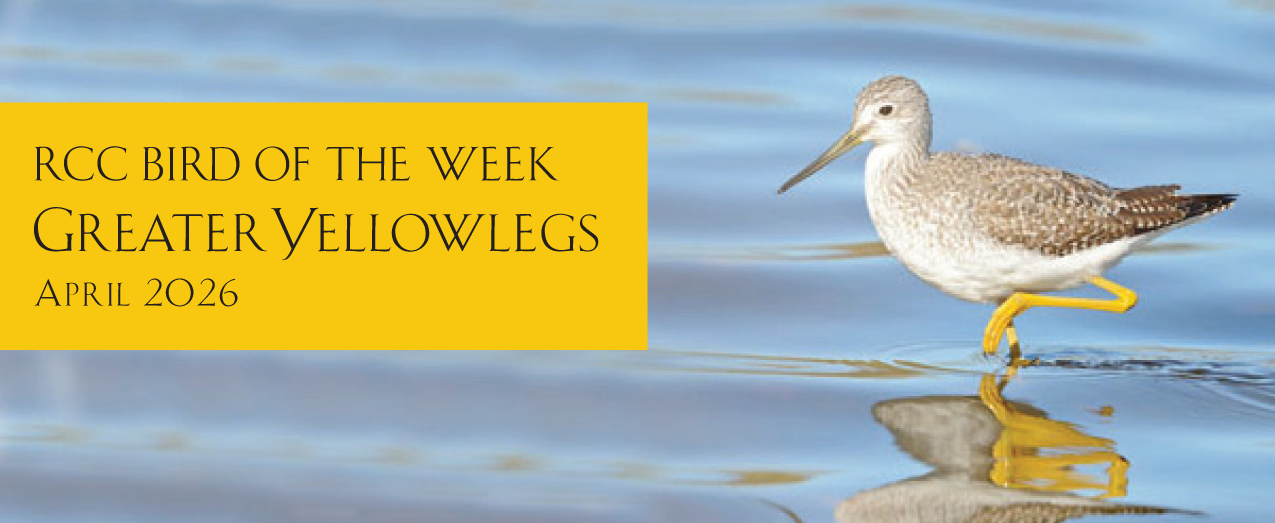
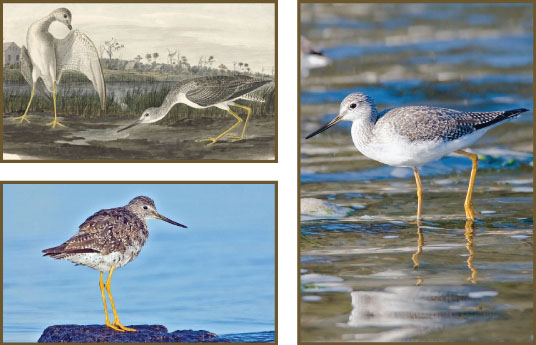
Greater Yellowlegs - Ross Feldner This endangered elegant wader has a long naming lineage. The first part of its scientific name is attributed to the Italian naturalist Ulisse Aldrovandi in 1603 and was even mentioned by Aristotle! This noisy and conspicuous bird breeds in bogs and marshes in Canada and Alaska. It then migrates to both coasts of the United States. The Greater Yellowleg’s breeding habitat is so inhospitable and mosquito-ridden that it is one of the least-studied shorebirds on the continent. Greater Yellowlegs nest in a slight depression in the ground in well-hidden locations usually near water. The nest is sparsely lined with grass, leaves, lichen, and twigs. They dine on insects, small fish, crustaceans, frogs, seeds and berries. They forage alone on mudflats, shorelines, marshes and flooded pastures, sweeping their bill side to side to stir things up. Courting males put on an elaborate display, diving and singing a rapid tuu-whee tuu-whee song. After landing, the male runs in circles around the female and poses with upraised wings before mating. | |