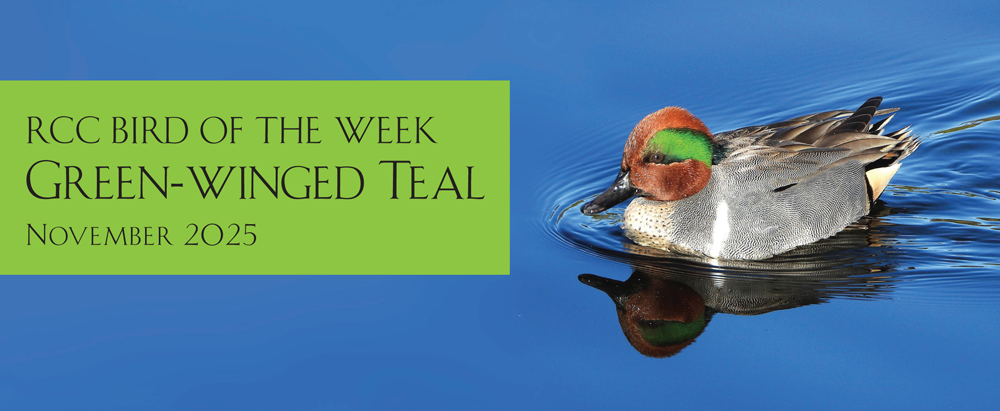
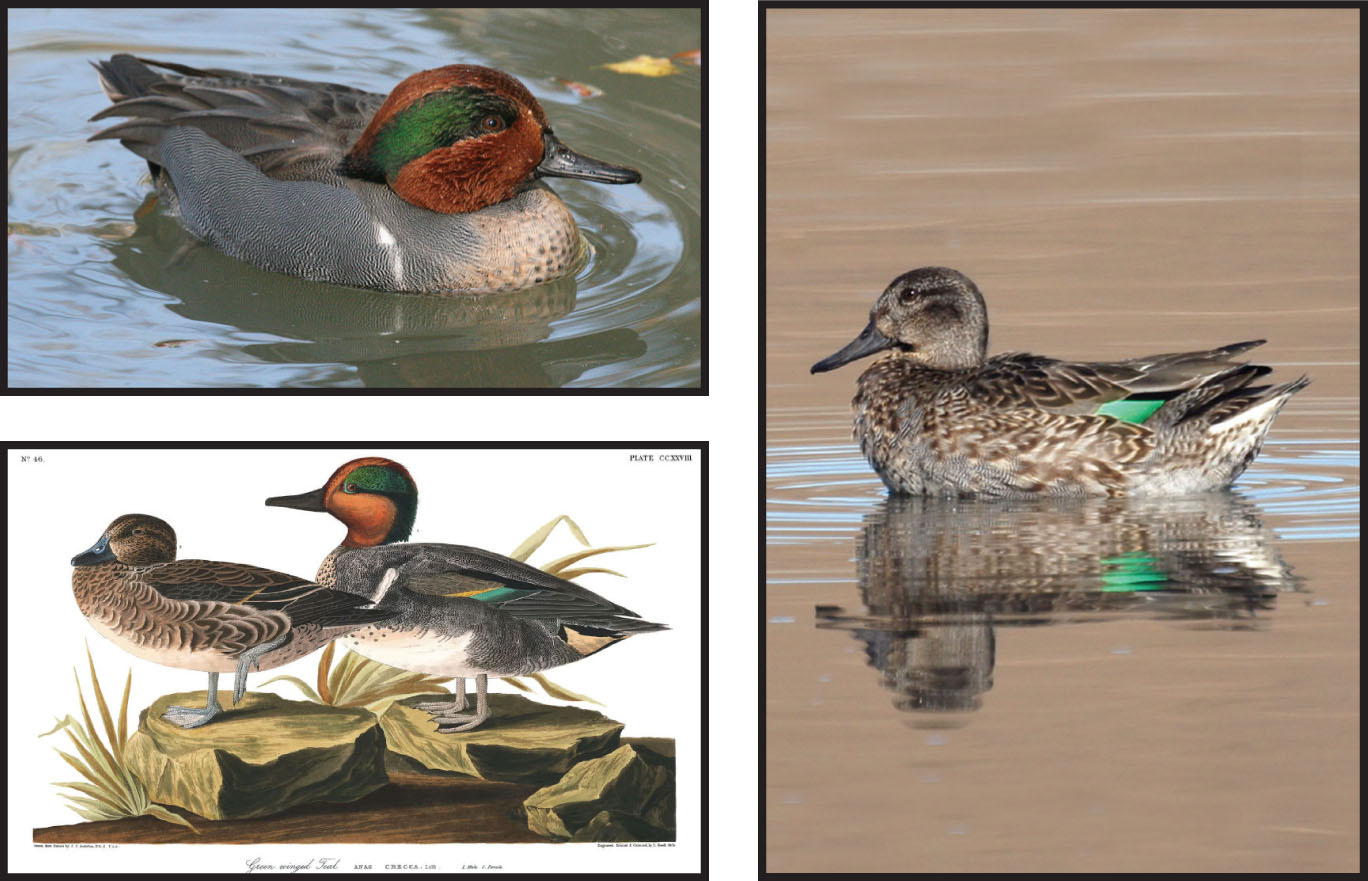
Green-winged Teal - Ross Feldner These compact, perky little ducks holds the record for smallest dabbling duck in North America. They are about the size of a robin, but what they lack in size they make up in numbers with some wintering flocks containing up to 50,000 members! Green-winged Teals inhabit inland lakes, marshes, ponds, pools, and shallow streams with dense emergent and aquatic vegetation. They nest in small depressions on dry ground usually near the base of shrubs, under logs, or in dense grass. The nest is usually concealed both from the side and from above in heavy grass, weeds, or brushy cover. Males leave the females at the start of incubation seeking safe waters to molt. Within 2 hours after hatching the ducklings are mobile and able to swim around and follow their mother for food! Green-winged Teals are one of the earliest spring migrants to arrive on nesting areas as soon as the snow melts. During fall migration Green-winged Teals depart breeding areas from September to October. During the spring migration they depart their winter areas in February and arrive on breeding areas in late April to early May. Green-winged Teals prefer finding food on mud flats that offer leaves of aquatic vegetation and seeds but will also eat insects, mollusks and crustaceans. | |