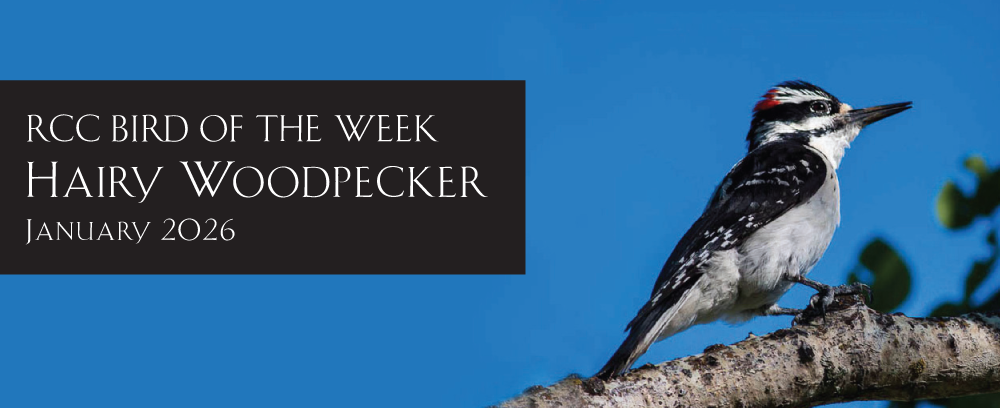
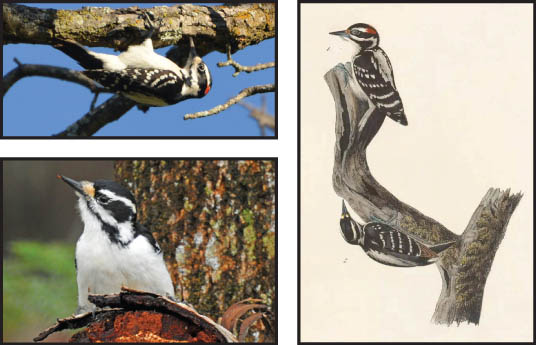
Hairy Woodpecker - Ross Feldner This striking, medium-sized woodpecker is a permanent resident all across America. Hairy Woodpeckers closely resemble the Downy Woodpecker except they are considerably larger with a longer bill. They can often be seen at suet feeders and in deciduous, coniferous, and mixed forests. Hairy Woodpeckers forage on trees, often turning over bark and excavating to find insects, mainly beetles, ants, and spiders. The long, narrow shape of this woodpecker’s beak is perfect for drilling into trees and finding insects. They also eat berries, nuts and fruit, as well as tree sap. The Hairy Woodpecker is a valuable ally to the agriculture industry as a top predator of the European corn borer, a moth that causes crop losses of over $1 billion annually. They prefer to nest in tree cavities up to 60 feet above ground. Prior to nesting, the male and female will maintain separate territories during early winter and then pair up in mid-winter, often with a previous mate. Hairy Woodpeckers have a number of special adaptations including special feet, with two toes pointing forward and two toes pointing backward that help them to grip the side of a tree. Their strong head and neck muscles enable them to peck at the side of a tree without injuring themselves. Additionally their long, rigid tail feathers support them while climbing up the trunks of trees. | |