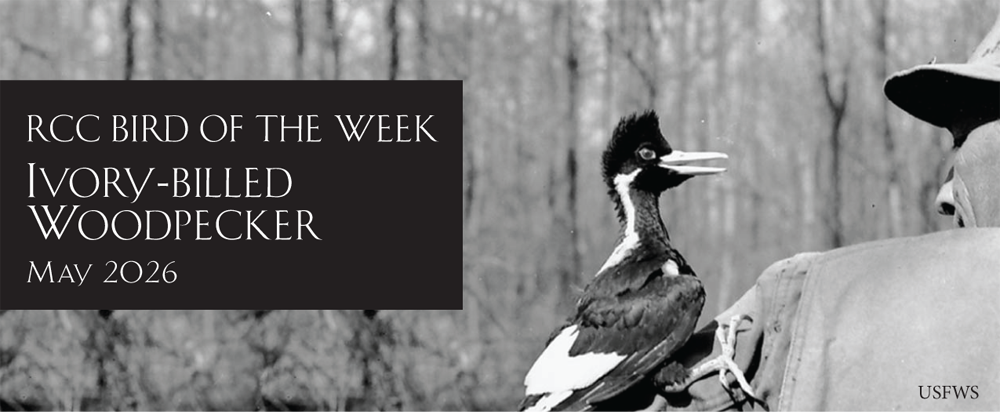
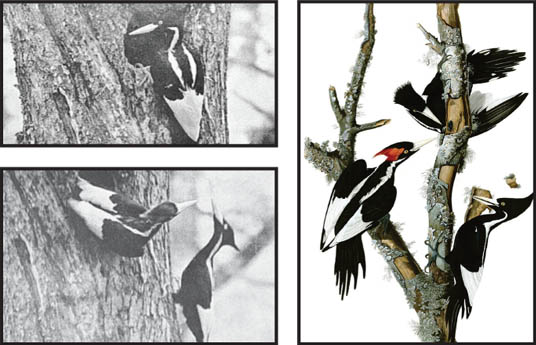
Ivory-billed Woodpecker - Ross Feldner When I got my first Birds of America field guide in 1966, the Ivory-billed Woodpecker was listed as “on verge of extinction.” I thought I must see this bird soon! Alas, it was not to be. The largest woodpecker in America, the Ivory-billed Woodpecker, also known as the “Lord God Bird,” has tantalized birders around the world for many decades with the faint possibility some may yet exist even though it is currently listed as functionally extinct. There have been sporadic, unconfirmed sightings in Louisiana in 2022 and 2025, Arkansas in 2004, and Florida in 2005. A research team from the National Aviary and Project Principalis found potential evidence, including drone video, trail camera photos, and audio recordings, suggesting at least three Ivory-billed Woodpeckers may be in Louisiana swamps, according to research shared by EcoWatch. The evidence, though compelling to some, is not widely accepted. Skeptics often argue that these sightings are cases of mistaken identity, frequently confusing the Ivory-billed Woodpecker with the familiar Pileated Woodpecker. Ivory-billed Woodpeckers primarily ate beetle larvae found in recently dead or dying trees which require vast areas of mature, old-growth forests to survive. Their decline was linked to the devastation of their territory and primary food source in the late 19th century due to heavy logging. Their presumed extinction was excelerated by bird collectors hunting them. Research teams, such as Project Principalis, still continue their search for the Ivory-billed Woodpecker. But the question remains: Do any of them still exist? |