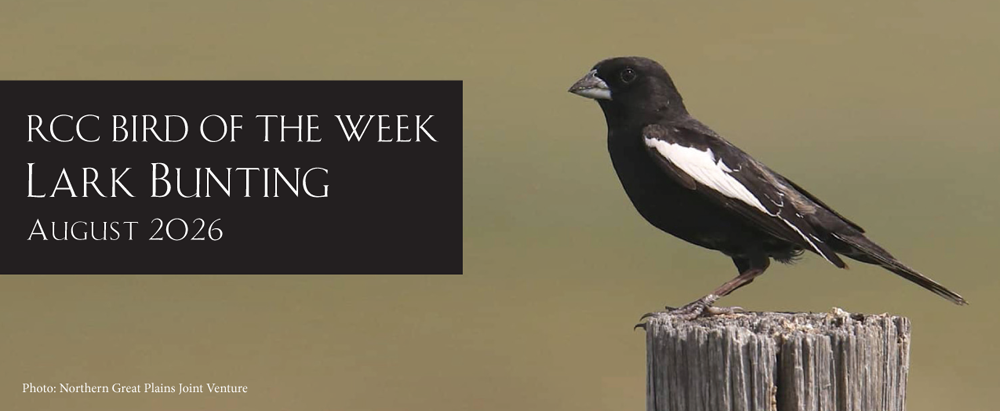
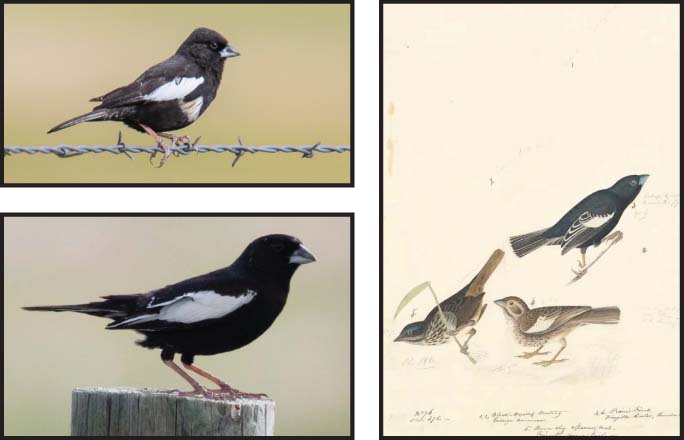
Lark Bunting - Ross Feldner A true case of mistaken identity, the Lark Bunting is considered "misnamed" because it is neither a true lark nor a bunting! It lives in grassland habitats and is known to be able to survive periods of drought, taking moisture from grasshoppers and other insects. It was noted during the “Dust Bowl” year of 1937 in Kansas that almost all wildlife had disappeared except the Lark Bunting. It typically nests in dispersed colonies. Males fly up over their territory and sing while descending to declare ownership of a nesting territory. The song consists of a mix of whistles and trills. The call is a soft hoo. To attract a mate, the male flies 20 to 30 feet straight into the air and drops down in a slow, fluttering spiral while belting out a beautiful, continuous melody. The female mate choice is radically different from year to year! In different years, females show preference based on males' black coloring, size of wing patch, size of beak, as well as other characteristics. The Lark Bunting is the most prevalent of the passerine (perching birds or songbirds) species found in the grasslands of North America, breeding in the prairie regions in the mid-western United States. Like many grassland birds there has been a decrease in population with the loss of natural prairie habitat. |