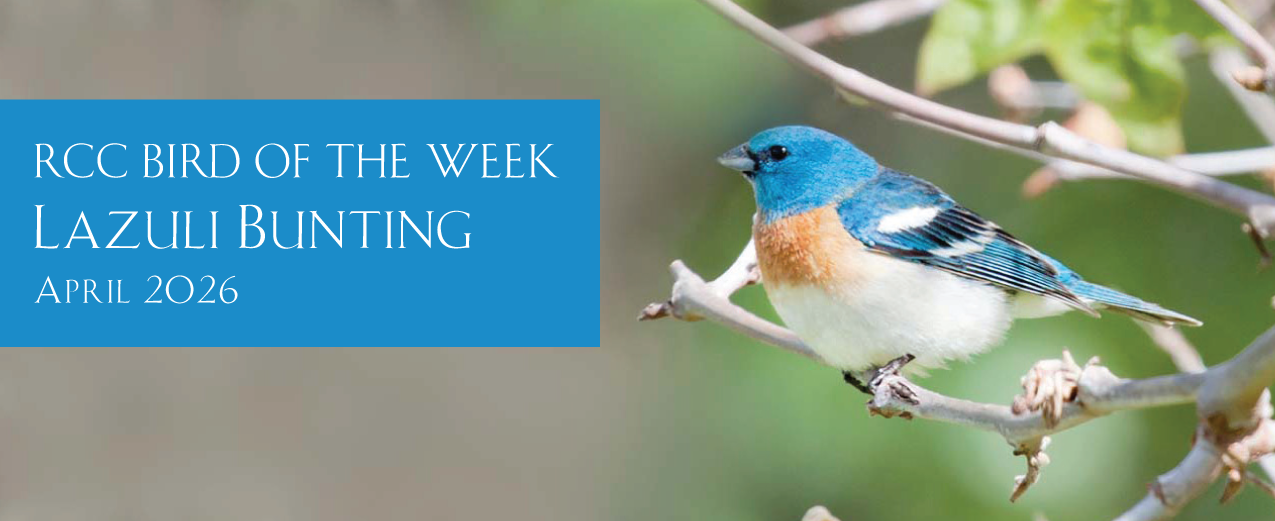
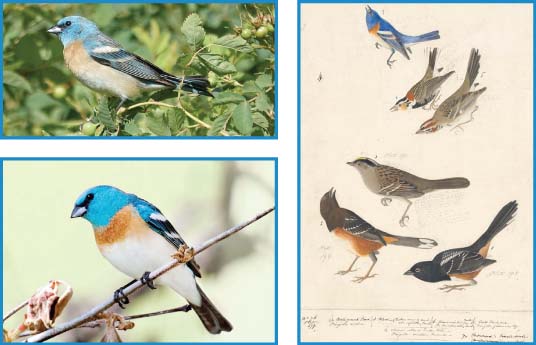
Lazuli Bunting - Ross Feldner Named for the gemstone lapis lazuli, the brilliant cerulean feathers and vibrant orange breast of the male make the Lazuli Bunting a striking sight. In contrast, females are more subtly colored with warm grayish-brown plumage and a pale cinnamon breast. They are fond of insects such as caterpillars, spiders, and beetles, as well as berries and seeds from plants like serviceberry and chickweed. When foraging, Lazuli Buntings glean food from the foliage, hop along the ground, or fly out to catch aerial prey. They will often visit feeders especially those with millet or nyjer seed. Amazingly, no two male Lazuli Buntings sing the same song! Each male develops his own distinct tune, which he uses to attract mates and defend his territory. Once a mate is attracted and paired with, they produce 1 to 2 broods per year. Lazuli Buntings nest in thick shrubs, vines, or low trees, usually 2-4 feet off the ground. The female picks the site and builds the nest, which is an open cup of grass, weeds, bark, and leaves, lined with fine grass, rootlets, and hair. Tent-caterpillar silk is often wrapped around the outside of the nest! Lazuli Buntings prefer habitat that includes open brush and streamside shrubs. They breed in brushy areas with open grassy areas nearby from southern Canada to northern Texas and west to southern California. | |