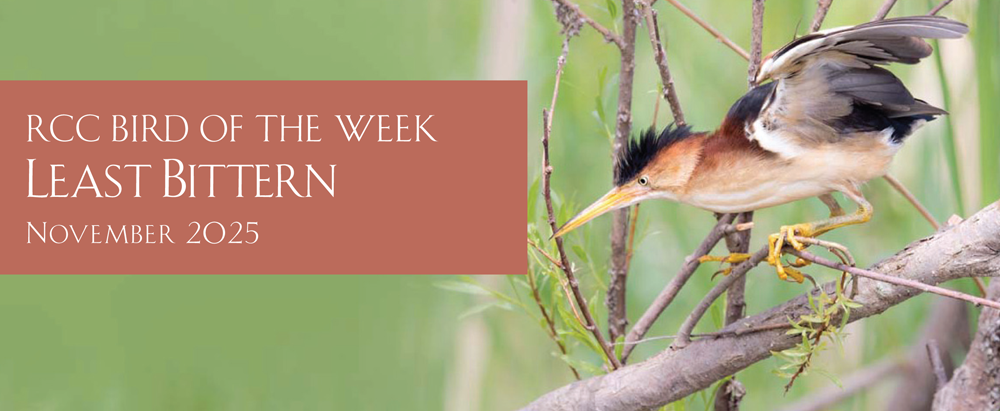
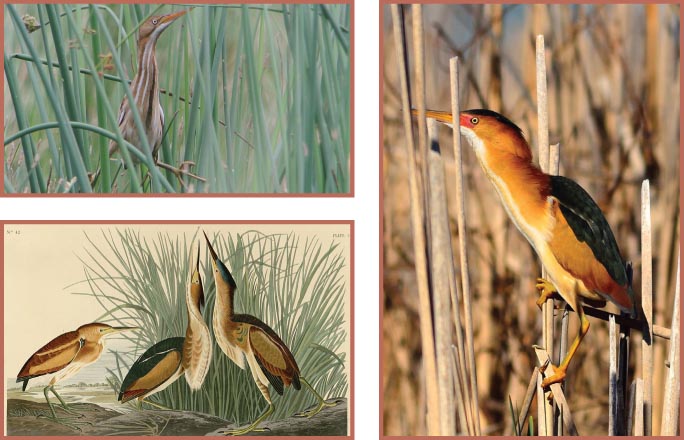
Least Bittern - Ross Feldner This extremely shy bird is the smallest member of the heron family found in America. The Least Bittern is an elusive bird spending much of its time straddling reeds. When alarmed, the least bittern freezes in place with its bill pointing up, turns its front and both eyes toward the source of alarm, and sometimes sways to resemble wind-blown marsh vegetation. This predator-avoidance behavior makes the bittern less vulnerable to many potential predators. Because of its habit of perching among the reeds, the Least Bittern can feed from the surface of water that would be too deep for the wading strategy of other herons. They nest in large marshes with dense vegetation from southern Canada to northern Argentina, building nests from strips of rushes woven together to form a platform and fastened to saw grass growing on the bank of a stream. The nest is well-concealed, usually among cattails and other marsh vegetation. Least Bitterns mainly eat fish, frogs, crustaceans, insects and small mammals, which they capture with quick jabs of their bill while climbing through marsh plants. They also build small foraging platforms at rich feeding sites, catching fast-moving prey that swim by and will use stalks of plants as stepping-stones clutching them in each foot as they step forward. The secretive Least Bittern has been adversely affected by the draining and filling of wetlands. | |