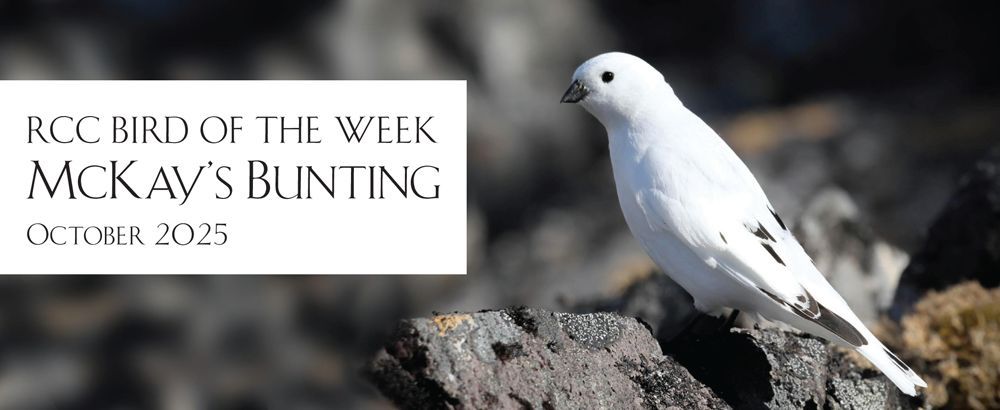
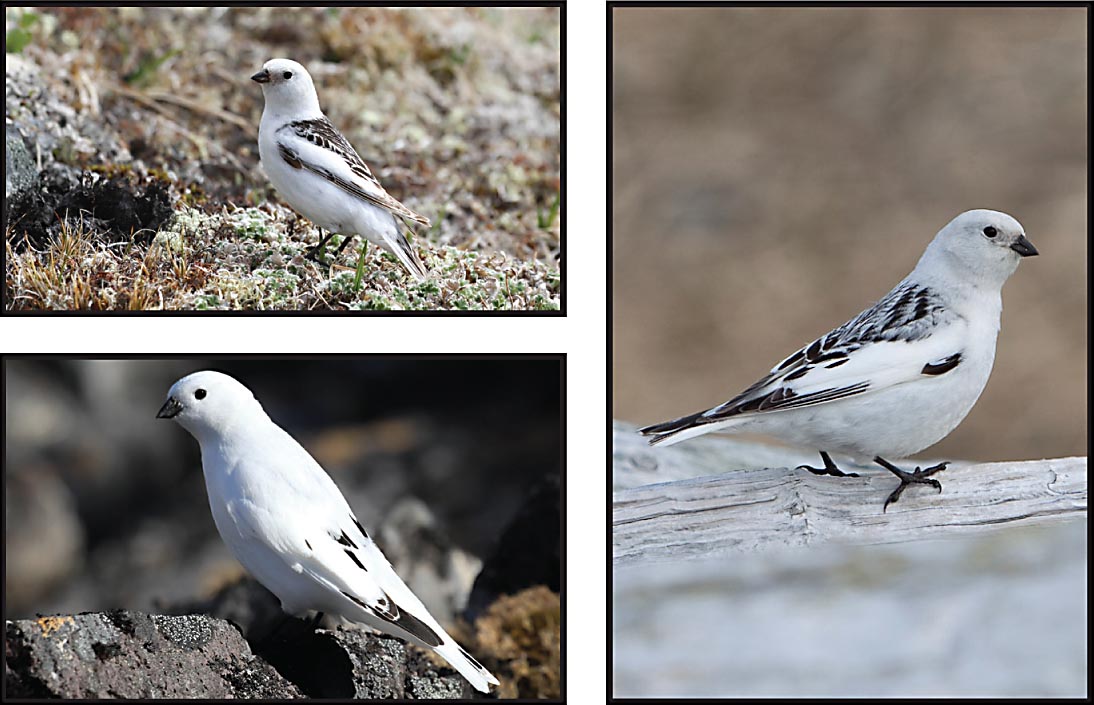
McKay's Bunting - Ross Feldner If you’re up for some high adventure then this is the bird for you. Your best chance to see it on is by traveling to its breeding grounds on remote St. Matthew Island or Hall Island in the bitterly cold Bering Sea. These rare birds are shrouded in mystery and because where they live is so inaccessible there is little known about its habits and status. Similar in color to the Snow Bunting but almost pure white, these tiny birds are members of the Passerine family of perching birds. McKay’s Buntings nest on shingle beaches usually in hollow drift logs or rock crevices and winter on coastal marshes and agricultural fields. Its nest is a shallow cup made up of grasses, lichens, sedges and stems and lined with finer grasses and feathers. Little is known of their feeding habits but they are thought to be similar to the Snow Bunting. Winter diet is mainly seeds from grasses and weeds and during the summer a mixed diet of seeds, flower buds, and insects. According to the US Fish and Wildlife Service, the McKay's Bunting is facing a critical situation. Its population has been steadily declining, raising concerns about its future. Recent surveys from St. Matthew and Hall Island found the global population declined 38% from 2003 to 2018, mostly due to habitat loss, introduced predators like red foxes, weasels and rats, and an increase in extreme weather events. | |