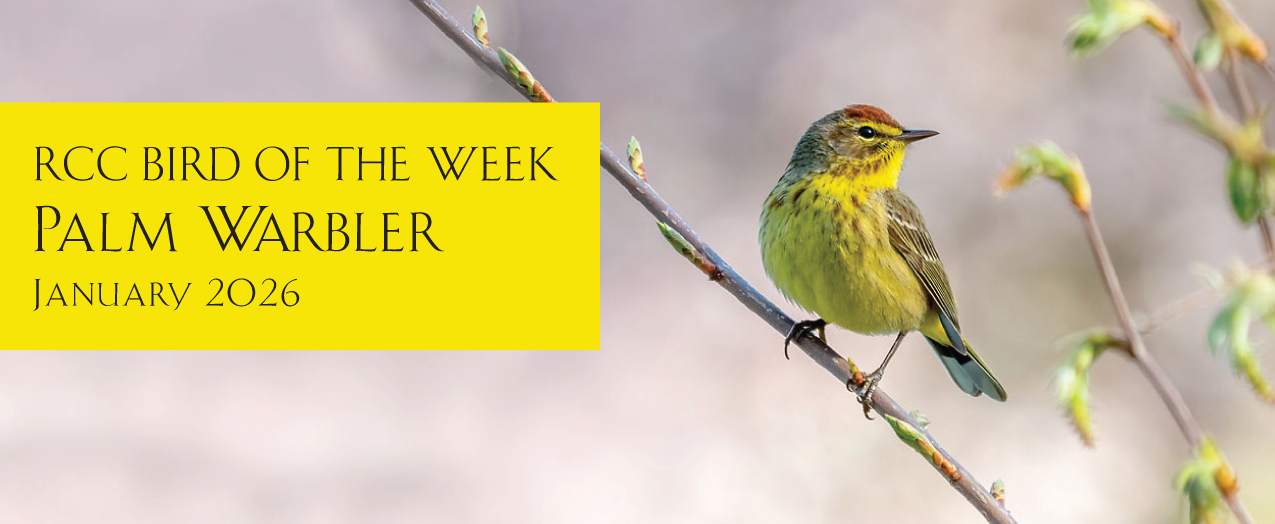
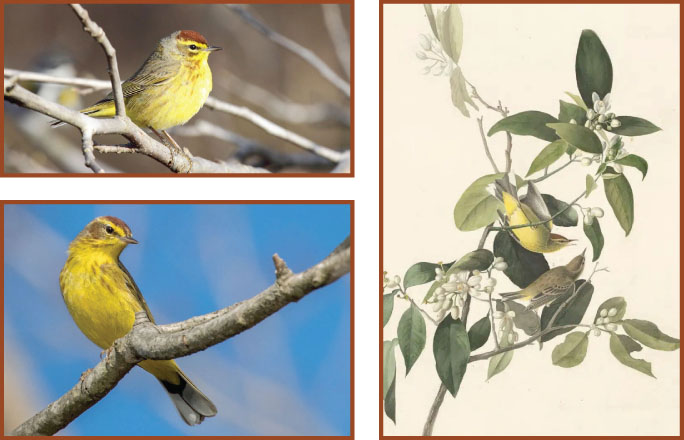
Palm Warbler - Ross Feldner Unlike most warblers, the Palm Warbler prefers to forage down low in thickets or on the ground and is easily recognized by its constant tail bobbing. This neatly patterned warbler has two subspecies that mix where they meet. The Western Palm Warbler which has less yellow and less streaking and the Eastern Palm Warbler which had brownish upper parts and yellow underparts with a bold rufous breast. They are one of the earliest migrants to return to their breeding grounds in the spring, often months before most other warblers. Females build cup-shaped nests out of peat moss and other soft plant materials usually on the surface of bogs, beneath a small conifer. Their nesting habitat is often very remote and difficult to get to, making their nests difficult to locate. Palm Warblers mainly eat insects including mosquitos, flies, ants, bees and spiders by searching among the leaves of shrubs or low trees. They also eat berries, seeds and even nectar. They are often seen in small flocks with Eastern Bluebirds, Chipping Sparrows, Pine Warblers, and other species. Many Palm Warblers spend the winter in Florida near, you guessed it, palm groves! | |