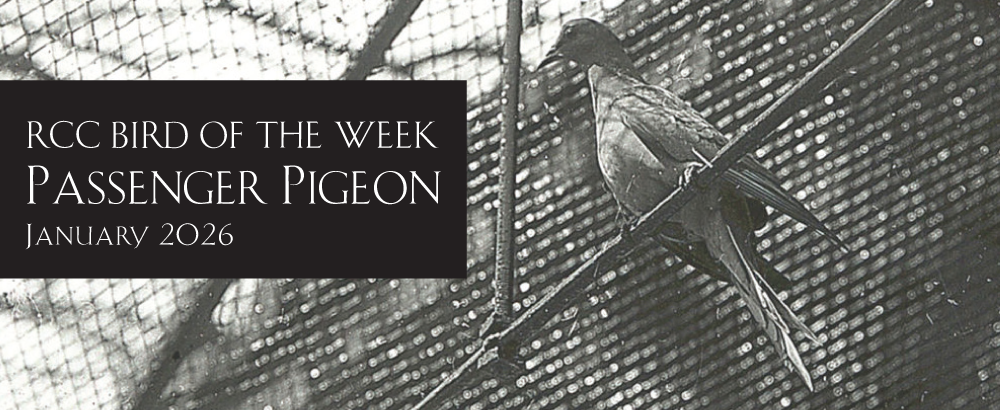
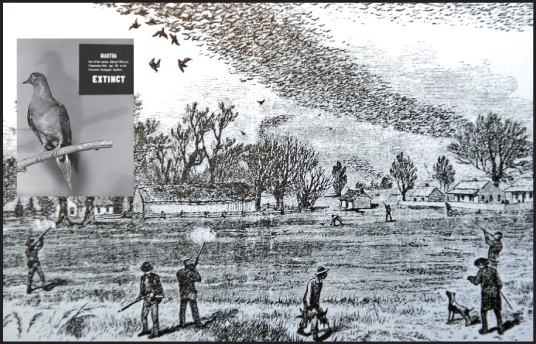
Passenger Pigeon - Ross Feldner The last known living passenger pigeon died at 1 p.m. September 1, 1914, in the Cincinnati Zoological Garden. That bird — named "Martha" — was 29 years old. At one time the North American population numbered as many as five billion birds and comprised 25 to 40 percent of America's total wild bird population! They captivated early residents with their spring and fall migrations. Hunters and market hunters alike pursued them with reckless abandon. The birds were trapped, shot, netted and clubbed; even the young, called "squabs," were knocked from nests with poles, or the trees holding their nests were cut down, and they, too, were collected for market. The largest nesting area ever recorded was in central Wisconsin in 1871. It was 850 square miles with an estimated 136,000,000 pigeons living there. Demand for wild pigeons grew, primarily for food, but also for trapshooting. An improving transportation system provided a faster means to take hunters to the birds and the harvested birds to big city markets. When word spread on the telegraph lines that the pigeons were coming in, market hunters and netters would converge on rookeries. The results were devastating. W. E. Clyde Todd, wrote in his Birds of Western Pennsylvania, "…one is imbued with the sense of the irreparable loss suffered by the naturalists of the country in the passing of the pigeon… The story of its passing is a shameful record of human cruelty, avarice and indifference – a story one wishes had never been told." | |