| | | “In every outthrust headland, in every curving beach,
in every grain of sand there is the story of the earth.”
— Rachel Carson | | | | | | As spring gives way to summer, campuses across the country enter a season of transition. Graduations mark the conclusion of one chapter and the beginning of another, as students carry the lessons, relationships, and commitments formed throughout the academic year into communities, careers, research institutions, and movements for change. While classrooms may grow quieter in the months ahead, the work of environmental leadership continues. This month, the Rachel Carson Council is proud to announce the largest-ever cohort of our National Environmental Leadership Fellowship. Thirty-nine students from colleges and universities across the United States have joined the 2026–2027 fellowship program, representing a growing network of emerging leaders committed to advancing environmental justice, sustainability, conservation, and civic engagement. Their selection reflects both the expanding reach of the RCC Campus Network and the continued determination of students to create change in their communities. 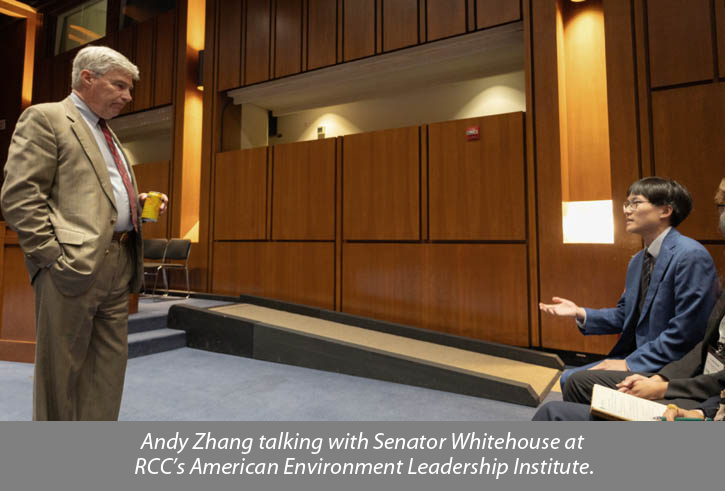 That commitment to leadership is reflected throughout this issue. In our Alumni Spotlight, University of Connecticut student leader Andy Zhang demonstrates how environmental advocacy can be woven into broader conversations about governance, public health, equity, and institutional change. Our Faculty Spotlight highlights Vanderbilt University’s Dr. Hussam Mahmoud, whose recognition as a National Geographic Explorer underscores the critical role of interdisciplinary research in addressing complex environmental challenges such as wildfire resilience. That commitment to leadership is reflected throughout this issue. In our Alumni Spotlight, University of Connecticut student leader Andy Zhang demonstrates how environmental advocacy can be woven into broader conversations about governance, public health, equity, and institutional change. Our Faculty Spotlight highlights Vanderbilt University’s Dr. Hussam Mahmoud, whose recognition as a National Geographic Explorer underscores the critical role of interdisciplinary research in addressing complex environmental challenges such as wildfire resilience.
Across campuses, students and researchers continue to advance innovative solutions to pressing environmental issues. This month’s research features explore efforts to address food insecurity through urban agriculture, develop circular approaches to agricultural waste management, strengthen organizational sustainability through change-management strategies, and confront the growing challenges facing water quality and freshwater resources. Together, these projects remind us that environmental progress is often driven not by a single breakthrough, but by countless acts of problem-solving, collaboration, and persistence. Our Campus Spotlight turns to Louisiana, where the accelerating loss of coastal wetlands offers one of the clearest examples of climate change’s long-term consequences. The Yale School of the Environment is working with communities to confront difficult questions surrounding adaptation, resilience, and managed retreat, Louisiana’s experience serves as both a warning and an opportunity to learn from those already living on the frontlines of environmental change. 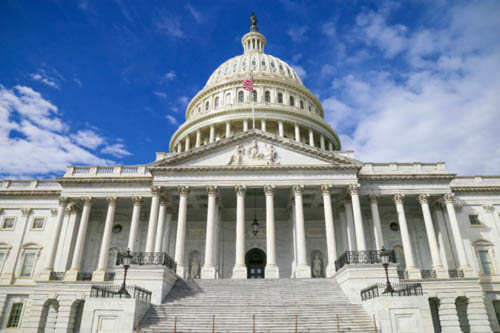 At the same time, the broader landscape of higher education continues to face significant challenges. Across the country, debates surrounding diversity, equity, and inclusion initiatives, academic freedom, faculty governance, and federal oversight are reshaping institutions in real time. From efforts to restrict academic programs and faculty appointments to broader questions about the role of higher education in a democratic society, these developments raise important concerns about the future of inquiry, inclusion, and public scholarship. Universities remain essential spaces for critical thinking, scientific discovery, and civic engagement, making these conversations particularly consequential. At the same time, the broader landscape of higher education continues to face significant challenges. Across the country, debates surrounding diversity, equity, and inclusion initiatives, academic freedom, faculty governance, and federal oversight are reshaping institutions in real time. From efforts to restrict academic programs and faculty appointments to broader questions about the role of higher education in a democratic society, these developments raise important concerns about the future of inquiry, inclusion, and public scholarship. Universities remain essential spaces for critical thinking, scientific discovery, and civic engagement, making these conversations particularly consequential. Yet amid challenges, students continue to lead. This month’s advocacy spotlight follows George Mason University graduate Sophia Colby, whose experience participating in RCC Advocacy Day demonstrates how environmental education can translate directly into public service and policymaking. Likewise, the University of Minnesota’s historic partnership with the Fond du Lac Band of Lake Superior Chippewa reminds us that environmental justice often requires confronting historical injustices while building pathways toward reconciliation and stewardship. In Fellows Speak Out, students invite us into deeply personal reflections on ecology, memory, place, and responsibility. Their essays explore everything from the overlooked lives of cockroaches and wild ponies to submerged communities, coastal ecosystems, food systems, and the landscapes that shape our identities. These stories remind us that environmental work is not only about science and policy. It is also about relationships: between people and place, communities and ecosystems, past and future. 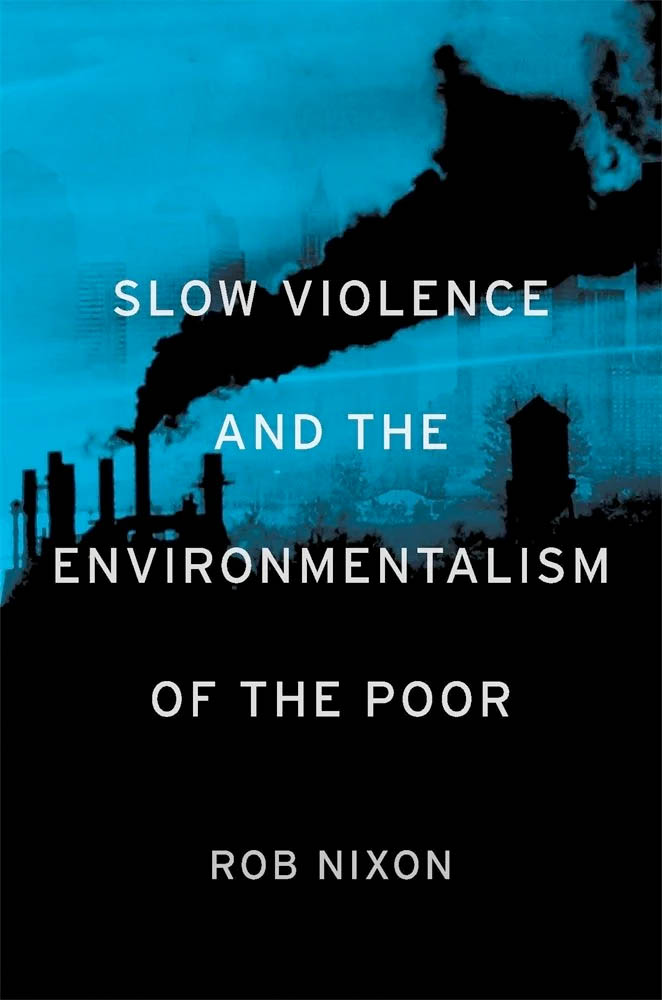 Finally, our Books section features Slow Violence by Rob Nixon, a powerful examination of how environmental harm often unfolds gradually, invisibly, and unequally across communities. Nixon challenges readers to recognize that many of the most significant environmental injustices occur not in moments of spectacle, but through slow-moving processes that accumulate over time. His work offers an important framework for understanding many of the issues highlighted throughout this month’s Dispatch. Finally, our Books section features Slow Violence by Rob Nixon, a powerful examination of how environmental harm often unfolds gradually, invisibly, and unequally across communities. Nixon challenges readers to recognize that many of the most significant environmental injustices occur not in moments of spectacle, but through slow-moving processes that accumulate over time. His work offers an important framework for understanding many of the issues highlighted throughout this month’s Dispatch.
As we move into the summer months, may these stories inspire curiosity, reflection, and action. Whether through research, advocacy, storytelling, community engagement, or simply paying closer attention to the world around us, each of us has a role to play in creating a more just and sustainable future.
Stay informed. Stay engaged. And join us in amplifying these powerful stories from campuses nationwide. | | | | | | 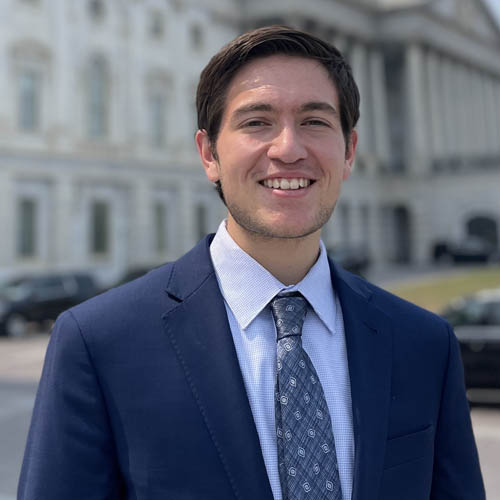 Diego Tovar — Director of Campus and Civic Engagement Diego Tovar — Director of Campus and Civic Engagement
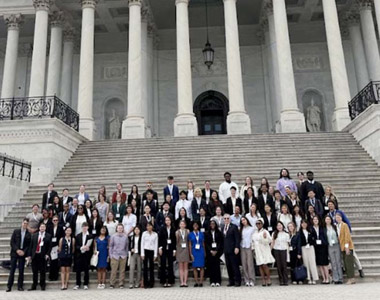
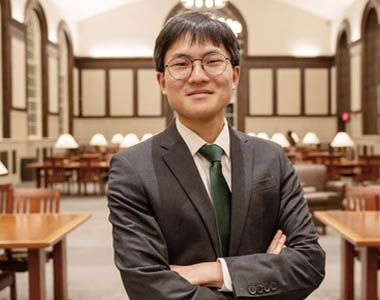
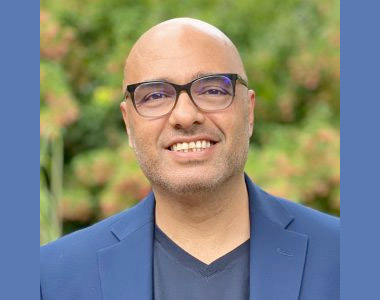
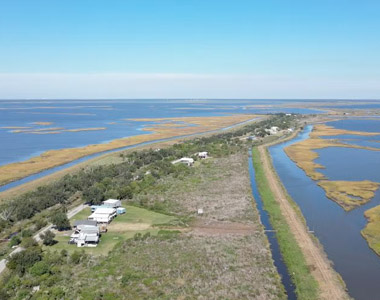
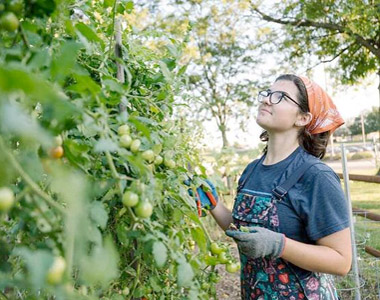
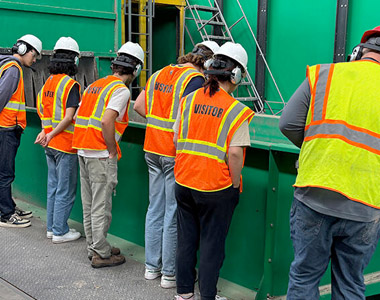
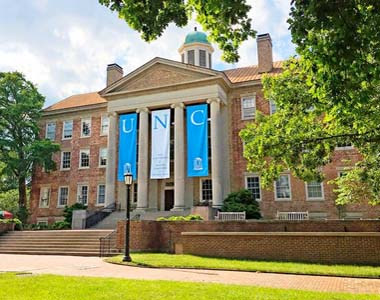
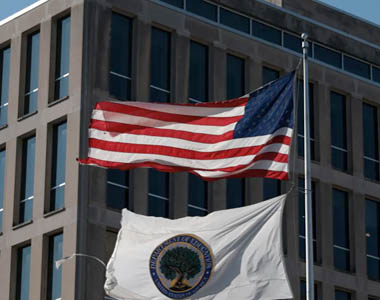
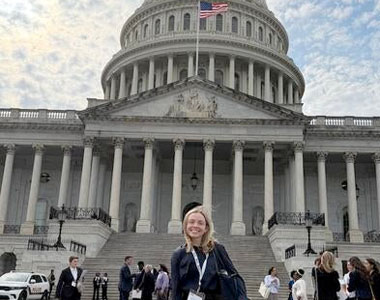
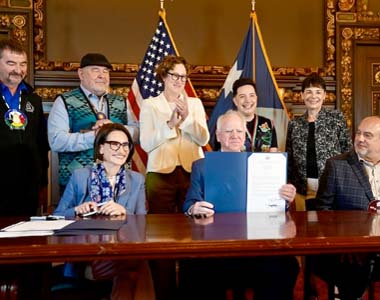
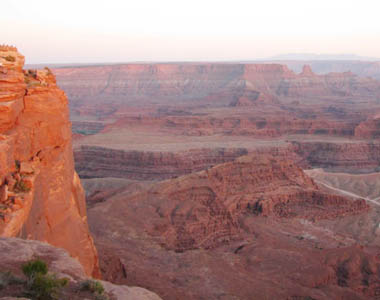
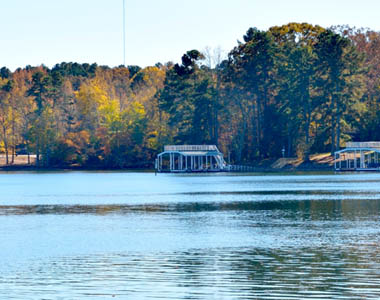
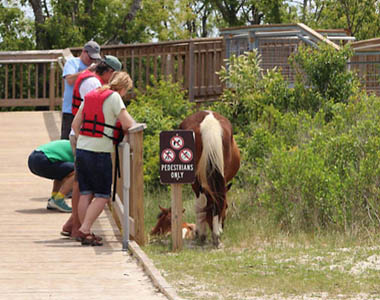
Diego Tovar, Director of Campus and Civic Engagement, holds his master’s in Global Environmental Policy from American University and an undergraduate degree as a Udall Scholar in Ecosystem Science and Sustainability with a minor in Political Communication from Colorado State University. Diego has worked for the White House Council on Environmental Quality, the Environmental Protection Agency, the U.S. House of Representatives, and the Navajo Nation Washington Office focusing on climate justice and climate adaptation. | | | | | | Rachel Carson Council Expands National Environmental Leadership Fellowship with Largest-Ever Cohort Thirty-nine students from across the United States have joined the Rachel Carson Council’s National Environmental Leadership Fellowship for a year-long fellowship supporting environmental action in their communities. The Rachel Carson Council (RCC) today announced the selection of its 2026–2027 cohort of National Environmental Leadership Fellows, welcoming 39 students from campuses across the United States. | | | | | | | | Andy Zhang Redefines Campus and Climate Blueprints This is the next installment in a Q&A series highlighting the accomplishments of recent RCC Fellowship alumni. Andy, a graduating senior and 2026-2026 Student Body President at the University of Connecticut, leads a 120+ member organization with a $2.4 million annual budget. He brings a systems approach to environmental advocacy—one that recognizes climate justice as inseparable from public health, equity, and economic resilience. | | | | | | | | VSEC Director Hussam Mahmoud Receives Distinguished National Geographic Explorer Title Hussam Mahmoud, director of the Vanderbilt Center for Sustainability, Energy, and Climate, has been named a National Geographic Explorer for an innovative study aimed at providing a more holistic framework for wildfire preparedness. National Geographic Explorers are groundbreaking scientists, conservationists, educators, and storytellers who receive funding and support from the National Geographic Society to illuminate and protect the planet through research, exploration, and storytelling. | | | | | | | | Louisiana’s Shrinking Coast Offers a Narrowing Window for Managed Retreat Louisiana is losing its coast faster than anywhere else in the U.S. What happens next could become a blueprint — or a warning — for vulnerable communities around the globe. Louisiana's coast is disappearing, and its population has already started to retreat. The shoreline, the most exposed in the world, is projected to move more than 30 miles inland of New Orleans and by 2070, it will lose about 75% of its remaining wetlands. Eventually, all of coastal Louisiana will become uninhabitable, research has showed. | | | | | | | | Where Water Holds Memory: Dr. Ryan Emanuel on Indigenous Environmental Justice in Eastern North Carolina Coastal Carolina Riverwatch is honored to welcome Dr. Ryan E. Emanuel, author of On the Swamp: Fighting for Indigenous Environmental Justice, for a special evening lecture and book signing on Thursday, July 23, from 6:00 to 7:30 p.m. at Promise Land Market in Morehead City. Ticket: $20 donation. Space is limited. Tickets are nonrefundable. Books will be available for purchase at the event, and guests are welcome to bring their own copy of On the Swamp to have signed. | | | | | | | | How One College Addresses Food Insecurity Through Urban Agriculture When Zac Kissell was searching for a summer job last March, he didn’t expect it would alter his career goals. The rising third-year mechanical engineering technology student at the University of Dayton stumbled upon a posting to work at Flyer Farm, the university’s student-run urban agriculture initiative. More than a year later, Kissell said the experience has inspired him to explore careers that combine engineering and the environment, in the hopes of making systems more streamlined and sustainable. | | | | | | | | Making Sustainability Stick: Yale Students Use Campus as a Change-management Case Study On a sunny day last September, students in Yale’s “Sustainable Implementation” course traded Sage Hall for a humming material recovery facility in Berlin, Connecticut, for an up-close lesson on what change management looks like off the page. As mixed recycling from Yale and dozens of other customers sped along conveyer belts, plant managers explained how the high-tech system sorts waste into refrigerator-size bales of paper, plastic, and metal for resale and remanufacturing. | | | | | | | | Manure Marketplace in the Making: NC State’s Food Animal Initiative Developing New Tool Using feedback from farmers across the state, researchers with NC State University’s Food Animal Initiative are developing a new tool to help connect livestock and poultry producers with farmers who can use manure as a source of organic fertilizer. Stephanie Kulesza, FAI’s platform director for integrated, sustainable food animal systems, is leading the project, which began in 2025 with support through an FAI talent development grant. | | | | | | | | Protecting Our Most Vital Resource: Clean Water Symposium Focuses on Long Island’s Future Hard clam populations that once supported one of New York’s most productive fisheries have declined by nearly 99 percent. “I’ve watched in my lifetime the demise of the Peconic Bay scallop fishery, harmful algal blooms increase, and now in the second legislative district we have not one but two situations with emerging contaminants, PFAS, among others, both affecting our surface waters and our groundwaters,” said Suffolk County Legislator Ann Welker. | | | | | | | | UNC Board Rejects Hire of Women and Gender Studies Professor The vote against Kiran Asher’s appointment is the second high-profile rejection of a scholar who was otherwise approved by faculty and administrators. The University of North Carolina at Chapel Hill Board of Trustees on Wednesday voted to reject the appointment of a women’s studies professor whose hire had been approved by faculty and administrators. The decision is the latest example of the UNC trustees using what is typically a rubber-stamp vote to deny the hire of a green-lighted faculty candidate. | | | | | | | | Texas’s Higher Ed Overseer Dismisses Dozens of Complaints Texas’s new higher ed ombudsman, a position Republicans created to investigate public colleges and universities, has been accepting complaints for roughly five months now. But his office says that, out of the 69 complaints it received through June 11, it has only opened one probe. It closed 67 other complaints without investigations, while the most recent complaint remains open “pending response from complainant with additional information.” | | | | | | | | | | Trump’s UCLA Demand: $1.2B Fine and Limits on Trans, Foreign Student Freedoms A faculty lawsuit forced the university to release a 27-page draft “resolution agreement,” which would also require UCLA and affiliated hospitals to stop “performing hormonal interventions and ‘transgender’ surgeries” on anyone under 18. The details of the Trump administration’s demands on the University of California, Los Angeles—in addition to the previously reported $1.2 billion payout the federal government asked for—have finally been revealed. | | | | | | | | | | ‘Vulnerable’ Medical Schools Caught in MAGA’s Crosshairs Republicans are scrutinizing “woke” medical schools. But experts warn that bowing to political pressure could hurt the future of public health, research and higher education. When the Department of Justice demanded years of admissions data to identify possible racial discrimination at three top medical schools in late March, one official called the federal government’s latest efforts to dismantle diversity, equity and inclusion in higher education “another day in paradise.” | | | | | | | | The Blueprint for Banning DEI: How Texas Is Using Department Consolidation to Reshape Higher Ed Across the United States, the rapid shift in equity work and initiatives has had a substantial impact on universities' functions and operations. Amid backlash and the rollout of anti-DEI efforts, higher education stakeholders have seen state and federal governments push to neutralize “gender and race ideologies.” | | | | | | | | Beyond Belonging: Do Students Feel They Matter on Campus? Most students say there is someone on campus who knows them in a meaningful way, but a significant minority feel invisible. A majority of students say there is at least someone at their institution who knows them in a meaningful way. But a quarter aren’t sure if anyone really knows them or say that they feel “invisible,” according to a new Student Voice flash survey assessing students’ experiences of connection beyond more traditional notions of belonging. | | | | | | | | Here’s the Latest on the Education Department’s Interagency Agreements The U.S. Department of Education now has 14 interagency agreements with six other federal agencies, continuing the Trump administration’s efforts to dismantle the agency and give states more authority on fiscal and policy decisions. The four newest agreements, announced June 16, move some special education programming to the U.S. Department of Health and Human Services and certain civil rights, student privacy and desegregation activities to the U.S. Department of Justice. | | | | | | | | From George Mason to Capitol Hill: How Environmental Policy Training Shaped One Graduate’s Path During her final semester at George Mason University, Sophia Colby put her environmental policy training into action. Colby traveled to Capitol Hill as part of the Rachel Carson Council’s National Environmental Advocacy Day, where she met with federal lawmakers to discuss climate legislation and community resilience. For Colby, BA Environmental and Sustainability Studies ’26, the experience was a direct extension of the analytical and communication skills she developed at George Mason. | | | | | | | | University of Minnesota, Fond du Lac Band Move Forward Together on Historic Cloquet Forestry Center Land Return In a milestone moment for collaboration and reconciliation, the University of Minnesota and the Fond du Lac Band of Lake Superior Chippewa are moving forward with the return of the Cloquet Forestry Center land, wholly located within the Fond du Lac Reservation. The effort is enabled by provisions in the state bonding bill approved by the Minnesota Legislature and signed into law by Governor Walz in a ceremony this morning. | | | | | | | | Peggy Shepard: Aligning Community and Environmental Justice “The health and vitality of the earth begins at the community level - every community - and we must be vigilant to ensure that environmental justice is dispensed fairly and vigorously across the diverse landscape of America.” - Peggy Shepard Known as the Godmother of the Environmental Justice Movement, Peggy Shepard is a national leader advancing environmental justice and policy solutions in urban communities. | | | | | | | | Redrock, White, and Blue? An elegy for dying deserts and a lament of patriotism that excludes the land The desert heat makes sleep hard but dreams easy. You need to live half in a dream for this landscape to make sense, to explain expanses of sage that are both bushes and a wash of green on a sea of red. The redrock dreamscape is a hypnotic suite of pastels – lavender, mauve, rose, slate, indigo – always changing against the shifting sun, always impossibly in the distance until you're suddenly amongst them. | | | | | | | | Our Forgotten Love for Cockroaches “The more clearly we can focus on the wonders and realities of the universe around us, the less taste we shall have for destruction.” —Rachel Carson (Sense of Wonder, 1965) Sometimes, I wonder how many cockroaches people kill per day. It must be thousands to millions, because I witness multiple of them every day. I’ve seen them get stepped on, squished, swatted, screamed at, and then forgotten; their flattened bodies swept into the trash. | | | | | | | | The Answers We Find Carved into the Blue Ridge Parkway Cold. Your eyes open to frigid air curling around your limbs. A breeze ripples the tent’s fly-cover. One fist, two fists ... no, more like one-and-a-half fists past sunrise. You muster up the courage to venture out of your sleeping bag and into this strange world. Here, numbers are meaningless. Time is an abstract concept, a gentle reminder to find a water-filtering site before sunset and a circular repetition of dusk and dawn that will continue long after our footsteps fade. Watches and phones are nowhere to be found. | | | | | | | | Flooded Histories: The Submerged History of Lake Lanier Lake Lanier, the perfect recreational spot to escape the landlocked metro Atlanta area. Nearly 14 million visitors a year frequent the over 90 parks for swimming, fishing, boating, and hiking. The lake is marketed as an idyllic venue of natural beauty, outfitted with amenities for all ages. However, Lake Lanier also has a reputation for being one of the most dangerous lakes in the United States, with over 700 deaths in the past 70 years. | | | | | | | | Unclean Isn’t the Same As Dirty I learned quickly not to search for familiar sights on any “Most Beautiful Beaches in the United States” list I came across growing up. For us Texans, the festivities surrounding “the beach,” the road trips, cookouts, and fishing charters, are much more appealing than the beach itself. The waves breaking on our shores are brown more often than they are blue. Mud squelches beneath our toes more often than sand. The horizon is broken up not by candy-striped lighthouses but by the tangled, industrial silhouettes of petrochemical complexes. | | | | | | | | Playing with Ponies: Human Wildlife Interactions on Assateague Island Beach days on Assateague Island hold treasured memories for over three million people who visit the national seashore’s coastline and estuarine waters every year, myself included. Growing up just a two-hour drive away from Assateague, I have always admired the intricate ecosystems that comprise the barrier island and its inhabitants. The best-known long-term resident species on Assateague is the wild pony, which roams the sandy beaches, saltwater marshes, and maritime forests. | | | | | | | | Fish as Friends and Food This is Lily. At 11-years-old, octopuses are her favorite animals. She refuses to eat fish or shellfish, as those are the primary food sources for octopuses, and she doesn’t want to deprive them of their survival needs. As a child, the thought of the death of even one octopus was deeply upsetting, but as she (I) grew older, those perspectives changed. In middle school, when looking for a charity to fundraise for, I was disappointed to learn that there were few charities simply dedicated to the appreciation and welfare of octopuses. | | | | | | | | Broken Cycles: Food, Soil, and Us On a quest to secure ingredients for dinner, I walked into the grocery store near my house. I was immediately welcomed by a blast of air-conditioning and shelves filled with products from around the world: spinach from California, mangoes from Thailand, and Chinese la mian made in Malaysia. Each of these foods was grown or produced in a different part of the world, and each had traveled thousands of miles to arrive at my local grocery store, packaged, labeled, and neatly lined up on the shelves | | | | | | | | Rob Nixon (Harvard University Press, 2013) Centered around themes of environmental justice, sacrifice zones, and health, Rob Nixon urges us to critically rethink our conceptions of violence. Rather than envisioning violence as purely “spectacle-driven” or “flashy”, Nixon explains that violence is often invisible, gradual, and unable to be rendered purely legible with Western-centric definitions of the word. Slow Violence is profound in encouraging readers to envision violence as encompassing even the most seemingly inconspicuous processes.
Nixon also brings in perspectives from the Global South, shedding a crucial light on historically underrepresented areas that experience the first and worst impacts of the climate crisis by contrasting them with groundbreaking “spectacles” of violence in the Global North, such as the 9/11 terrorist attacks that sparked immediate global mobilization and outrage. By juxtaposing the social capital and ensuing mobility from violence in such different areas, Nixon implores us to look beyond state-manufactured and conventional definitions of violence. The climate crisis is the fundamental representation of Nixon’s “slow violence”. Nixon argues that gradual, climate-inflicted violence — rising sea levels that affect crop yields and livelihoods, the inability to access clean drinking water or to breathe clean air — is inherently violent, and should garner just as much mobilization and activism as they reflect the deeper, structural societal issues. Purchase Here | | | | | | RCC prides itself on its National Campus Network of more than 90 colleges and universities. We are working to engage faculty members, students, and administrators in our efforts for a more just and sustainable world. With our growing fellowship program, our presence on campuses across the country has never been greater. Contact RCC today to bring our staff to your campus for lectures, workshops, or meetings to help find the best ways to engage your faculty and students in the efforts against climate change, environmental justice, and the work of the Rachel Carson Council. Campus Visits with RCC President, Dr. Robert K. Musil 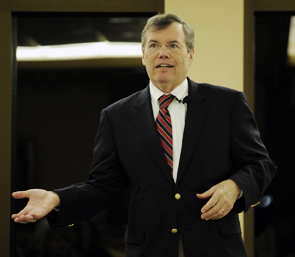 RCC President & CEO, Dr. Robert K. Musil, a national leader in climate change, environmental justice and health is available to book for in-person campus speaking events! Musil has been called “informative, challenging and inspirational all at once.” He is “motivational” with “intellectual depth” and “extraordinary impact.” RCC President & CEO, Dr. Robert K. Musil, a national leader in climate change, environmental justice and health is available to book for in-person campus speaking events! Musil has been called “informative, challenging and inspirational all at once.” He is “motivational” with “intellectual depth” and “extraordinary impact.”
Dr. Musil offers compelling campus lectures and visits involving classes, meetings with campus and community groups, consultations with faculty and administrators, or for Earth Day, Commencement, and other special events. Stays range from one to three days. Reduced fees are in place for 2026-2027 and can be designed to meet reduced budgets. To arrange a campus visit with Dr. Musil, contact the RCC President’s Office at [email protected] The RCC also offers talks, classes, and workshops on student engagement, activism, sustainability, and the RCC Fellowship program with: Director of Communications, Sydney O'Shaughnessy; Director of Campus and Civic Engagement, Diego Tovar; and Director of Policy and Strategic Development, Joy Reeves. To arrange, contact Director of Campus and Civic Engagement, Diego Tovar. | | | | | | The June issue of RCC's Campus Dispatch was produced by Ross Feldner | | | |  Sign Up Here to Receive the RCC E-News and Other RCC Newsletters, Information and Alerts. Sign Up Here to Receive the RCC E-News and Other RCC Newsletters, Information and Alerts. | | | | | | | | | | | |