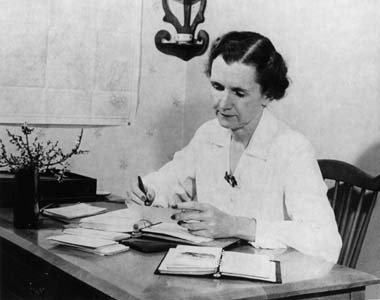
| | | “It is not half so important to know as to feel.” — Rachel Carson, The Sense of Wonder (1965) | | | | | | Dear RCC Supporter, October settles across college campuses in a flourish of red and gold, as the bustle of a new academic year gives way to deeper conversations, fresh discoveries, and the steady work of turning ideas into action. Beneath the changing leaves, students and faculty are confronting questions that extend far beyond the classroom: How do we protect the independence of higher education? How can research respond to the environmental challenges facing our communities? And how can the next generation find its voice in shaping a more just and sustainable future? This month’s Campus Dispatch reveals that even amid uncertainty, campuses remain places of remarkable creativity, resilience, and possibility. 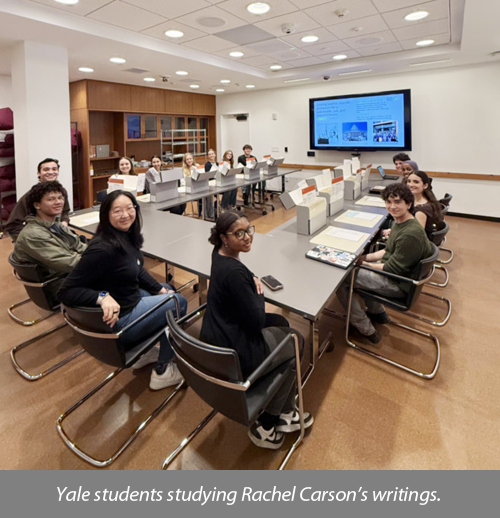 Yet the challenges facing higher education continue to deepen. Democratic lawmakers have accused the Department of Education of withholding approximately $630 million across 35 grant programs through changes to how multiyear funding is distributed. Meanwhile, a proposed $70,000 fee for international students participating in Optional Practical Training has raised new questions about access to educational and professional opportunities in the United States. Universities also face uncertainty over proposed changes to tax-exempt status tied to campus diversity programs.
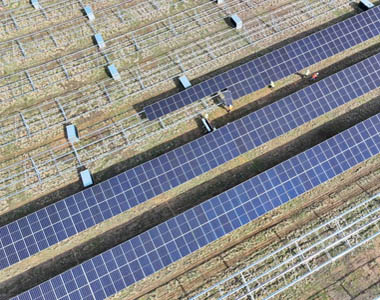
And yet, across the Rachel Carson Council Campus Network, environmental leadership continues to flourish. At Catawba College, student Environmental Stewards guided community members through the Fred Stanback Jr. Ecological Preserve during Rowan County Creek Week, connecting visitors with the wonders of local wetlands. Clark University celebrated the launch of its School of Climate, Environment, and Society with a symbolic tree planting, while Duke University welcomed a new chapter for Sarah P. Duke Gardens with the appointment of Grace Elton as its next executive director. In Campus Research, universities are translating scientific inquiry into solutions for pressing environmental challenges. The University of North Carolina at Chapel Hill celebrates 25 years of immersive environmental field education, while Middlebury College joins a major research network investigating PFAS contamination in groundwater and soil. Elon University has supported the development of a new solar energy facility in Kentucky capable of generating the equivalent of enough electricity to power more than 20,000 homes annually. At North Carolina State University, a research partnership is helping restore safe drinking water to families affected by Hurricane Helene. Meanwhile, University of Michigan experts examine the consequences of removing federal limits on power plant pollution, reminding us of the essential relationship between environmental research, public health, and policy. 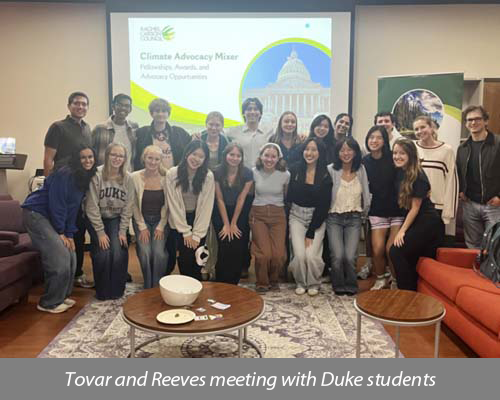 This October also marks an especially active period for the Rachel Carson Council Campus Network, as RCC leadership traveled across the country to engage students and faculty in environmental advocacy, policy, and storytelling. At the University of Virginia, RCC President Dr. Robert K. Musil returned to lecture on sustainability and encourage students to participate in RCC’s national storytelling competition. At Pomona and Pitzer Colleges, Diego Tovar led conversations that explored environmental justice, feminism, Indigenous sovereignty, and student activism. At the University of Maryland, Diego Tovar and Joy Reeves challenged students to imagine environmental futures through comics, science fiction, and creative storytelling. Musil also visited East Carolina University, where coastal studies and water quality shaped discussions, while Tovar traveled to Yale University for workshops and conversations connecting Rachel Carson’s enduring sense of wonder with the practical work of environmental advocacy. Tovar and Reeves also went to Duke University to build lasting connections with fellow alumni and foster new student connections. That spirit of collaboration extended to Baltimore, where RCC participated in the 2026 Association for the Advancement of Sustainability in Higher Education (AASHE) Conference. Bringing together sustainability leaders from colleges and universities nationwide, the gathering offered opportunities to strengthen partnerships, exchange ideas, and demonstrate how education can become a foundation for meaningful environmental action. 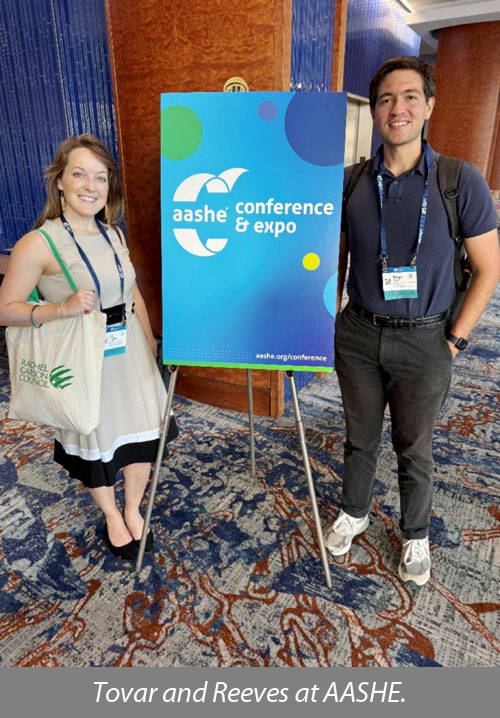 The next generation of environmental leaders is already putting those lessons into practice. This month’s RCC Alumni Spotlight features Josette Chun of Middlebury College, whose work in conservation and community building reflects the lasting influence of the National Environmental Leadership Fellowship.
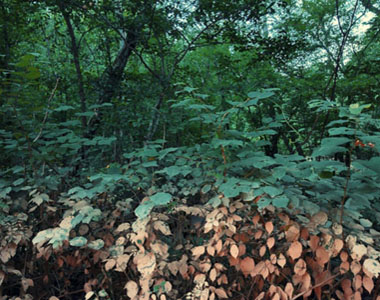
Our RCC Fellows Speak Out section brings that storytelling tradition vividly to life. This month’s writers invite us beneath the waves in “Seeing as the Urchin,” into Alaska’s endless summer light in “Summer Solstice Surprises,” and along the shores of Cheat Lake in “Acid to Alive.” Other essays confront environmental injustice at an abandoned waste incineration facility, examine the complicated relationship between Appalachian communities and the land, and explore the consequences of mining in a Swedish town. From kudzu-covered landscapes and hurricane-battered coastlines to a hidden wetland in the West Texas desert, these reflections reveal how environmental understanding begins with observation, personal experience, and a willingness to question the world around us.
Finally, our Books section turns to Paul Kingsnorth’s Against the Machine: On the Unmaking of Humanity, a provocative examination of technology’s growing influence over modern life. Through reflections on culture, self-reliance, and the relationship between humanity and technological progress, Kingsnorth challenges readers to reconsider what it means to remain connected to ourselves, our communities, and the natural world. As October draws to a close, the stories in this month’s Campus Dispatch offer a reminder that environmental progress rarely begins with grand gestures alone. It begins with students exploring a wetland, researchers restoring clean water, writers finding meaning in overlooked landscapes, and communities gathering to imagine a different future. At a time when the independence of higher education and the health of our planet face significant challenges, the curiosity, courage, and creativity emerging from campuses nationwide remain essential. Rachel Carson understood that wonder and action are not separate pursuits, but deeply connected expressions of our responsibility to the living world. Stay informed. Stay engaged. And join us in amplifying these powerful stories from campuses nationwide. | | | | | | 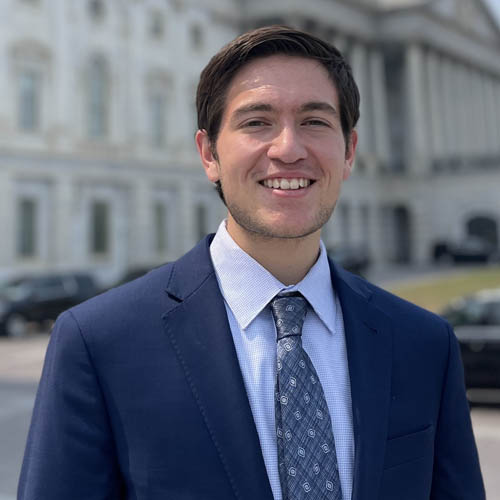 Diego Tovar — Senior Director of Campus and Civic Engagement
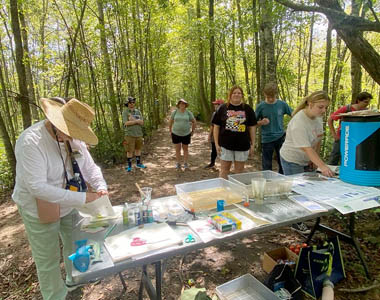
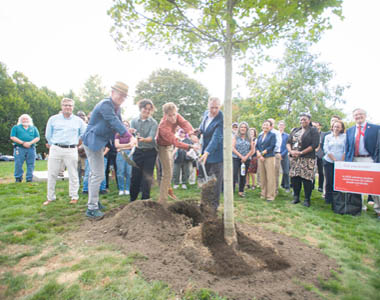
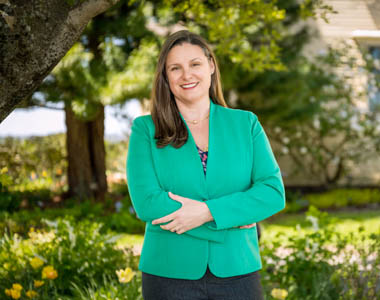
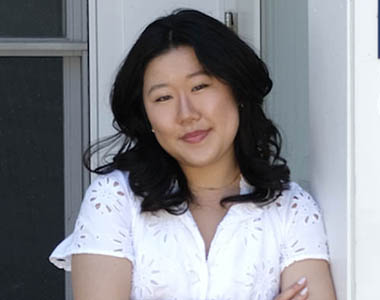
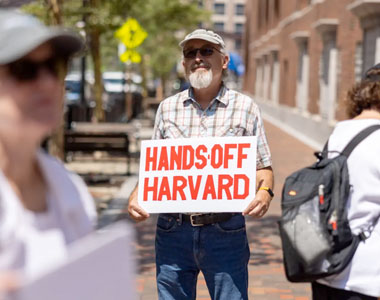
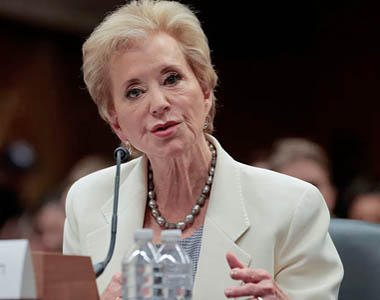
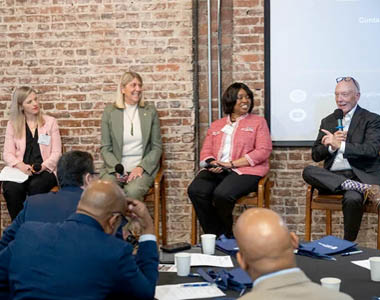
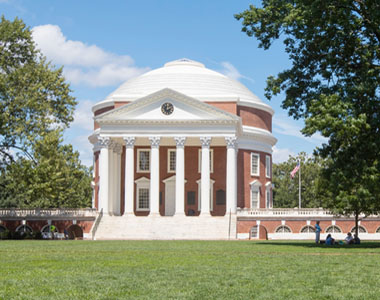
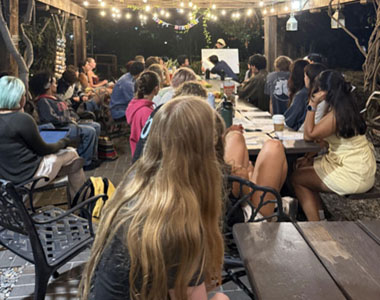
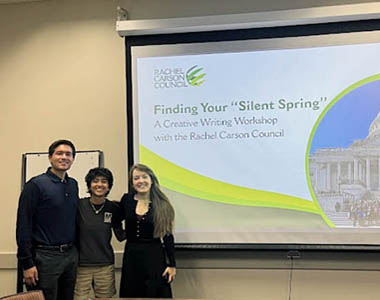
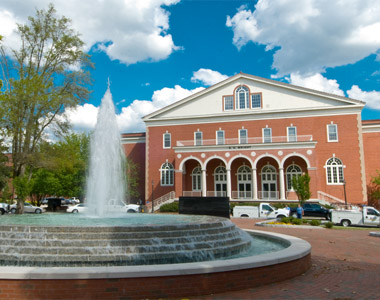
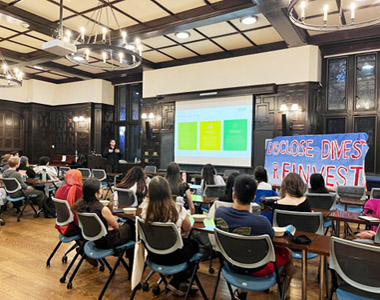
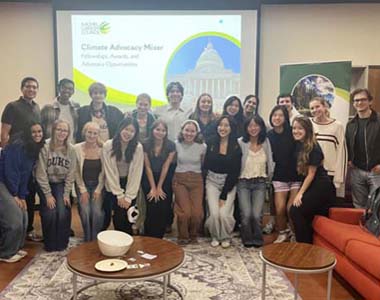
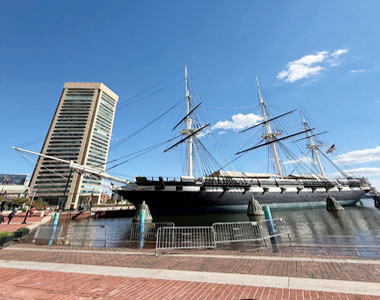
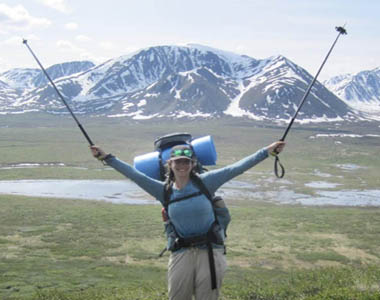
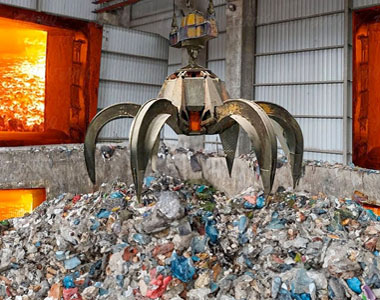
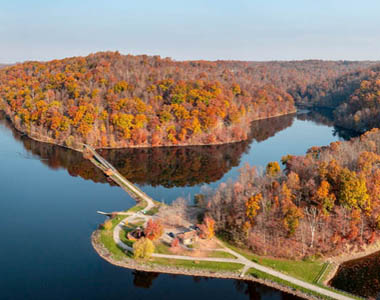
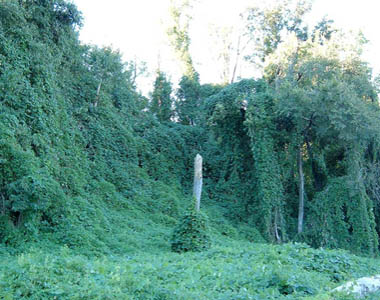
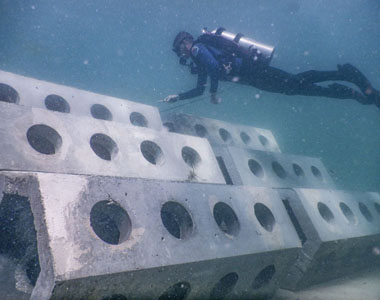
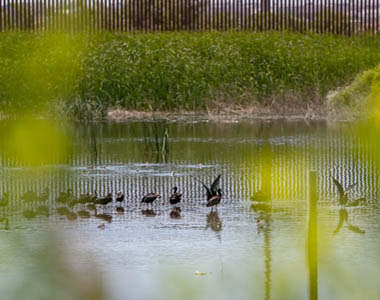
Diego Tovar, Director of Campus and Civic Engagement, holds his master’s in Global Environmental Policy from American University and an undergraduate degree as a Udall Scholar in Ecosystem Science and Sustainability with a minor in Political Communication from Colorado State University. Diego has worked for the White House Council on Environmental Quality, the Environmental Protection Agency, the U.S. House of Representatives, and the Navajo Nation Washington Office focusing on climate justice and climate adaptation. | | | | | | Catawba College Students Lead Creek Week Nature Investigation at Ecological Preserve On Sunday, Sept. 13, 2026, Catawba College joined Rowan County Creek Week by inviting the community to explore the Fred Stanback Jr. Ecological Preserve. There, participants were guided along the preserve’s wetland trails to a variety of fun-filled stations, each led by an Environmental Steward eager to showcase the natural wonders found on site. | | | | | | | | ‘We need to generate the energy that leads to more optimism, hope, and action’ With two shovelfuls of dirt applied to the base of a red maple that now grows beside the Shaich Family Alumni and Student Engagement Center, Clark University on Monday signaled its enduring commitment to confront the most pernicious threats to the health of the planet. The tree-planting ceremony was part of a daylong series of events to celebrate the launch of the School of Climate, Environment, and Society. | | | | | | | | Grace Elton Named Next Executive Director of Sarah P. Duke Gardens Duke University has named Grace Elton as the next executive director of Sarah P. Duke Gardens, effective Jan. 1, 2027. Elton will succeed Bill LeFevre, who is retiring after 19 years. Elton joins Duke Gardens from New England Botanic Garden at Tower Hill in Boylston, Mass., where she has served as CEO for nine years. During her tenure, she grew the garden’s annual budget by 78%, visitation by 81% and membership by 47%, while leading a more than $31 million comprehensive capital campaign. | | | | | | | | Josette Chun Builds Community Through Conservation This is the next installment in a Q&A series highlighting the accomplishments of recent RCC Fellowship alumni. The series explores where former RCC Fellows are today and how their time with the Rachel Carson Council influenced their career paths. Josette Chun, a senior at Middlebury College, held the RCC National Environmental Leadership Fellowship during the 2025-2026 academic year. We sat down with her to discuss how her work has evolved since holding these fellowships one year ago. | | | | | | | | Carolina Marks 25 Years of Environmental Field Education This year marks the 25th anniversary of Carolina’s field site program. Launched in 2001 through a partnership of Carolina’s Study Abroad Office, the environment, ecology and energy program and the UNC Institute for the Environment, the initiative created three new field sites in North Carolina and abroad. Students spend a semester immersed in environmentally significant locations where they learn and work in the environments they study in the classroom. | | | | | | | | Middlebury Awarded $2.1 Million NSF Grant to Study PFAS The $7.9 million grant will establish the PFAS Environmental Research Network (PERN), bringing together researchers, educators, and students from Middlebury, Bennington College, the University of Vermont, and Landmark College, along with state agencies, Community College of Vermont, and other partners. The network will investigate PFAS contamination in groundwater and soil and its potential health risks for local communities. | | | | | | | | Solar Energy Center Begins Operations With Support From Elon University A subsidiary of NextEra Energy Resources, LLC developed the Sebree Solar Energy Center in Henderson County, Kentucky; the project became operational on August 7, 2026. The 150-megawatt solar facility will help meet the region’s growing electricity demand, generating the equivalent of enough energy annually to power more than 20,000 homes. Sebree Solar II will also contribute more than $15.5 million in new tax revenue over the life of the facility. | | | | | | | | Clean Water, Again: How a Research Partnership Helped Families Affected by Hurricane Helene Several families in Western North Carolina have clean water again, nearly two years after Hurricane Helene devastated the area. The September 2024 hurricane left thousands of people without safe drinking water in Buncombe and Mitchell counties, an area where many households rely on private wells and spring-fed systems. | | | | | | | | EPA Removes Limits on Power Plant Pollution: SEAS Experts discuss Consequences Andy Hoffman is the Holcim (US) Professor of Sustainable Enterprise, a position that holds joint appointments at the Ross School of Business and School for Environment and Sustainability. “This administration continues to act on the belief that climate change is not real,” Hoffman said. “This, despite the extreme weather events that are increasing in frequency and severity in the U.S. and around the world.” | | | | | | | | How Elite Universities Got Tangled Up in Politics and Petroleum Half a century of corporate influence set the stage for Trump's attacks, a new study argues. After returning to office last January, President Donald Trump made it clear to America’s universities that federal money comes with strings attached. Since then, the administration has frozen or withdrawn billions of dollars in federal funding from top schools and launched investigations into them, using its leverage to influence admissions, hiring, and DEI policies. | | | | | | | | Democratic Lawmakers Accuse Education Department of ‘frontloading’ Grants Democratic lawmakers this month accused the U.S. Department of Education of “frontloading” grants — or making multiyear funding available in one lump sum ahead of time rather than funding a larger number of grants over time, as is typical. This approach has led to the withholding of approximately $630 million in appropriated resources across approximately 35 grant programs. | | | | | | | | | | Trump Administration Proposes a $70,000 Fee for International Students to Work in the US The Department of Homeland Security on Wednesday proposed a $70,000 fee for international students seeking to work in the United States, the latest effort from the Trump administration to crack down on foreign enrollment. A proposed rule would require schools to pay the fee for every student who participates in the optional practice training program, known as OPT, which allows students to work in jobs related to their major. | | | | | | | | | | Higher Ed Leaders Go On Offense With Student Success Project As colleges and universities face growing scrutiny over the value of a degree, higher education leaders are pushing back against skepticism, arguing that student success has long been an institutional priority, even if those efforts aren’t always visible to the public. Against that backdrop, five higher education associations announced the launch of the National Student Success Project, a nationwide initiative bringing together institutions around five commitments to help students succeed both during and after college. | | | | | | | | Colleges Seek Answers Amid Trump Push to Cancel Tax Exemptions Over Diversity Programs The Trump administration is threatening to cancel universities’ tax exemptions over diversity programs, and the higher education world is worried. The new rules, which aim to stamp out policies supporting minorities on college campuses, are unusually stringent. At the same time, they’re also vague, leaving many to wonder what commonplace activities and practices might land a school in the government’s crosshairs. | | | | | | | | Return to the University of Virginia The relationship between the University of Virginia and the Rachel Carson Council was deepened this autumn when RCC President Dr. Robert K. Musil returned to the historic grounds at the invitation of Spencer Phillips, Associate Professor in the university’s noted environmental program in Global Sustainability that includes foreign policy and related issues. In two large lecture classes on Sustainability Policy and on Global Sustainability, Musil urged UVA students to enter the RCC’s new national storytelling contest. | | | | | | | | Catalyzing Climate Action in Claremont When Diego Tovar arrived in Claremont, California, in late September, the calendar said fall, but Southern California had other plans. Under a blazing sun and temperatures that felt more like July than the beginning of autumn, the campuses of Pomona and Pitzer Colleges offered a fitting backdrop for three days of conversations about environmental justice, storytelling, feminism, Indigenous sovereignty, and the power of students to turn ideas into action. | | | | | | | | Plotting a Better Planet at the University of Maryland What do a comic book, a science fiction novel, and an environmental justice movement have in common? At the University of Maryland, students discovered that each can tell a story powerful enough to change how people see the world and imagine a different future. On October 8th, 2026, RCC Senior Director of Campus and Civic Engagement Diego Tovar and RCC Senior Director of Policy and Strategic Development, Joy Reeves visited the UMD for an interactive workshop exploring the intersection of creative storytelling, environmental justice, and student advocacy | | | | | | | | North Carolina Again? East Carolina University (ECU) sits in the Tar River watershed and close to the Outer Banks of North Carolina. It is no surprise, then, that water, in all its forms, is a major concern and that coastal studies, water quality, climate change, and oceanography are among the subjects that stand out on campus. It is why RCC President and CEO, Dr. Bob Musil, was invited there to lecture, teach classes, and meet with faculty. | | | | | | | | The Sense of Wonder, and the Will to Act at Yale Rain swept across Yale University’s historic campus on October 16th, as the first colors of autumn brightened the trees lining New Haven’s streets. Beneath the changing leaves and Gothic architecture, students gathered for an afternoon and evening devoted to turning concerns about environmental advocacy and policy into meaningful change. | | | | | | | | The (Blue) Devil’s in the Details: Climate Careers at Duke On a sunny October afternoon in Durham, North Carolina, Duke University’s Gothic stone buildings stood against a backdrop of changing autumn leaves as students, environmental advocates, and emerging professionals gathered to discuss the future of climate action. For the Rachel Carson Council (RCC), the visit offered an opportunity to reconnect with familiar faces, build new relationships, and explore how the next generation of environmental leaders can turn their interests into meaningful careers and community action. | | | | | | | | AASHE 2026: RCC Making Waves at Baltimore’s Inner Harbor On a sunny October morning in Baltimore, Maryland, higher education sustainability leaders from across the country gathered to exchange ideas, strengthen partnerships, and explore how colleges and universities can help shape a more sustainable future. Among them were Joy Reeves and Diego Tovar from the Rachel Carson Council (RCC), bringing a message that meaningful environmental change begins with education, grows through collaboration and community building, and takes shape through action. | | | | | | | | Earth Island Institute Announces the 2026 Brower Youth Award Winners Earth Island Institute's New Leaders Initiative announced this year's recipients of the prestigious Brower Youth Awards for Environmental Leadership today: Esther Bonney, Kaitlyn Culbert, Garrett Ordonez, Maritza Sanchez, Ojas Sanghi, and Renee Zhao. The annual Brower Youth Awards recognizes six outstanding and emerging leaders for their achievements to transform the environmental movement in North America and beyond. READ MORE | | | | | | The Rachel Carson Council (RCC) Storytelling Award The Rachel Carson Council (RCC) Storytelling Award is a national, turnkey program for college and university students to explore how narrative, identity, and environmental justice shape climate action and hope through creativity. When Silent Spring was released on September 27, 1962, Rachel Carson’s words helped ignite intersectional, intergenerational environmental movements across the United States and beyond. | | | | | | | | Seeing as the Urchin Can you peer through the non-eyes of another? “To sense this world of waters known to the creatures of the sea we must shed our human perceptions of length and breadth and time and place, and enter vicariously into a universe of all-pervading water.” Rachel Carson wrote this in an essay in the Atlantic in 1937. 89 years later I invite you to leave your shoes and human sensory boundaries at the wrack line and wade in. The ocean is warmer and more thoroughly spangled with plastic than how Rachel knew it, but remains equally bejeweled with wonders. | | | | | | | | Summer Solstice Surprises The summer solstice illuminates everything you usually rush past. I learned that during my time in the backcountry of Alaska, somewhere north of nowhere, where the sun climbed high at midnight and never really bothered to set. Days blurred into one long, golden stretch of light, and without dusk to hurry me along, I found myself slowing down in ways I hadn't expected: watching a beaver lounge near its dam at 2 am, listening to a river change its voice as the temperature dropped, standing still just to watch light move across a mountain that had nowhere better to be. | | | | | | | | The Issue with White Trash The smokestack jutted upwards like a skyscraper as we approached the abandoned waste incineration facility. Upon seeing the physical manifestation of the injustice we’d committed our semester to learning about, we all finally understood the grand size of the problem we were dealing with. While we all “ooo”ed and “aww”ed at the sheer magnanimity of the edifice, the ex-chief engineer came out to greet us, distributing seemingly unnecessary high-viz gear and hardhats to each student, despite the fact that the last piece of equipment ran over two years ago. | | | | | | | | Acid to Alive: The Story of Cheat Lake On any warm summer day, Cheat Lake looks like many of America’s most treasured recreational spaces. All summer long, you will see dozens of boats and kayaks dotting the water and anglers lining up to fish the shoreline. The warm sun greets all those who come to hike and run the trails in the parks around the lake or swim along the lake’s beaches, unless you come anytime after September. Though the fall colors at Cheat Lake are beautiful and are worth seeing despite the chilly weather. | | | | | | | | A Big, Green Wave: The Everlasting Kudzu Vines As a kid in the rural South, one of my friends' and my favorite activities was walking places we did not belong. We wandered through cornfields, creeks, and neighborhoods we would never be able to live in. We’d weave through different places, as vines grew tall beside us. Vines covered so much land, as if it was the ocean swallowing up the beach. It was simply beautiful; the vines made me feel like I was in a science fiction movie or on another planet. | | | | | | | | Appalachia’s Presumed Division Between People and the Environment Growing up in Appalachia inherently shaped my environmental justice perspective. When I was younger, I had a deep sense of protection for the land, for the mountains that I loved so much. I couldn’t comprehend how people brazenly took from the earth and destroyed it. As I have matured, I have come to understand that these issues are more complex than right or wrong. Most people live somewhere in between, teetering across blurred lines, just trying to survive. | | | | | | | | A Death of The Rosebush Without Thorns “The greatest threat to society is the belief that someone else will save it.” - Robert Swan, Arctic and Antarctic explorer. The poles of the Earth are so dangerous that not many survive a visit. Those who do survive tell stories of walking through an ethereal, unimaginable landscape. I can almost imagine the luminous aurora borealis above a silent, endless ice sheet. Sometimes, this world we live in feels like a fairy tale. | | | | | | | | Out With the Old, in With the New: A Road Trip to Sweden’s Sinking Town Kiruna, Sweden, may be one of the few places in the world where pad thai and Swedish meatballs can be enjoyed at the same establishment. At the Arctic Thai and Grill, two unexpected cultures come together in a tradeoff between an incoherent menu and an oddly comforting meal. The town of Kiruna as a whole brings about this same phenomenon. While the many tradeoffs associated with its iron ore mine are uniquely divisive, it proves to be an unforgettable place. | | | | | | | | Honeycomb Against the Hurricane I have a complicated relationship with the ocean. I grew up in Naples, Florida, close enough to smell salt on a bad-weather day, and by the time I left for college I survived two hurricanes that redrew my hometown's geography without asking my permission. Irma came first, in 2017, making landfall as a Category 3 just up the coast on Marco Island and turning my street into a canal for the better part of a week. Five years later, Ian arrived as a Category 4 and finished what Irma started, flattening entire blocks in neighboring Fort Myers Beach and Sanibel Island. | | | | | | | | A Pond in a Desert Usually, when people think of West Texas, they think of dry, desert, hot. And believe me, they aren’t wrong. I spent the first eighteen years of my life living in the dry, hot desert of El Paso, Texas. What most wouldn’t think of is a beaver. There is a wetland that hides within the county, home to a solo beaver, wildflowers, and bullfrogs. The Rio Bosque Wetlands Park, located near the city of Socorro, within El Paso County, is one of two wetland areas in the county. It was restored in the late 1990’s by local and federal groups, fed by treated wastewater. | | | | | | | | Against the Machine: On the Unmaking of Humanity Paul Kingsnorth (Thesis, 2025) 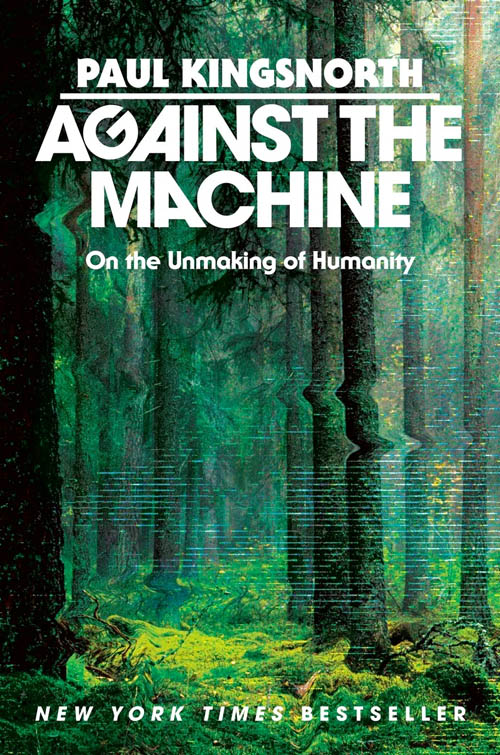 Against the Machine is a critique and exploration on enduring elements of human society, patterns which Kingsnorth sees as neither novel nor temporary. “The Machine” is his umbrella term for a constellation of forces: the destruction of modern culture, the homogenized West, and capitalism’s drift toward oligarchy. At its core, “the Machine” is the broader accelerating dominance of technology over daily life.
Kingsnorth’s view on the streamlined, brainless convenience of modern life is more complicated than despair. He expresses revulsion, urgency, and a spur to create a more promising future via quiet resistance, or what he dubs “the Cooked Ascetic”. The Cooked Ascetic refers to individuals that practice firm boundaries between technology and self-reliance. In this way, we are reminded to remain conscious of how we use and adapt to changes around us and reconnect to our identity as people with roots, not just citizens of a place.
Kingsnorth talks about the conception of these ideas throughout history, from the English Luddites to the Chinese Ming Dynasty rebellion. He pulls from a multitude of authors to describe how, all throughout history, writers have consistently pointed to the need to rebel against the Machine. Firmly guided by his anti-technocratic research, Kingsnorth is adamant throughout the book on the rejection of, not necessarily technology itself, but the full conscription to it. He leaves very little room for acceptance of or adaptation to our circumstances and resolutely preaches the philosophy of anti-Machine. In an age of decreasing literacy rates, increasingly omnipresent authority, and human nature becoming evermore stagnant, Against the Machine is a much-needed and relevant repository of human society and our engagement with a dying culture. Purchase Here | | | | | | RCC prides itself on its National Campus Network of more than 90 colleges and universities. We are working to engage faculty members, students, and administrators in our efforts for a more just and sustainable world. With our growing fellowship program, our presence on campuses across the country has never been greater. Contact RCC today to bring our staff to your campus for lectures, workshops, or meetings to help find the best ways to engage your faculty and students in the efforts against climate change, environmental justice, and the work of the Rachel Carson Council. Campus Visits with RCC President, Dr. Robert K. Musil 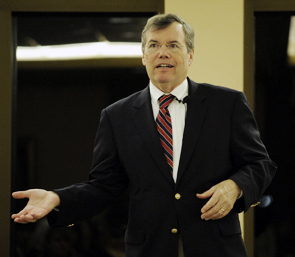 RCC President & CEO, Dr. Robert K. Musil, a national leader in climate change, environmental justice and health is available to book for in-person campus speaking events! Musil has been called “informative, challenging and inspirational all at once.” He is “motivational” with “intellectual depth” and “extraordinary impact.”
Dr. Musil offers compelling campus lectures and visits involving classes, meetings with campus and community groups, consultations with faculty and administrators, or for Earth Day, Commencement, and other special events. Stays range from one to three days. Reduced fees are in place for 2026-2027 and can be designed to meet reduced budgets. To arrange a campus visit with Dr. Musil, contact the RCC President’s Office at [email protected] The RCC also offers talks, classes, and workshops on student engagement, activism, sustainability, and the RCC Fellowship program with: SDirector of Communications, Sydney O'Shaughnessy; Director of Campus and Civic Engagement, Diego Tovar; and Director of Policy and Strategic Development, Joy Reeves. To arrange, contact Director of Campus and Civic Engagement, Diego Tovar. | | | | | | The October issue of RCC's Campus Dispatch was produced by Ross Feldner | | | |  Sign Up Here to Receive the RCC E-News and Other RCC Newsletters, Information and Alerts. | | | | | | | | | | | |