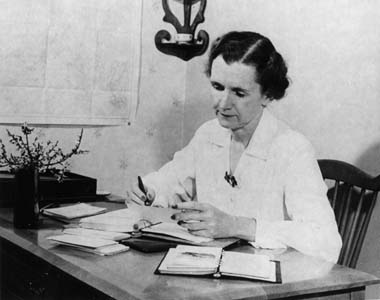
| | | “It is a wholesome and necessary thing for us to turn again to the earth and in the contemplation of her beauties to know the sense of wonder and humility.”
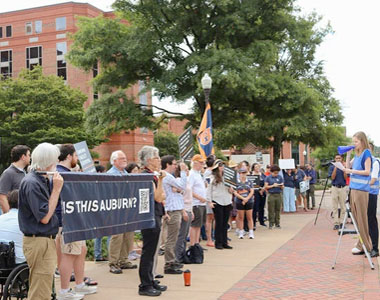
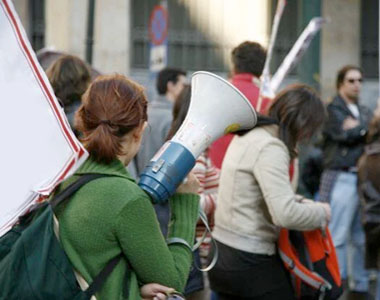
— Rachel Carson, The Sense of Wonder | | | | | | Dear RCC Supporter, Another academic year begins with campuses once again alive with possibility. Students return to classrooms and laboratories, faculty reopen conversations interrupted by summer, and a new generation of leaders ask what role they’ll play in shaping the world beyond their campus gates. September carries that familiar sense of renewal, but this year, it also arrives at a moment when the independence of higher education, the future of environmental research, and the power of civic participation are being tested across the country. Those pressures are increasingly visible. At Auburn University, faculty are protesting after the Board of Trustees abolished the faculty senate and gave itself greater control over curricular decision-making. In Texas, new legislation reshapes curriculum review, redefines the role of faculty senates, expands governing boards’ authority over administrative hiring, and places new restrictions on campus protest. University autonomy is being violated. Meanwhile, 17 researchers have filed a class-action lawsuit accusing the National Institutes of Health of unconstitutionally blocking grants for projects that do not reflect the Trump administration’s views on subjects including gender identity and climate change. These developments underscore continuing tensions surrounding academic freedom, shared governance, research, and university autonomy. Across the Rachel Carson Campus Network, students, faculty, researchers, and alumni continue to demonstrate what environmental leadership can look like. This month, we celebrate RCC National Environmental Leadership Fellows receiving recognition on their home campuses, RCC alumni celebrated by their impact, and the work of our growing communities across the nation. Research and innovation are also confronting some of the defining environmental questions of our time. At North Carolina State University, researchers examine how America’s rapidly expanding data center industry could place new pressures on local water supplies. Clark University brought leaders together to address the growing danger of extreme heat, while NYU is helping New York City explore ways to reduce greenhouse gas emissions from homes and small businesses. Duke, meanwhile, is preparing to offer first-year students an immersive semester at its Marine Lab in Beaufort, an experiment in what environmental education can look like when the coast itself becomes the classroom. 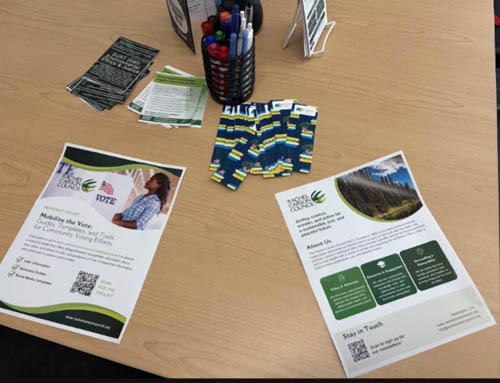 Campus action extends beyond university boundaries. In North Carolina, Catawba College has stepped forward to support an environmental education program after its state funding was eliminated, helping preserve a program that has trained teachers for more than three decades.
And as the 2026 elections approach, RCC’s Mobilize the Vote initiative offers students guides, templates, and tools for nonpartisan community voting efforts grounded in the belief that civic participation is one component of environmental leadership.
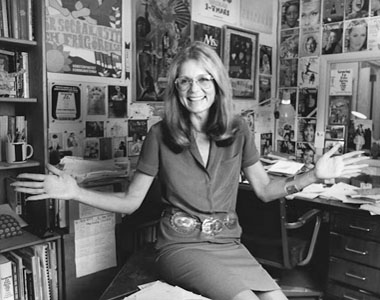
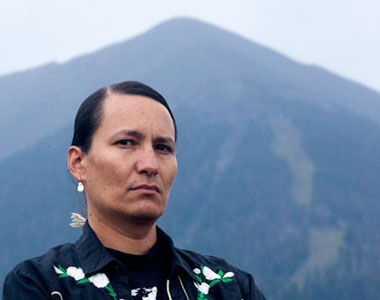
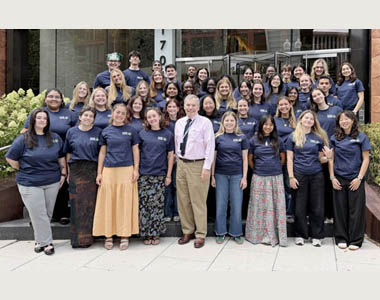
This month also brings moments for reflection on the meaning of advocacy and public life. We remember Gloria Steinem, the journalist and organizer whose decades of work for women’s equality left a lasting imprint on American campuses and movements. In Roots of Resistance, we honor Klee Benally, the Diné activist, author, musician, and environmentalist whose defense of Indigenous communities and Mother Earth embodied resistance to exploitation and environmental injustice. 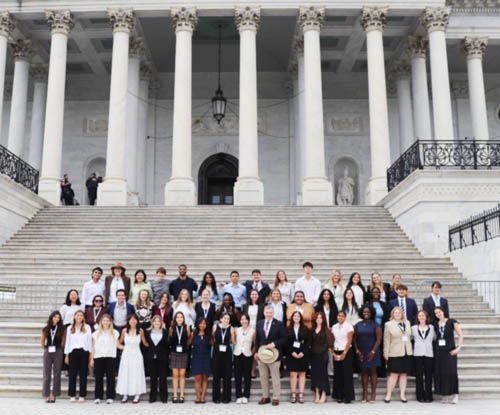 Within RCC, that spirit continues through generations of environmental leaders. Former RCC Fellow Zoe Tseng is building community through Big Green Tent, while RCC alumni MacEva Wright reflects on bringing science and people together after completing both the Stanback and Presidential National Environmental Leadership Fellowships. And this summer, RCC Fellows from across the country gathered in Washington, D.C., for the 2026 American Environmental Leadership Institute, transforming their different experiences of forests, coastlines, farms, cities, and communities into a shared commitment to environmental leadership.
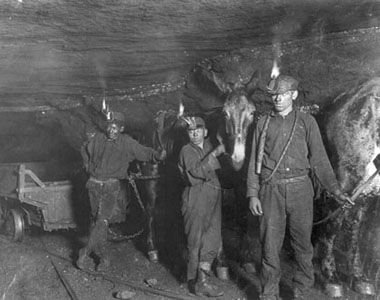
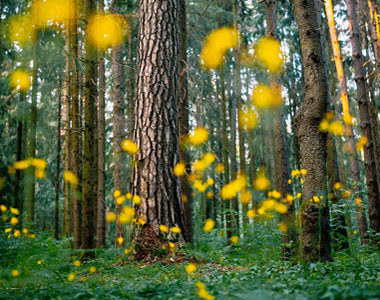
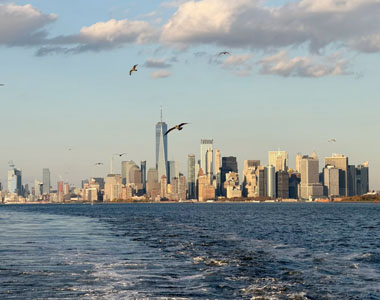
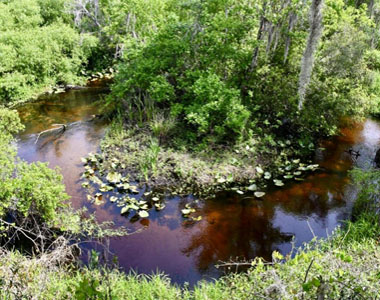
September also marks the launch of the Rachel Carson Council Storytelling Award, inviting college and university students nationwide to explore the intersections of narrative, identity, environmental justice, climate action, and hope. Its launch carries particular meaning as September 27th marks the anniversary of the 1962 publication of Silent Spring. Our RCC Fellows Speak Out section carries that tradition forward. This month’s writers move from glasses of water offered in strangers’ homes to the legacy of Appalachian coal; from disappearing fireflies on Long Island to peregrine falcons nesting among the cliffs of Lower Manhattan; from a childhood love of swamps to mining and resistance in the Black Hills and questions about the disappearance of lobsters from changing waters. Together, their essays remind us of Rachel Carson’s own legacy of leading with storytelling to create systemic change. 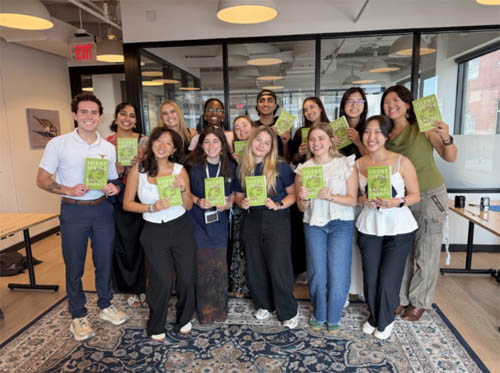 Finally, our Books section turns to Richard Powers’ Pulitzer Prize-winning The Overstory, a novel that intertwines nine human lives through their relationships with trees. Its message feels particularly fitting for the beginning of another academic year: individual lives may appear separate, but beneath the surface they are connected by systems far larger than themselves. That same lesson runs throughout this September’s Campus Dispatch.
At a moment of profound environmental, civic, and institutional change, campuses remain places where people can research, question, organize, create, and imagine something different. From a student beginning an RCC fellowship to a researcher studying water use, from a writer noticing the disappearance of fireflies to a community defending the independence of its university, these actions may begin locally, but their consequences can reach far beyond the imaginable. Stay informed. Stay engaged. And join us in amplifying these powerful stories from campuses nationwide. | | | | | | 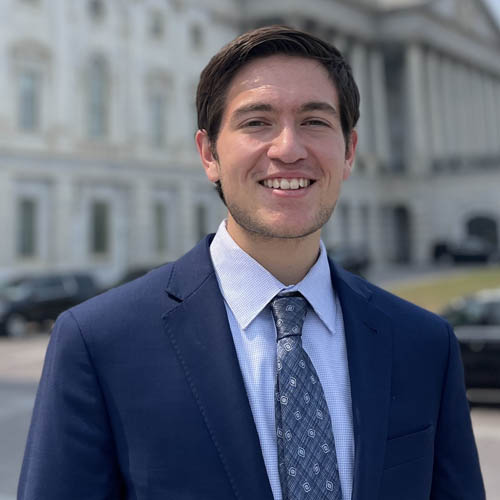 Diego Tovar — Senior Director of Campus and Civic Engagement
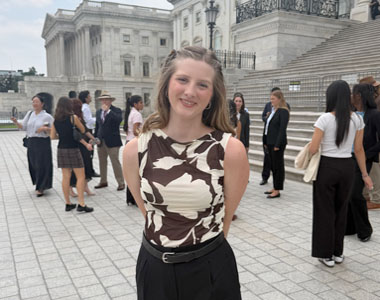
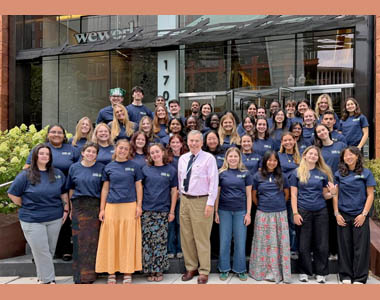
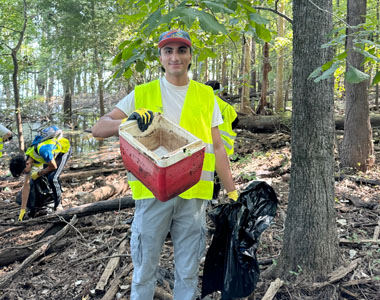
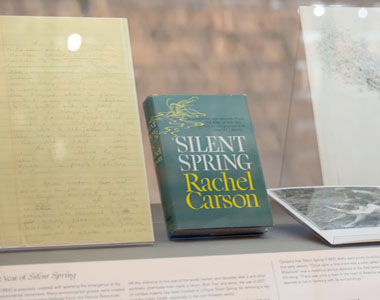
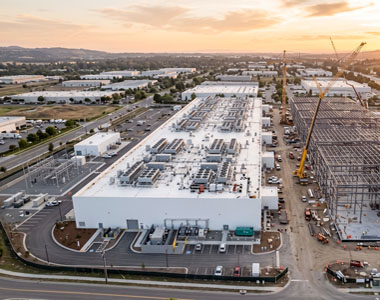
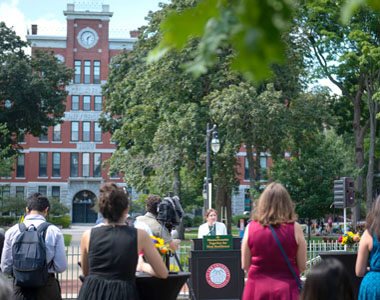
Diego Tovar, Director of Campus and Civic Engagement, holds his master’s in Global Environmental Policy from American University and an undergraduate degree as a Udall Scholar in Ecosystem Science and Sustainability with a minor in Political Communication from Colorado State University. Diego has worked for the White House Council on Environmental Quality, the Environmental Protection Agency, the U.S. House of Representatives, and the Navajo Nation Washington Office focusing on climate justice and climate adaptation. | | | | | | College of Ag Sciences Student Selected For Environmental Leadership Fellowship Ava Ciabattoni, a fourth-year student majoring in pharmacology and toxicology in Penn State’s College of Agricultural Sciences, has been selected for the Rachel Carson Council’s 2026-27 National Environmental Leadership Fellowship. The yearlong fellowship identifies students with a passion for environmental education, advocacy and policy. Through the program, fellows receive mentorship, guidance and financial support to develop and implement projects and campaigns that advance environmental action in their communities. | | | | | | | | UConn Student to Continue Legacy of Environmental Stewardship 'An important part of environmental leadership is about expanding your network and stepping out of your comfort zone'. In 1962 biologist and author Rachel Carson sounded the alarm about the ecological devastation resulting from the overuse of pesticides. In her book “Silent Spring,” she detailed the impacts of these chemicals with clear and passionate storytelling on behalf of the environment which awakened a public consciousness that sparked a new era in the environmental movement. | | | | | | | | Undergraduate Alexandre Massip Earned a National Environmental Fellowship University of Pittsburgh student Alexandre Massip has been selected for the Rachel Carson Council’s National Environmental Leadership Fellowship, a yearlong program supporting students focused on environmental education, advocacy and policy.Massip, a junior in the Kenneth P. Dietrich School of Arts and Sciences and David C. Frederick Honors College, is majoring in environmental science and public policy as well as pursuing certificates in sustainability and geographic information systems. | | | | | | | | Two Trinity Students Receive National Environmental Leadership Fellowships Two Trinity College students have received yearlong fellowships to support environmental action in their communities. Breanna Pitta ’27 and Carla Schmidt ’27 were selected for the National Environmental Leadership Fellowship by the Rachel Carson Council. The Trinity students are among the 39 members of this year’s cohort from across the United States. The fellowship will last for the 2026-27 academic year. | | | | | | | | How Pranav Hooda’s Leadership Skills Sprung From Project Earth When Pranav Hooda ’27 made the choice to attend Duke University, his first academic decision was easy: signing up for Project Earth experiential orientation – a weeklong orientation focused on climate and sustainability hands-on programming for first-year students. In his first few days as a Blue Devil, Hooda met a transformative student leader in Felicia Wang, who graduated in 2025. “She led Project Earth from the beginning, and put a lot of elbow grease into it, and made it,” Hooda said. | | | | | | | | Curating Carson Exhibition revives Rachel's environmental legacy SINCE THE MIDDLE OF THE LAST CENTURY, every carbon-based life-form on Earth holds within its cells the spike of the radioactive marker carbon-14, imprinting the reality of the Atomic Age in our deepest recesses. This turning point also marked the time when the scientist and naturalist Rachel Carson was writing her most influential works, shaping a global conversation that continues today. | | | | | | | | America’s Data Center Boom Puts New Pressure on Local Water Resources Across the United States, communities are pushing back against the rapid surge in data center construction, citing concerns not only about how these facilities could affect their utility bills but also about their potential impact on local water supplies. “A large, continuous industrial user, like a data center, fundamentally alters a watershed because its water demand never sleeps,” said Matthias Sprenger, an assistant professor in the Department of Forestry and Environmental Resources at North Carolina State University. | | | | | | | | Clark University Hosts Leaders to Discuss Extreme Heat Under the midday sun on the plaza outside Clark University’s Shaich Center, Massachusetts Climate Chief Melissa Hoffer announced the appointment of the state’s first-ever Heat Resilience Officer, Katie Schlick. The new post kickstarts Governor Maura Healey’s community-centered partnership to tackle extreme heat throughout Massachusetts — from schools and neighborhoods to workplaces and our electric grid. | | | | | | | | As Duke Prepares to Send First-years to Marine Lab, Faculty Have Questions and Praise The next class of Duke first-years will have the option to spend their first semester at the Duke University Marine Lab in Beaufort as part of a new program known as Duke Embark. At a Arts & Sciences Council meeting, some faculty raised questions about the initiative, concerned that it might undermine the first-year experience. Lisa Campbell, Rachel Carson distinguished professor of marine affairs and policy, presented to the council about Embark. | | | | | | | | How NYU Law is Helping Create Climate-Friendly Homes and Small Businesses in New York City NYU’s Guarini Center has been tapped by the city for work on greenhouse gas emissions and other environmental policies including in underserved communities How does a city effectively and substantially reduce carbon emissions from a laundromat? A brownstone home with three apartments? The city of New York has tasked NYU Law’s Guarini Center on Environmental, Energy, and Land Use law with finding out. | | | | | | | | A Small, Private NC School Will Fund Environmental Program Cut From State Budget For over 30 years, the office has administered a statewide program that certifies North Carolina teachers to give lessons about environmental science and related issues. But the office, which had two employees and received just $275,000 in state funding, was cut from the $34 billion state budget for the upcoming fiscal year, sparking outcry among teachers who rely on the program. | | | | | | | | | | Mobilize the Vote: Guides, Templates, and Tools for Community Voting Efforts At the Rachel Carson Council, we believe civic participation is a powerful part of environmental leadership. Caring about climate, public health, environmental justice, education, and democracy is where leadership begins, but action is what moves change forward. When students show up for their communities through voting, they help shape a more just and sustainable future. | | | | | | | | | | How 2026 Could Reshape the State Legislature In the closing weeks of the 2026 general election, signs point to a “blue wave” cycle similar to 2018. Roy Cooper leads Michael Whatley for U.S. Senate by double digits in many polls. The national generic ballot average leans Democratic by 6 points, and the August Carolina Forward Poll found a similar result on the state legislative ballot. Voters are restless and ready for change. So how will a 2026 “blue wave” affect the North Carolina General Assembly? | | | | | | | | How Do College Students Decide Where to Register to Vote? Every election cycle millions of college student voters face a choice: Whether to vote using their campus address, or the address where they grew up. Approximately 1 in 5 college students attend college out of state, presenting the unique opportunity for them to choose where to vote between two different state political contexts. Even students attending college in their home states often move to another congressional district or town, allowing them to choose where to vote as well. | | | | | | | | Are College Civics Centers Strengthening Democracy or Reshaping Academia? Scholars and a lawmaker clashed over the merits of state-led efforts to reform civics education at the college level during a forum held Wednesday at Howard University. “The state should not be dictating higher education,” Mary Anne Franks, a law professor at George Washington University, told attendees of a higher education form convened by the Education Writers Association. “That is the job of actual people with qualifications,” Franks said. | | | | | | | | Auburn Faculty Protest Board’s Curricular Overhaul Three months after the Board of Trustees abolished the faculty senate and gave itself curricular control, faculty are back on campus and making their disapproval known With the fall semester now in full swing, Auburn University faculty members are protesting the Board of Trustees’ summer overhaul of shared governance and curricular decision-making at the public land-grant university in Alabama. | | | | | | | | Texas Escalates Attacks on Higher Education at the Expense of Students Senate Bill 37 drastically reshapes the curriculum review process, redefines the role of faculty senates, increases the authority of governing boards over administrative hiring, and establishes an Office of the Ombudsman to address compliance concerns — undermining higher education. Senate Bill 2972, meanwhile, restricts free speech on campus by rolling back several rights passed in 2019 that protected Texans’ ability to protest. | | | | | | | | ‘Direct Repression’ of Academics on the Rise, Report Finds Universities must promote “broad public understanding” that university autonomy is essential, Scholars at Risk’s annual report says. Universities in democracies such as Georgia, India and the United States have seen their autonomy “violated” by government interference in the past year, according to the latest annual update from the international academic rights organization Scholars at Risk. | | | | | | | | Researchers Say NIH Grant Screening Process Violates First Amendment More than a dozen researchers accused the National Institutes of Health of unconstitutionally blocking grants for projects that don't reflect the Trump administration’s views on topics including gender identity and climate change in a class action lawsuit. The 17 researchers, whose legal counsel includes the American Civil Liberties Union, Protect Democracy and the Center for Science in the Public Interest, sued the agency along with Director Jay Bhattacharya, Health Secretary Robert F. Kennedy Jr. and several federal institutions. | | | | | | | | Academic Freedom Advocates Stand Up at Yale It is all too common, as Anne Applebaum wrote of Sen. Lindsey Graham of South Carolina, for a Republican politician to “abandon his previous ideals, to bury the patriotism that was once so important to him, and to become, instead, a loud, opportunistic collaborator.” We have seen a horde of figures in civil society make their Faustian bargain with Donald Trump and his authoritarian, white supremacist regime. | | | | | | | | Gloria Steinem, Whose 1970s Activism Sparked a Revolution on College Campuses, Dies at 92 Gloria Steinem, the journalist, organizer, and feminist icon whose activism helped ignite the modern women's movement, died Wednesday at her home in New York City. She was 92. Her death was confirmed Thursday in a statement posted to her official Instagram account and by her foundation, which said she “passed away peacefully at her home in New York City, surrounded by some of the many who loved her.” | | | | | | | | Khalil Accuses Columbia of Discrimination in New Lawsuit Mahmoud Khalil and other current and former students sued Columbia University for allegedly failing to protect them from harassment tied to pro-Palestinian protests in 2024. Former campus protest leader Mahmoud Khalil sued Columbia University Monday, accusing officials of discriminating against him and other Palestinian students and failing to keep them safe from doxxing and harassment amid widespread demonstrations in spring 2024. | | | | | | | | Rachel Carson Council Fellow Builds Community at Big Green Tent Zoe Tseng, National Environmental Leadership Fellow (2024-2025) takes her skills and leadership to new heights as the newsletter lead of the environmental start up, Big Green Tent. “The Big Green Tent is more than a newsletter—it’s a home for hope, action, and connection. We bring you inside the sustainability movement through stories of small organizations making a big difference, and we give you the tools to turn inspiration into impact.” –Big Green Tent | | | | | | | | RCC Alumni Spotlight: MacEva Wright Brings Science and People Together By Angela Zhao MacEva Wright, a 2026 Master of Environmental Management graduate from Duke University, held the RCC Stanback Fellowship in the summer of 2025 and the RCC National Environmental Leadership Fellowship during the 2025-2026 academic year. We sat down with her to discuss how her work has evolved since holding these fellowships one year ago. | | | | | | | | The Rachel Carson Council (RCC) Storytelling Award The Rachel Carson Council (RCC) Storytelling Award is a national, turnkey program for college and university students to explore how narrative, identity, and environmental justice shape climate action and hope through creativity. When Silent Spring was released on September 27, 1962, Rachel Carson’s words helped ignite intersectional, intergenerational environmental movements across the United States and beyond. | | | | | | | | Roots of Resistance: Klee Benally: Diné Fighter for the Land “When I speak of liberation, it is not to foment yet another social justice; it is an inclusive and fervent agitation against domination and exploitation of existence, for the liberation of Mother Earth is the liberation of all existence.”—- Klee Benally Fighter for the Land Klee Benally (6 October 1975 - 30 December 2023) was a Diné Indigenous activist, author, musician, traditional dancer, and environmentalist from the Navajo Nation. | | | | | | | | The RCC is Building the Next Generation of Environmental Leaders From July 19-23, 2026, the Rachel Carson Council welcomed a national cohort of emerging environmental leaders to Washington, D.C., for its 2026 American Environmental Leadership Institute (AELI). RCC Fellows traveled from campuses across every region of the country, bringing with them experiences shaped by the forests, rivers, coastlines, mountains, farms, cities, and neighborhoods they call home. | | | | | | | | Would You Like a Glass of Water? Cross-stitching, serial killers, zines, poetry, fiber art festivals, political corruption. All topics I talked about with strangers, couch to couch. “Would you like a glass of water”? It was a question everyone asked me when I entered their home. I always answered, “No, thank you! I’m fine.” I have a habit of carrying my trusty emotional-support water bottle. I like drinking out of straws, and mine has a built-in straw. I’m admittedly quite attached to it. At the time, saying no didn't feel like a big deal. | | | | | | | | Holding Myself to Account It’s back to school season; get ready for Halloween; don’t wait to shop these Thanksgiving Deals; take care of Christmas gifts early this year; time to refresh your space for the New Year! And on and on, it goes. Wherever we look, we are bombarded with advertisements compelling us to buy more. Whether it’s co-opting the language of self-care (e.g., You deserve to treat yourself with yet another item you’ll forget about in a week) or stoking fears about proving your status. | | | | | | | | The Coal Conundrum When you think of coal mining, what do you picture? Men with pickaxes? Lunch pails and script? Maybe the remnants of mine fires? 12 dead in the Sago Mine disaster…The suffocation of 13 in the Villa Mine fire. These are all things people could associate with coal mines, specifically in the Appalachian region of the United States. Coal was a lifestyle in the mountains, especially in the 1900s. However, with environmental regulations set in place during the 1970s due to the Clean Air Act, production has slowed. | | | | | | | | The Disappearance of the Fireflies I have spent a fair amount of time away from home–long, vivid months in Taiwan studying Chinese, summers researching green spaces in Tokyo. This past year was perhaps my longest stretch. I flew 4000 miles away from New York to work for a tribal consortium in Alaska. The immense love I developed for its warm communities and subzero temperatures is a story for another time. When I came home in late July, I went for a long evening walk through my Long Island neighborhood. | | | | | | | | The Cliffs of Lower Manhattan New York City holds more people than any other city in the United States. It is also believed to hold more peregrine falcons than anywhere else in the world. This bird, known as the fastest animal on Earth, regularly reaching over 200 miles per hour, can also be found nesting on the Verrazzano-Narrows Bridge, the Marine Parkway, and on office towers in Lower Manhattan. Throughout its time on this planet, a peregrine has evolved to hunt its prey from cliffs. | | | | | | | | I Love the Swamps Growing up in the temperate rainforests of Washington State and hearing stories of the dangerous and venomous species in places like Florida and Australia, I felt grateful that I could play and explore outside, never worrying about the snakes I handled or bodies of water I swam in. As a five-year-old, I could walk right up to a garter snake and swiftly snatch it up, holding and staring in admiration despite the foul musk they would release to deter me. | | | | | | | | Unmeasured and Unscathed: Mining and Resistance in the Black Hills. Thank you for being here and for all that you do to protect the health of your community. I whispered to each Prairie Rose and Purple Coneflower. Sage was the only one I had met before. Pejí Hotá. Lying on the bookshelf of my small Washington Heights apartment lies a bundle of sage wrapped in the same light pink tissue paper it had been gifted to me in during my first visit to the Reservation. | | | | | | | | Where Are the Lobsters? You have to start with bait. Otherwise, you’re just throwing a brick of wire down to the bottom of the ocean. So reach into the bucket of frozen fish, thawing as rapidly as the fog burning off on the horizon. You can try to not breathe in through your mouth to help with the smell, but I find you get used to it. And after enough early mornings on the water, that metallic concoction of scales and blood-red ice starts smelling more and more like potential. Because when you stash two of those frozen fish into the bait cage of a lobster trap and huck the whole thing off the side of the boat, magic happens. | | | | | | | | The Overstory
Richard Powers (W.W. Norton & Company, 2019) By Angela Zhao 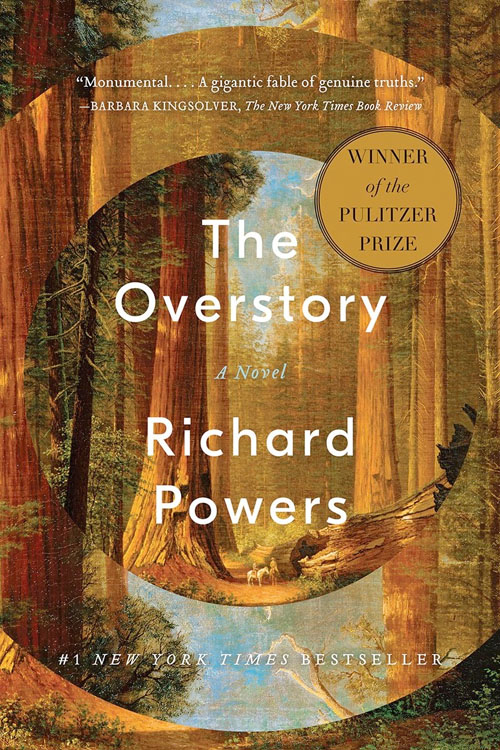 Richard Powers’ novel, The Overstory, follows the lives of nine different individuals and interweaves them through a beautifully simple, common theme: trees. Winner of the 2019 Pulitzer Prize, The Overstory intimately connects this eccentric group of characters and, in the process, reveals profound considerations about how we view the world and each other.
From a military veteran whose life is saved by a massive banyan fig tree after his parachute malfunctions to a paralyzed, genius coder that becomes deeply connected to the science of forests through video games, The Overstory is masterful in demonstrating how we are really not so separate from the seemingly pristine world of nature. A tale punctuated by thrilling climate activism in ancient sequoia forests and desperate acts of ecoterrorism, Powers reminds us the longer that it takes us to realize this truth, the more urgent the climate crisis becomes.
Encompassing many topics ranging from environmental sociology to principles of Confucianism, Powers pushes for immediate environmental action through the crossing of artificial demographic boundaries (age, gender, socioeconomic status, etc.), often dividing and isolating individuals in order to produce powerful, collective climate action. However, creating metaphors directly from the world of ecosystems and trees, the most impactful parts of Powers’ writings encourage readers to rethink the most trivial aspects of daily life, such as the conceptualization of time, purpose, and admiration of the natural world sparked from a simple walk in the woods. Click here to purchase The Overstory by Richard Powers - Bookshop.org US | | | | | | RCC prides itself on its National Campus Network of more than 90 colleges and universities. We are working to engage faculty members, students, and administrators in our efforts for a more just and sustainable world. With our growing fellowship program, our presence on campuses across the country has never been greater. Contact RCC today to bring our staff to your campus for lectures, workshops, or meetings to help find the best ways to engage your faculty and students in the efforts against climate change, environmental justice, and the work of the Rachel Carson Council. Campus Visits with RCC President, Dr. Robert K. Musil 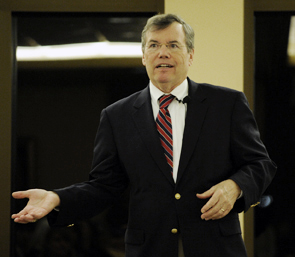 RCC President & CEO, Dr. Robert K. Musil, a national leader in climate change, environmental justice and health is available to book for in-person campus speaking events! Musil has been called “informative, challenging and inspirational all at once.” He is “motivational” with “intellectual depth” and “extraordinary impact.”
Dr. Musil offers compelling campus lectures and visits involving classes, meetings with campus and community groups, consultations with faculty and administrators, or for Earth Day, Commencement, and other special events. Stays range from one to three days. Reduced fees are in place for 2026-2027 and can be designed to meet reduced budgets. To arrange a campus visit with Dr. Musil, contact the RCC President’s Office at [email protected] The RCC also offers talks, classes, and workshops on student engagement, activism, sustainability, and the RCC Fellowship program with: SDirector of Communications, Sydney O'Shaughnessy; Director of Campus and Civic Engagement, Diego Tovar; and Director of Policy and Strategic Development, Joy Reeves. To arrange, contact Director of Campus and Civic Engagement, Diego Tovar. | | | | | | The September issue of RCC's Campus Dispatch was produced by Ross Feldner | | | |  Sign Up Here to Receive the RCC E-News and Other RCC Newsletters, Information and Alerts. | | | | | | | | | | | |