 | | |  As autumn deepens, there are plenty of reasons to be spooked––thankfully most are Halloween-related. Yet even amid seasonal chills, the past month has brought incredible progress in ocean policy in the face of strong opposition. While we ponder costumes and candy supplies, scientists and advocates continue to unveil new insights about our ocean and its inhabitants. From this month’s headlines, consider a few creative last-minute costumes: a sea otter, ancient plankton, an autonomous glider, or Ran Fiennes. Read on to learn more about how those figures took part in important developments. As autumn deepens, there are plenty of reasons to be spooked––thankfully most are Halloween-related. Yet even amid seasonal chills, the past month has brought incredible progress in ocean policy in the face of strong opposition. While we ponder costumes and candy supplies, scientists and advocates continue to unveil new insights about our ocean and its inhabitants. From this month’s headlines, consider a few creative last-minute costumes: a sea otter, ancient plankton, an autonomous glider, or Ran Fiennes. Read on to learn more about how those figures took part in important developments.
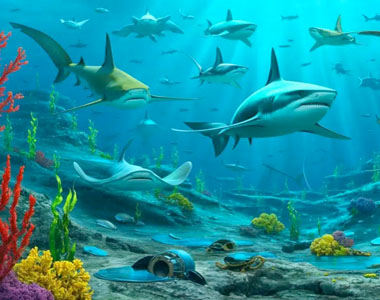
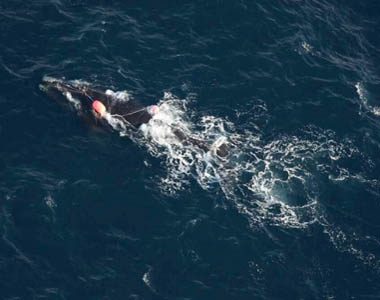
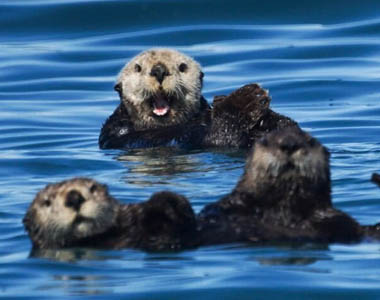
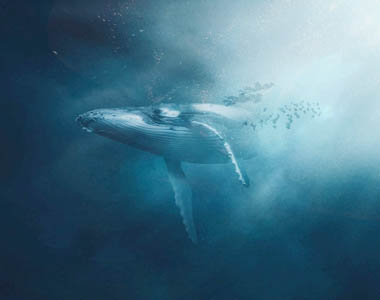
In “Breaking Waves,” we cover urgent updates on how climate change is affecting oceanic species, as well as efforts to save them. A new report has shown that warming, current shifts, and acidification are negatively impacting all migratory species. Meanwhile, Grist warns that coral reefs are approaching a tipping point, but it’s not too late to act. At the end of September, climate leaders around the world gathered to learn about and discuss climate solutions in New York City. Climate Week NYC 2025 led to a renewed commitment to sustainability and a more competitive and innovative vision for the future. 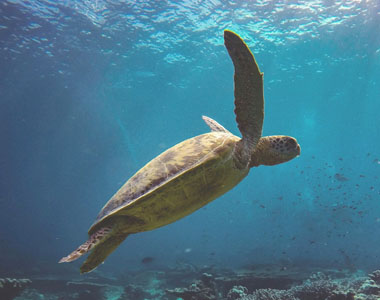 There are conservation victories to celebrate as well: green sea turtles have been delisted as an endangered species. However, not all news is positive on this front. Deep-sea mining plans continue to threaten precious habitat, particularly for sharks. Also, in commercial fisheries, a high number of whales have gotten entangled in fishing gear. From our colleague Justin Catanoso at Mongabay, we learn how Alaskans are locked in a battle over the fate of sea otters. There are conservation victories to celebrate as well: green sea turtles have been delisted as an endangered species. However, not all news is positive on this front. Deep-sea mining plans continue to threaten precious habitat, particularly for sharks. Also, in commercial fisheries, a high number of whales have gotten entangled in fishing gear. From our colleague Justin Catanoso at Mongabay, we learn how Alaskans are locked in a battle over the fate of sea otters.
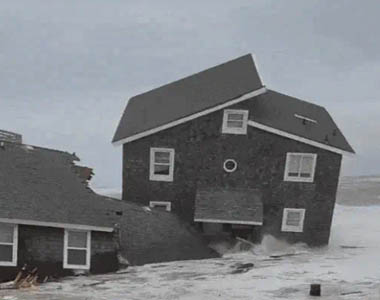
In this month’s “Coasts and Environmental Justice” section, we set our eyes on North Carolina, where rising seas, erosion, and hurricanes are swallowing coastal towns––stories powerfully captured by the Coastal Review and supported by the NC Coastal Federation. In “Climate’, we have the spookiest news of the month. As we head into the heart of the hurricane season, these fierce storms are, unfortunately, getting much worse, posing a serious threat to millions of people. Hurricane Melissa, a Category 5 storm, now has now made landfall as the strongest hurricane ever to hit the island of Jamaica. But, as our ocean climate shifts, there are still hopeful signs. Plankton, when included in climate models, have the capacity to temper the nutrient loss climate change may cause. Also, wave and tidal energy systems are rapidly advancing out of testing phases. Even without the U.S., marine energy is projected to reach 300GW of power by 2050, mostly concentrated in Europe. That is enough power to support over 200 million homes! And, despite the Trump Administration’s slashing scientific research funding, an innovative collaboration between Rutgers University and Woods Hole is forging ahead. Read on to learn about their five-year autonomous drone mission to take and transmit data from around the world’s oceans. The “Redwing” will be capable of crossing oceans, surfacing often to send valuable data back to researchers. 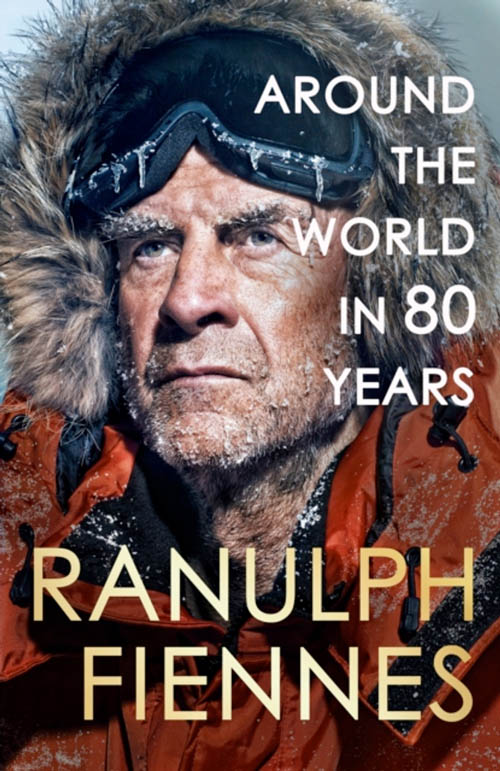 And, in November, we have a few events to look forward to. They range from the Chocorua Lake Climate Futures Film Festival to COP 30 in Belem, Brazil. The film festival, hosted by the Lake Conservancy and the Cook Memorial Library in Chocorua, NH, will feature two days of film viewing and discussion. The month will also feature a global strike hosted by Fridays for Future on November 11, 2025, emphasizing the urgency of climate action. And, in November, we have a few events to look forward to. They range from the Chocorua Lake Climate Futures Film Festival to COP 30 in Belem, Brazil. The film festival, hosted by the Lake Conservancy and the Cook Memorial Library in Chocorua, NH, will feature two days of film viewing and discussion. The month will also feature a global strike hosted by Fridays for Future on November 11, 2025, emphasizing the urgency of climate action.
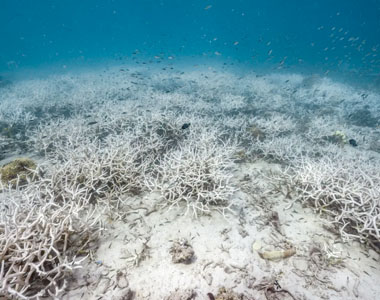
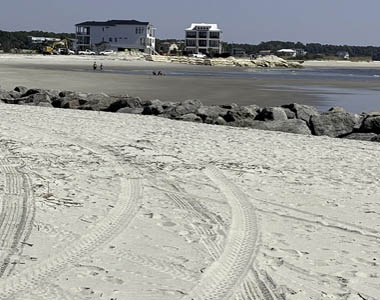
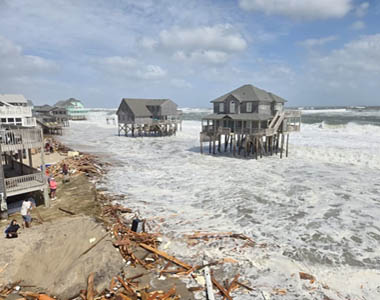
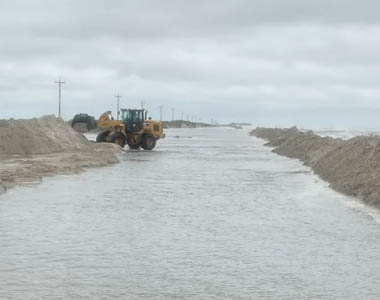
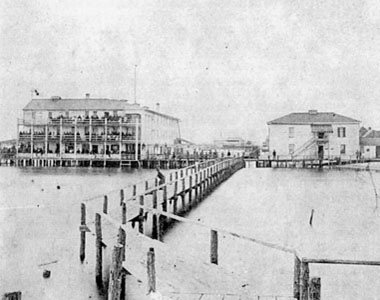
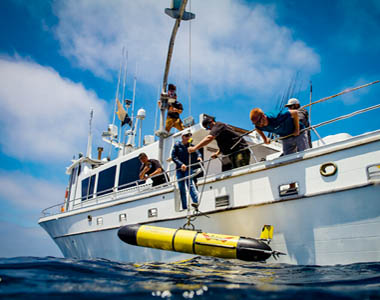
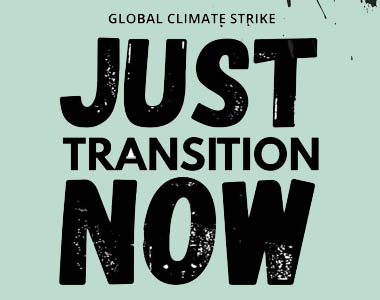
In “Books,” we feature the biography of “the world’s greatest living explorer,” Sir Ranulph Fiennes, titled Around the World in 80 Years. For Sir Ranulph, exploration is part of the human experience. Read his book for details on his circumnavigation of the globe from pole to pole, Antarctic expeditions, and, after a heart bypass, the summit of Mount Everest. Click here to purchase | | | | | | | | RCC Presidential Fellows - MacEva Wright and RCC Presidential Fellow - Ewan Dignon  MacEva Wright is the co-lead of the RCC Coasts and Ocean program with Bob Musil. She is a second-year graduate student at Duke University’s Nicholas School of the Environment working on a Master’s of Environmental Management with an emphasis on Coastal and Marine Systems and Environmental Justice. MacEva Wright is the co-lead of the RCC Coasts and Ocean program with Bob Musil. She is a second-year graduate student at Duke University’s Nicholas School of the Environment working on a Master’s of Environmental Management with an emphasis on Coastal and Marine Systems and Environmental Justice.  Ewan Dignon is the co-lead of the RCC Coasts and Ocean program with Bob Musil. He is an undergraduate at Duke University pursuing two degrees, Public Policy (B.A.) and Economics (B.A.), with a minor in Environmental Sciences and Policy. Ewan Dignon is the co-lead of the RCC Coasts and Ocean program with Bob Musil. He is an undergraduate at Duke University pursuing two degrees, Public Policy (B.A.) and Economics (B.A.), with a minor in Environmental Sciences and Policy. | | | | | | Climate Change is Threatening All of the Ocean's Migratory Species Migratory species serve as critical links in the ecosystems that sustain life on Earth. From forest elephants that contribute to carbon storage in the jungles, to whales that transport nutrients across the ocean - migratory species are vital to maintaining healthy ecosystems. Climate change is negatively impacting migratory species across the board, a new report has warned this week, altering the ranges, shrinking the habitats, and threatening the ecosystems across which all migratory species occupy throughout their lifecycles. | | | | | | | | Corals Are Disappearing, Pushing Earth to Its First Major ‘tipping point’ A new report says Earth has reached a dire milestone with the widespread death of warm-water coral reefs. But it's not too late to save what remains. Global temperature rise may feel like it’s gradual, but the changes it brings can turn out to be sudden, massive, and self-reinforcing. These changes are what scientists call tipping points. When a tipping point is reached, an Earth system abruptly and dramatically changes, often irreversibly, like the Amazon rainforest turning into a savanna. | | | | | | | | Better, Cheaper, Faster: Our Climate Week NYC 2025 Summary The tone at Climate Week New York City (CWNYC) 2025? The ERM team attending encountered a mood of grounded optimism. Discussions with companies and other stakeholders assembled for Climate Week suggest we are entering a new era, where sustainability efforts are judged by contributions to competitiveness and resilience and the sustainability agenda is increasingly tightly aligned with financial value creation. | | | | | | | | Sand is Vanishing on East Side of Ocean Isle’s $11M Erosion Fix Today, the shoreline east of terminal groin is being gnawed away, vanishing beach in front of a neighborhood of grand, multimillion-dollar homes built shortly after the $11 million erosion-control structure was completed in spring 2022. A wall of sandbags fends off waves from reaching some of the waterfront homes on the ocean side of the gated community that’s advertised as “luxurious coastal living.” Several lots remain vacant because the properties no longer have enough beachfront necessary to meet the state’s ocean setback requirements. | | | | | | | | ‘Messy situation’: Buxton Beach Closed After 8th House Falls It started two weeks ago, when one small, unoccupied house here fell into the ocean, long before two powerful tropical storms were approaching Hatteras Island. But by mid-afternoon Tuesday, shortly before high tide, both hurricanes Humberto and Imelda, while well offshore, had supercharged the ocean off Cape Hatteras, where the Outer Banks bend out farthest into the Atlantic. | | | | | | | | Coastal Storm Brings Ocean Overwash, Erosion to NC Beaches The Outer Banks suffered much of the brunt of the powerful system that brought wind, rain and coastal flooding. On Saturday the North Carolina Department of Transportation closed sections of N.C. 12 on Ocracoke. Overwash forced officials to close portions of the road Sunday on Hatteras Island, where crews spent the weekend pushing sand and water from the road and rebuilding the dune line that divides the beach from the road. | | | | | | | | As Hurricanes Stir Up Coastal Waters, North Carolina Homes Collapse Into the Sea Five unoccupied homes on North Carolina’s Outer Banks collapsed into the sea Tuesday as hurricanes Humberto and Imelda coursed through the Atlantic, stirring up coastal waters. The Outer Banks have seen 17 seaside homes destroyed since 2020. The destroyed homes, part of Cape Hatteras National Seashore, left the beach awash in debris, according to the National Park Service, which manages the coastline. Their loss comes just two weeks after another home collapsed into the sea in Buxton. | | | | | | | | Green Sea Turtle Saved From Extinction in Major Conservation Victory In a stunning victory for marine conservation, the green turtle has been officially saved from the very brink of extinction, marking a significant turning point in the efforts to safeguard one of the ocean’s most ancient navigators. In a stunning victory for marine conservation, the green turtle has been officially saved from the very brink of extinction, marking a significant turning point in the efforts to safeguard one of the ocean’s most ancient navigators. | | | | | | | | “They’re Mining Where Sharks Give Birth”: This Deep-Sea Rush Threatens Hidden Ocean Species (and the Damage May Already Be Spreading) In the depths of the Pacific Ocean, a looming threat from proposed deep-sea mining operations endangers the fragile habitats of sharks, rays, and ghostly chimaeras, raising urgent concerns over the potential extinction of these already threatened species.In the depths of the ocean, a hidden threat is emerging that could have catastrophic effects on marine biodiversity. | | | | | | | | | | Number of Whales Entangled in Fishing Gear Increased in 2024, Says NOAA Report The National Oceanic and Atmospheric Administration documented 95 large whales entangled in fishing gear in the US in 2024. That’s an increase from 2023 and higher than the historical average, according to a new federal report. "Entanglements are not decreasing, at least not in our region here on the East Coast," said Scott Landry, the director of the Marine Animal Entanglement Response Program at the Center for Coastal Studies in Provincetown. | | | | | | | | Booming Sea Otters and Fading Shellfish Spark Values Clash in Alaska Roarke Brown, a charter boat captain since 1972 in this picturesque fishing village, remembers being able to tread out onto the Kachemak Bay mud flats at low tide to fill a 5-gallon bucket with clams in little time with minimal effort. Tanner and Dungeness crabs? Drop a pot; haul it up crawling with crustaceans. “There was a big commercial crab fishery here that’s been closed for decades,” Brown tells Mongabay, seated aboard the Pacific Shadow, his charter boat, in Homer’s busy harbor. | | | | | | | | Hurricanes Are Getting Increasingly Worse: Climatologist It was well into what we now call hurricane season in 1879 when the Atlantic Hotel on the Beaufort waterfront began filling with hundreds of guests ahead of the North Carolina Press Association’s annual meeting taking place there in late August. Visitors from across the state, including the then-governor and his wife, made the lengthy trek to the hotel, most arriving around Aug. 15, of that year, about the same time as rumors began to circulate that a hurricane was causing damage in the Caribbean. | | | | | | | | Global Rules to Decarbonize Ships Delayed Amid Trump’s Pushback Just weeks ago an agreement on the International Maritime Organization’s ambitious decarbonization plan seemed certain. Then the U.S. stepped up opposition. The United Nations agency that governs global shipping has voted to delay the adoption of its landmark decarbonization strategy by one year, following intense opposition from the Trump administration. | | | | | | | | How Ancient Plankton Point to the Resilience of Ocean Ecosystems In a new study co-led by Patrick Rafter of the University of South Florida, researchers show that warming in the tropical Pacific — home to some of the world’s most productive fisheries — may not trigger the severe decline in nutrients predicted by earlier models. Instead, the region’s fisheries could remain productive even as ocean temperatures rise. “This is a rare source of good news about ocean warming,” said Rafter, a chemical oceanographer at USF’s College of Marine Science. | | | | | | | | The World’s Oceans Face Triple Planetary Crisis: Report A new report on the state of the world’s oceans paints a grim picture. The ninth annual Copernicus Ocean State Report finds “No part of the ocean is untouched by the triple planetary crisis, as pollution, biodiversity loss, and climate change are putting pressure on the ocean worldwide.” The EU-funded report draws on decades of historical and current observational data as well as satellite measurements to create a resource for policymakers, scientists and citizens to more fully understand the challenges facing the world’s oceans. | | | | | | | | Marine Energy Potential: More Than a Drop in the Ocean As global studies and new UK-led initiatives reveal, wave and tidal energy are no longer fringe technologies but key contenders in the race to net zero — with the potential to generate hundreds of gigawatts of clean, predictable power and transform coastal communities worldwide. Roadmaps helping to drive the global marine energy sector forward into the future estimate the technologies could contribute 300GW of renewable capacity by 2050, with a value of over US$340 billion. | | | | | | | | World-first Underwater Autonomous Glider to Circumnavigate the Globe In a world-first for marine science and technology, Teledyne Marine in collaboration with Rutgers University-New Brunswick, will conduct a pioneering mission to circumnavigate the globe with an autonomous underwater glider. Using Teledyne’s ‘Redwing’, the most advanced commercial subsea glider ever developed, the near five-year Sentinel Mission departs on 10 October 2025 following a ceremony at Woods Hole Oceanographic Institution (WHOI), which operates the second largest glider fleet in the world. | | | | | | | | Climate Futures Film Festival—part 1 Please join Chocorua Lake Conservancy (CLC), Cook Memorial Library (CML), and Unitarian Universalist Fellowship of the Eastern Slopes (UUFES) on Sunday, November 23 from 3–5 PM & Sunday, November 30 from 3–5 PM, for parts one and two of Climate Futures Film Festival. Each afternoon will include an hour of film viewing followed by a facilitated conversation with refreshments. | | | | | | | | UN Climate Change Conference - Belém, November 2025 Due to logistical and security adjustments, the Brazilian organizing committee will now require a specific national credential for access to the Belém Climate Summit (November 6 and 7). Media accreditation by the secretariat will ONLY be accepted for the 10th through the 21st of November. Applications for the Leaders Summit must be submitted before Friday, October 31, 2025 at 18:00 Brasilia time (BRT; GMT-3). | | | | | | | | Global Climate Strike 11-2025 Join our global climate strike for climate justice during the COP30 in Belém, Brazil. We must raise our voice not to let the Climate conference fail like the plastics treaty meeting in Geneva last August. We must let the people participating in the COP know that failure is not an option, and we have the recent ruling from the International court of justice to back us up! The global youth-led climate movement Fridays For Future (FFF) has announced a Global Climate Strike to take place on November 14, 2025, during the United Nations Climate Change Conference (COP30) in Belém, Brazil. | | | | | | | | Around the World in 80 Years Celebrating 80 years of national treasure and legendary explorer Sir Ranulph Fiennes - perfect summer reading for your next adventure.
The extraordinary life and adventures of 'the world's greatest living explorer' - perfect for fans of The Moth and the Mountain and Touching the Void On the eve of his 80th birthday, Sir Ranulph Fiennes looks back at his remarkable life and adventures. He's climbed Everest not long after a heart bypass operation, he's run seven marathons on seven continents, he's hauled loaded sledges across both polar ice caps and he's circumnavigated the earth... Ran Fiennes truly is the world's greatest explorer, and this book celebrates his 80th birthday by showcasing his greatest achievements in his own words. Featuring interviews and tributes from his friends, colleagues and admirers, Around the World in 80 Years celebrates the incredible life of a legendary explorer. PRAISE FOR SIR RANULPH FIENNES: 'Always that little bit further and always the best. It is why, even to this day, I remain in awe at all he has accomplished.' - Bear Grylls 'His ground-breaking expeditions have redefined what is possible, but have also ignited a fire within the hearts of those seeking their own extraordinary journeys.' - Levison Wood 'That sunny March day on top of the Eiger represented the beginning of the end of our days climbing together. Looking at Ran's grizzly, bearded face, I was yet to realise what he had planted within me, but I knew it was there. As the mist rolled in, for a while it looked like we might be stuck, but I didn't mind at all. I simply had to channel my inner Ran.' - Kenton Cool Click here to purchase | | | | The October 2025 issue of RCC's Coasts and Ocean Observer was produced by Ross Feldner | | | |  The Rachel Carson Council Depends on Tax-deductible Gifts From Concerned Individuals Like You. Please Help If You Can. The Rachel Carson Council Depends on Tax-deductible Gifts From Concerned Individuals Like You. Please Help If You Can. | | | | | | | |  Sign Up Here to Receive the RCC E-News and Other RCC Newsletters, Information and Alerts. Sign Up Here to Receive the RCC E-News and Other RCC Newsletters, Information and Alerts. | | | | | | RACHEL CARSON COUNCIL
8600 Irvington Avenue
Bethesda, MD 20817
(571) 262-9148
[email protected] | | | | | | | | | | | |