 | | | "Without the ocean, our world would be visited by unthinkably harsh extremes of temperature."
— Rachel Carson | | | | We are in the thick of the summer season--and it feels like it. The historic, ongoing heat wave that has shattered 1,300 temperature records across the United States hasn’t been the only thing heating up in July. Amidst World Cup updates and stories from America’s 250th Birthday Celebration, trailblazing marine research and advocacy also made its way into headlines. From mobile hatcheries to living shorelines to the birth of new seafloor, this month’s Observer offers a glimpse into the value of science in protecting marine ecosystems and human communities alike. 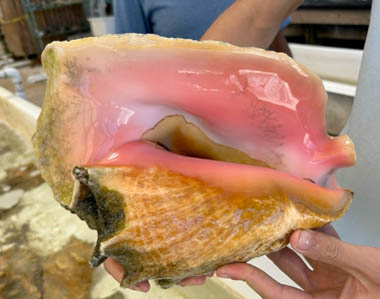 In the Bahamas, there is hope for a species once thought to be extinct for 15 years. The first queen conch larvae was successfully hatched from a solar-powered mobile laboratory on the island of Eleuthera. Read more about how this innovative hatchery has renewed a future for this Caribbean icon in "Marine Life and Conservation." In the Bahamas, there is hope for a species once thought to be extinct for 15 years. The first queen conch larvae was successfully hatched from a solar-powered mobile laboratory on the island of Eleuthera. Read more about how this innovative hatchery has renewed a future for this Caribbean icon in "Marine Life and Conservation."
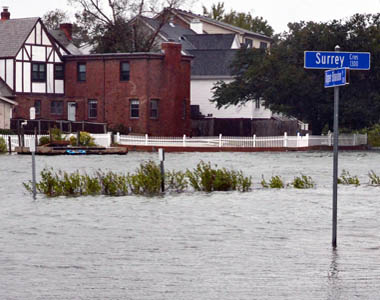 On the East Coast, living shorelines are being hailed by mid-Atlantic senators as an answer to the region’s coastal flooding struggles. In the face of land subsidence, sea level rise, and intensifying tropical cyclones, these projects could increase coastal resilience and secure long-term ecological benefits--if their appropriations requests are fulfilled. The proof that advocacy and progressive policy can be ecologically and economically profitable may soon be visible around the Chesapeake Bay; further north, the stunning rebound for Maine’s alewives is a testament to how progress in advocacy and policy can overcome decades of depletion. For more on this model of success, check out "Coasts and Environmental Justice." On the East Coast, living shorelines are being hailed by mid-Atlantic senators as an answer to the region’s coastal flooding struggles. In the face of land subsidence, sea level rise, and intensifying tropical cyclones, these projects could increase coastal resilience and secure long-term ecological benefits--if their appropriations requests are fulfilled. The proof that advocacy and progressive policy can be ecologically and economically profitable may soon be visible around the Chesapeake Bay; further north, the stunning rebound for Maine’s alewives is a testament to how progress in advocacy and policy can overcome decades of depletion. For more on this model of success, check out "Coasts and Environmental Justice." 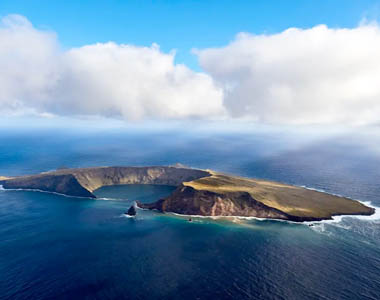 Another story of rebirth and renewal lies 15,000 feet below the surface: for the first time, scientists have documented the hatching of seafloor. After a series of earthquakes in the Indian Ocean, researchers monitoring a network of underwater pressure sensors and microphones were able to document the bubbling up of magma to fill the space between diverging tectonic plates. Read more about this momentous event in "Science and the Ocean." Another story of rebirth and renewal lies 15,000 feet below the surface: for the first time, scientists have documented the hatching of seafloor. After a series of earthquakes in the Indian Ocean, researchers monitoring a network of underwater pressure sensors and microphones were able to document the bubbling up of magma to fill the space between diverging tectonic plates. Read more about this momentous event in "Science and the Ocean."
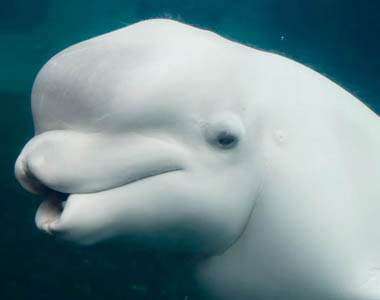
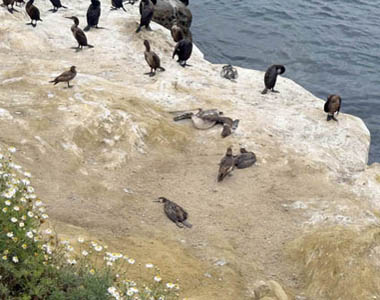
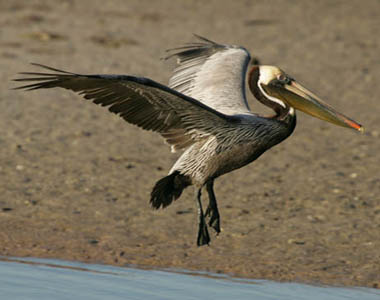
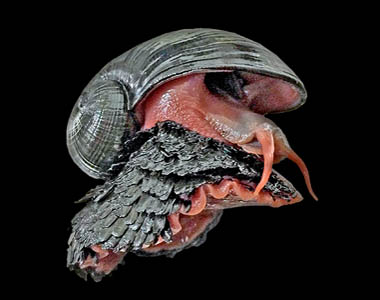
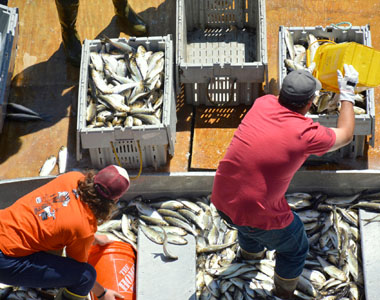
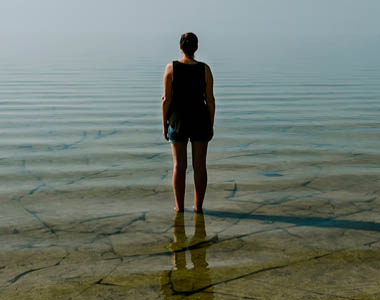
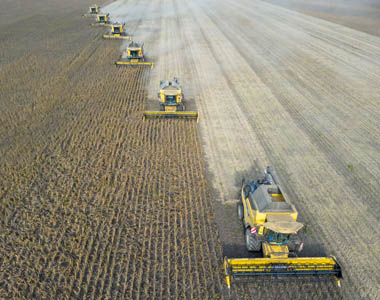
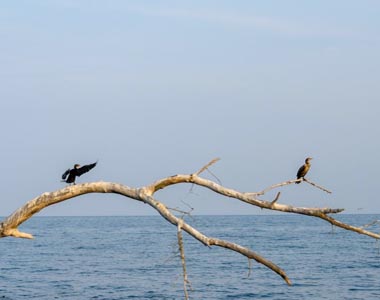
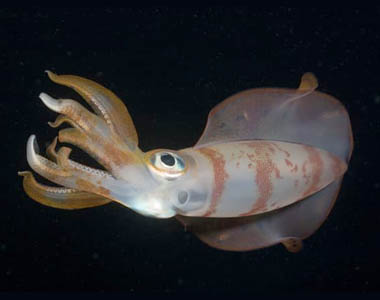
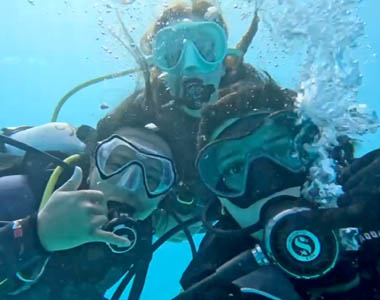
With temperatures not planning on dropping any time soon, we encourage you to find refuge by the water—perhaps with this month’s book recommendation, Deep Water: The World in the Ocean by James Bradley. A celebration of the ocean, Bradley reckons with humans’ complex connection to the sea in this 2025 Nautilus Book Award winner. With July wrapping up, the Rachel Carson Council hopes you are continuing to stay cool, curious, and connected to the ocean this summer. We will be back after a break ourselves with the September issue of RCC’s Coasts and Ocean Observer. | | | | | | | | RCC Stanback Fellows - Jordan Ross and Ashton Bailey 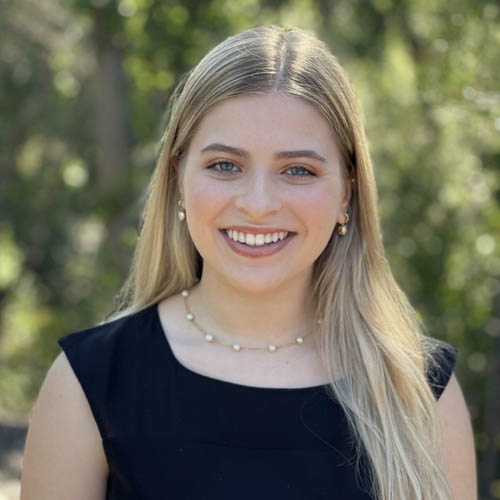 Jordan Ross is a rising junior at Duke University, majoring in Environmental Science and Policy with a minor in Economics. Originally from Los Angeles, California, she is passionate about advancing clean energy solutions and environmental policy, with a particular interest in environmental law and energy regulation. At Duke, Jordan serves as a Green Devil Intern with the Office of Climate and Sustainability, where she mentors first-year students and supports career-focused sustainability programming. She is also involved with the Duke Climate Coalition, contributing to clean energy policy initiatives and advocacy efforts aimed at expanding equitable access to renewable energy. Jordan Ross is a rising junior at Duke University, majoring in Environmental Science and Policy with a minor in Economics. Originally from Los Angeles, California, she is passionate about advancing clean energy solutions and environmental policy, with a particular interest in environmental law and energy regulation. At Duke, Jordan serves as a Green Devil Intern with the Office of Climate and Sustainability, where she mentors first-year students and supports career-focused sustainability programming. She is also involved with the Duke Climate Coalition, contributing to clean energy policy initiatives and advocacy efforts aimed at expanding equitable access to renewable energy.  Ashton Bailey is a junior at Duke University, pursuing a B.S. in Earth and Climate Sciences with a minor in Environmental Science and Policy. A proud Texan, Ashton’s passion for equitable disaster risk reduction and resilience arose after witnessing on numerous occasions the disproportionate impacts of natural disasters on vulnerable communities in Southeast and Central Texas. Prior to his studies at Duke, Ashton was involved in citizen science and advocacy in his hometown of San Marcos, working with the Texas Stream Team to monitor the quality of the San Marcos River. At Duke, he is a member of an interdisciplinary team researching how coastal and marine restoration practitioners define and operationalize equity in their efforts across the United States. Ashton Bailey is a junior at Duke University, pursuing a B.S. in Earth and Climate Sciences with a minor in Environmental Science and Policy. A proud Texan, Ashton’s passion for equitable disaster risk reduction and resilience arose after witnessing on numerous occasions the disproportionate impacts of natural disasters on vulnerable communities in Southeast and Central Texas. Prior to his studies at Duke, Ashton was involved in citizen science and advocacy in his hometown of San Marcos, working with the Texas Stream Team to monitor the quality of the San Marcos River. At Duke, he is a member of an interdisciplinary team researching how coastal and marine restoration practitioners define and operationalize equity in their efforts across the United States. | | | | | | Why the Beluga Kept Its Flexible Neck IT’S AN UNEXPECTED SIGHT for an aquarium. Not just the mariachi band, dressed to the nines, wearing matching black sombreros wide as satellite dishes. The truly odd part of the video is their audience: a lone beluga, floating eye level with the musicians, soaking in the music from behind a plate of reinforced glass. The trumpet’s melody stretches out like a clothesline. The other instruments weave along and around it, their notes crisp and fluttering. Meanwhile, the twelve-hundred-pound beluga regards them politely. | | | | | | | | Even I Felt Bad for the Birds Growing up in California, I quickly learned that birds and I did not get along. One of my earliest beach memories as a child was eating a turkey sandwich and chips in the sun while my family watched. Everything was fine until a seagull stood a few feet away, eyeing my lunch. As I watched it, another bird swooped in, snatching my sandwich. Suddenly, birds surrounded me. I screamed while birds grabbed everything; my parents claim it was only a handful. | | | | | | | | “We don’t know how bad this is going to get”: Seabirds Starving Due to Marine Heatwave A prolonged marine heatwave and a looming El Niño have created a starvation crisis for California’s seabirds, and scientists warn the worst may be yet to come. For decades, networks of scientists and dedicated volunteers have combed California’s beaches, conducting monthly surveys of washed-up marine life. These long-term counts established a vital ecological baseline, allowing experts to quickly spot when something goes | | | | | | | | Mobile Lab Gives Caribbean's Iconic Queen Conch New Hope A mobile hatchery in the Bahamas has successfully hatched its first queen conch larvae, marking a significant step in a community-led effort to restore a species facing commercial extinction within 15 years. On the island of Eleuthera in the Bahamas, a solar-powered laboratory on wheels has just produced its first queen conch – and with it, a new reason for hope for one of the Caribbean’s most culturally significant and ecologically vital marine species. | | | | | | | | Sea Mining Could Devastate an Enigmatic Group of Creatures, Researchers Warn The snails and other mollusks around hydrothermal vents have evolved to thrive in extreme conditions, but mineral extraction could drive more than half to extinction. Deep-sea mining threatens to drive to extinction more than half of the snails and other mollusks that rely on hydrothermal vents, according to the latest update of the International Union for Conservation of Nature’s Red List, the global scientific authority on the status of species. | | | | | | | | More Living Shorelines Could Come to States Bordering Chesapeake Bay if the Region’s Senators Get Their Way Norfolk, Virginia, has remained the poster child for cities facing land subsidence and flooding in the country, struggling through an onslaught of storm surges and blue-sky flooding that become more frequent every year. But while a major storm has not hit the city directly since Hurricane Matthew in 2016, it is one of the many places looking to congressional funding as a way to fund preemptive land management projects to protect their shorelines and their residents. | | | | | | | | | | Dam Removal Efforts Lead to a Stunning Comeback for Maine’s Alewives Along most of the Atlantic coast, alewives are struggling after decades of damming and overfishing. But in Maine, the fish is rebounding—and towns’ historic harvests are growing. For a few weeks each summer, the Sebasticook River in Benton, Maine, is paved with flashing silver scales, so thick it seems you could almost walk across. The alewives have returned for their annual migration. | | | | | | | | The Rise of Blue-space Therapy: How the Sea is Helping People Deal With Trauma, Anxiety and Addiction Watching the waves break across the vast, roaring ocean in front of him, Dave Phillips felt out of options standing on the cliff’s edge in Cornwall several years ago. The former British army corporal had lost a number of loved ones in quick succession, and the compounding effects of untreated post-traumatic stress disorder (PTSD) from his military tours had become all-consuming. “I’m from a generation where we didn’t talk,” says Phillips, 67. | | | | | | | | ‘Super’ El Niño Could Cause Global Food Price Shock Lasting Into 2028, Analysts Say Weather cycle threatens harvests worldwide, adding to inflation already fuelled by the Iran war. Economists are warning that a “super” El Niño weather cycle this year could cause a severe shock to global food prices lasting into 2028. As the Iran war pushes up world food prices to the highest level in three years, economists said supply chains faced “two shocks at once” stoked by extreme weather linked to global heating. | | | | | | | | New Research Traces How ‘forever chemicals’ Move Through the Great Lakes and Into People The study used more than 40 years of data to map fluctuating PFAS levels across species in the region's food chain. In the United States, PFAS chemicals are so ubiquitous — found in everything from frying pans to skincare — that nearly all of the country’s population likely has measurable levels of the so-called “forever chemicals” in their blood. | | | | | | | | Squid Are Among the Most Intelligent Ocean Creatures. Climate Change Might Shrink Their Brains Squid are among the scholars of the deep. Distributed across all of the world’s oceans, the 375 squid species can navigate mazes, cooperatively hunt, communicate via color change, recognize individual humans, and learn from past experiences—such as remembering how to escape from an enclosure. Neuron by neuron, squid have brains about as complex as that of dogs, and along with octopuses and cuttlefish, are the most intelligent invertebrates in the world. | | | | | | | | In a First, Scientists Observe Creation of New Seafloor The spread of the ocean floor, as tectonic plates spread apart, is known but hard to observe. Scientists have now documented the process in action. Far down on the ocean floor, Earth is recycling its own skin. At certain boundaries, the huge plates of rock that make up the planet’s crust crash into or over each other, pushing old crust below. At other junctures, these tectonic plates are spreading apart, allowing magma to bubble up and create entirely new stretches of seafloor. | | | | | | | | Oceans Touch Every Part of Our Lives. Here’s How Duke Research Is Safeguarding It Summer often means a visit to the ocean. But the ocean is about more than a dip in the water or a search for shells. It covers more than 70% of our planet and absorbs roughly 90% of excess atmospheric heat. Duke researchers are studying ocean solutions critical for long-term ecological health and community stewardship. “Research is important to understand our current ocean state,” said Stephanie Rousso, director of Oceans@Duke in the Nicholas Institute for Energy, Environment & Sustainability. | | | | | | | | Coast Film & Music Festival COME CURIOUS, LEAVE INSPIRED
OCTOBER 16 - 25, 2026 An annual showcase of adventure and documentary films and stories from the mountains to the sea, curated to entertain, inform, and inspire. The festival brings together a community of creators, changemakers, and fans to celebrate adventure, the human spirit, conservation, and the art of story. | | | | | | | | Deep Water: The World in the Ocean by James Bradley 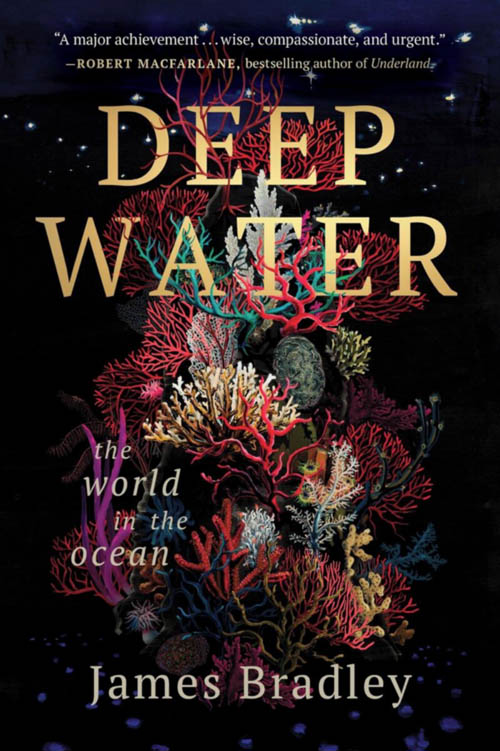 In this thrilling work—a blend of history, science, nature writing, and environmentalism—acclaimed writer James Bradley plunges into the unknown to explore the deepest recesses of the natural world. In this thrilling work—a blend of history, science, nature writing, and environmentalism—acclaimed writer James Bradley plunges into the unknown to explore the deepest recesses of the natural world.
Seventy-one percent of the earth’s surface is ocean. These waters created, shaped, and continue to sustain not just human life, but all life on Planet Earth, and perhaps beyond it. They serve as the stage for our cultural history—driving human development from evolution through exploration, colonialism, and the modern era of global leisure and trade. They are also the harbingers of the future—much of life on Earth cannot survive if sea levels are too low or too high, temperatures too cold or too warm. Our oceans are vast spaces of immense wonder and beauty, and our relationship to them is innate and awe inspired. Deep Water is both a lyrically written personal meditation and an intriguing wide-ranging reported epic that reckons with our complex connection to the seas. It is a story shaped by tidal movements and deep currents, lit by the insights of philosophers, scientists, artists and other great minds. Bradley takes readers from the atomic creation of the oceans, to the wonders within, such as fish migrations guided by electromagnetic sensing. He describes the impacts of human population shifts by boat and speaks directly and uncompromisingly to the environmental catastrophe that is already impacting our lives. It is also a celebration of the ocean’s glories and the extraordinary efforts of the scientists and researchers who are unlocking its secrets. These myriad strands are woven together into a tapestry of life that captures not only our relationship with the planet, but our past, and perhaps most importantly, what lies ahead for us. "Deep Water is a major achievement....Bradley's skills both as novelist and essayist converge here to create this wise, compassionate and urgent book, characterized throughout by a clarity of prose and a bracing moral gaze that searches water, self and reader." —ROBERT MACFARLANE, bestselling author of Underland. CLICK HERE TO PURCHASE | | | | The July 2026 issue of RCC's Coasts and Ocean Observer was produced by Ross Feldner | | | |  The Rachel Carson Council Depends on Tax-deductible Gifts From Concerned Individuals Like You. Please Help If You Can. The Rachel Carson Council Depends on Tax-deductible Gifts From Concerned Individuals Like You. Please Help If You Can. | | | | | | | |  Sign Up Here to Receive the RCC E-News and Other RCC Newsletters, Information and Alerts. Sign Up Here to Receive the RCC E-News and Other RCC Newsletters, Information and Alerts. | | | | | | RACHEL CARSON COUNCIL
8600 Irvington Avenue
Bethesda, MD 20817
(571) 262-9148
[email protected] | | | | | | | | | | | |