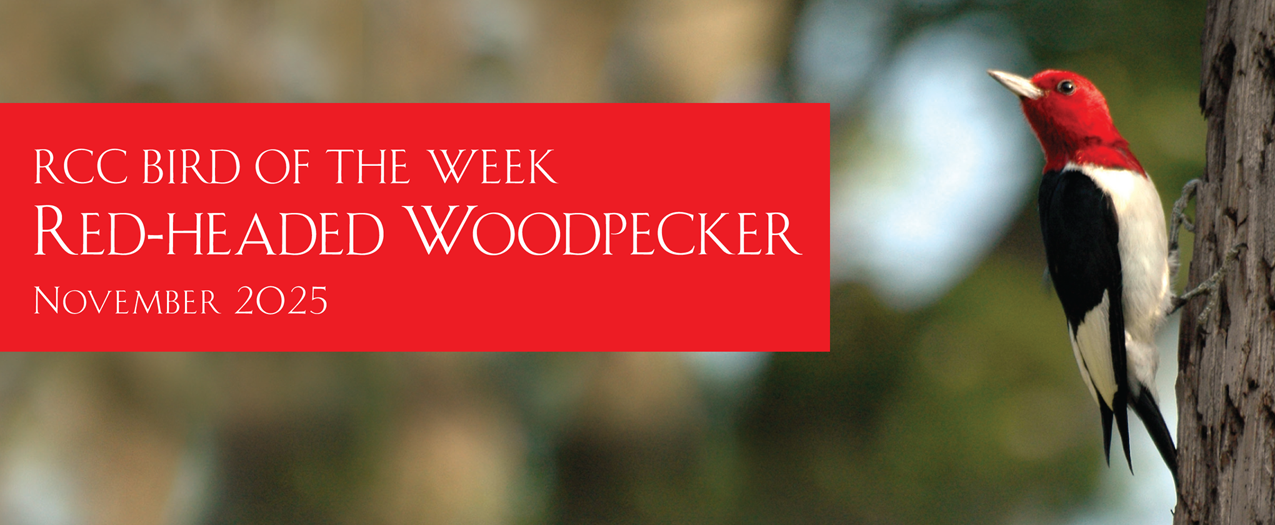
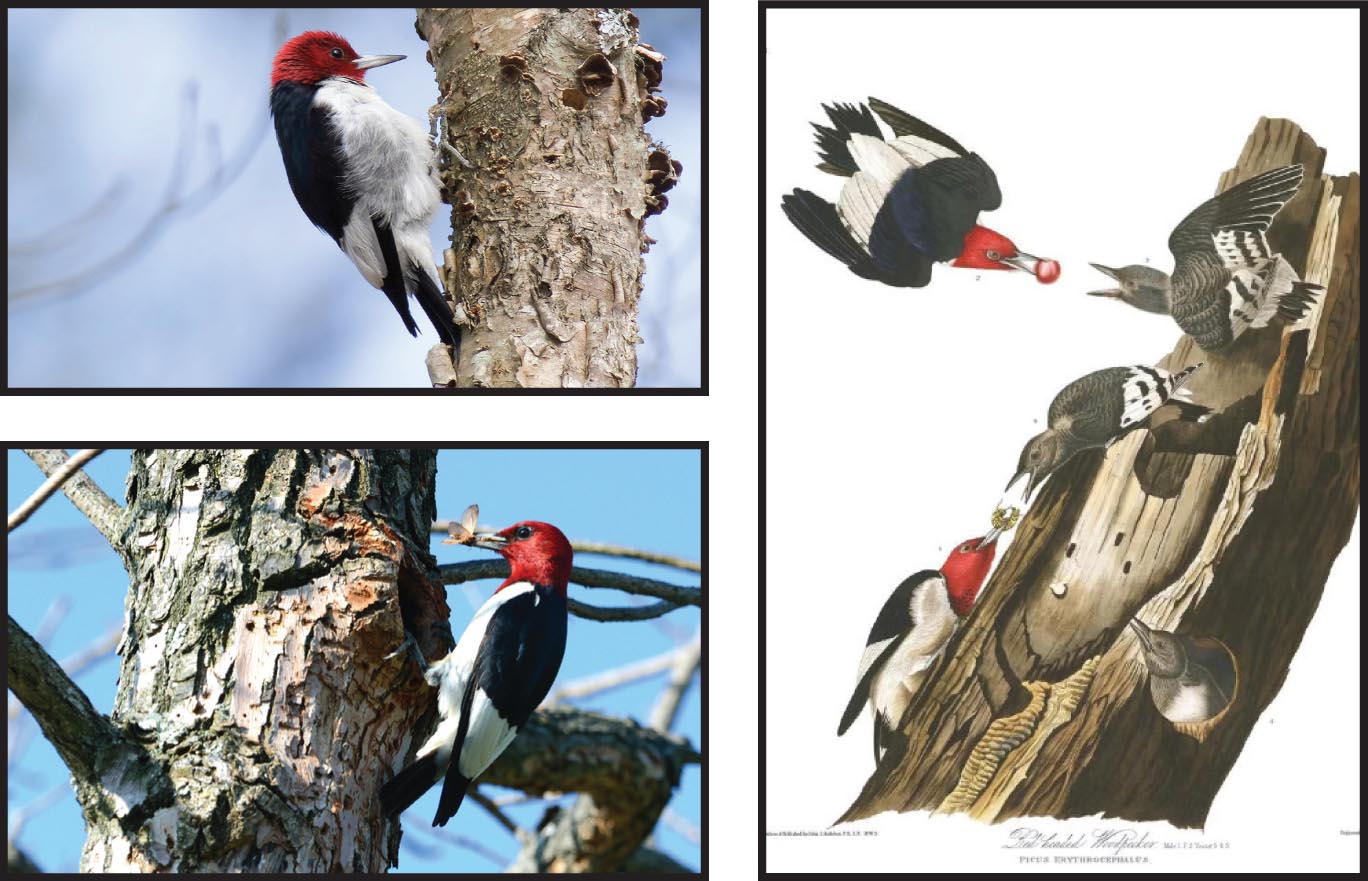
Red-headed Woodpecker - Ross Feldner This starkly-tricolored bird is one of only four North American woodpeckers that store food. But it goes one step further and covers the stored food with wood or bark. It will also hide seeds and insects under bark, under roof shingles and in cracks in wood. Red-headed Woodpeckers eat insects, fruits, seeds, nuts, berries and even small rodents. Their breeding habitat is open country across the east-central United States and southern Canada. Once they establish their territory the female chooses the location of the nesting cavity alerting her mate to it by tapping on the site. Both parents drill out the nesting cavity with the male doing most of the work. They excavate in dead trees and utility poles. Both parents care for the young which stay in the nest for about a month. Red-headed Woodpeckers are prolific breeders usually starting a second brood as soon as the first brood leaves the nest. Fledglings are proficient flyers, and most are able to feed and care for themselves without too much help from their parents. The Red-headed Woodpecker makes an appearance in Longfellow’s epic poem "The Song of Hiawatha," telling how a grateful Hiawatha gave the bird its red head in thanks for its service. Other homage includes a 2-cent stamp issued by the USPS in 1996 depicting a perched Red-headed Woodpecker. It was listed as “near threatened” in 2004 after experiencing a 65% decline in population over 40 years mostly due to habitat loss. Increased habitat management has helped stabilize their numbers. | |