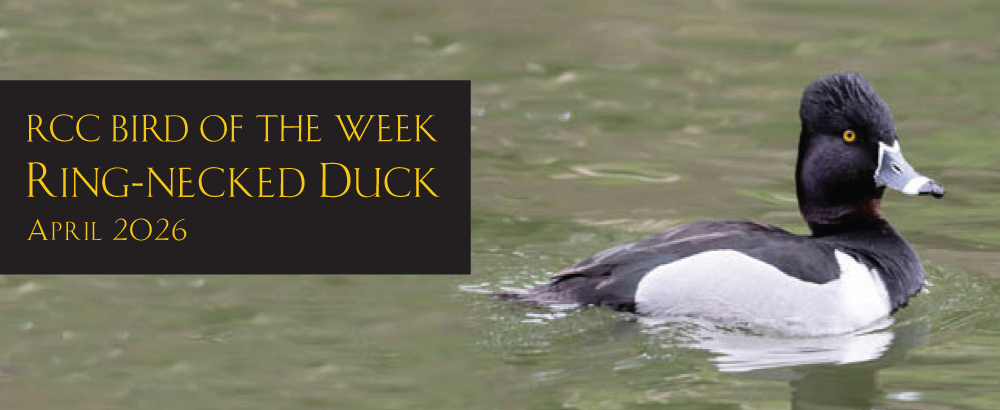
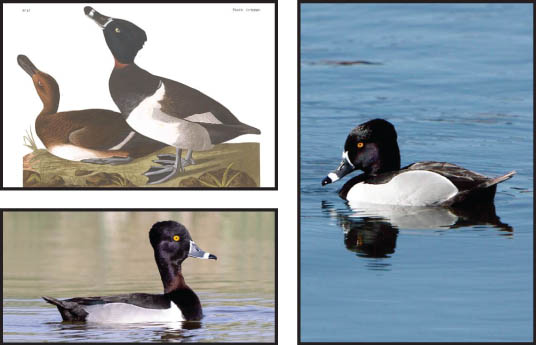
Ring-necked Duck - Ross Feldner If you look really really close you see where this diving duck got its name. There’s a faint cinnamon collar around the neck. Because this coloration is so difficult to see they are often referred to as a “ringbill.“ You will find these small ducks in freshwater ponds and lakes near forests where they dive from the surface for submerged plants. They also feed on insects, worms, snails, midges and leeches. Yum! They also eat mollusks (swallowing them whole and crushing the shells in their gizzard). A powerful swimmer, the Ring-necked Duck can forage to depths of 40 feet in search of plant and animal fare! They form immense flocks during fall migration, sometimes numbering in the hundreds of thousands. Their breeding habitat is wooded lakes or ponds in the northern United States and Canada mainly in boreal forests where they build a bowl-shaped nest on water in dense vegetation and woody plants. Out west, it is also a mountain bird. Ring-necks share many of the high-altitude lakes with Mallards as the only ducks that nest up that high.They start pairing up during spring migration. | |