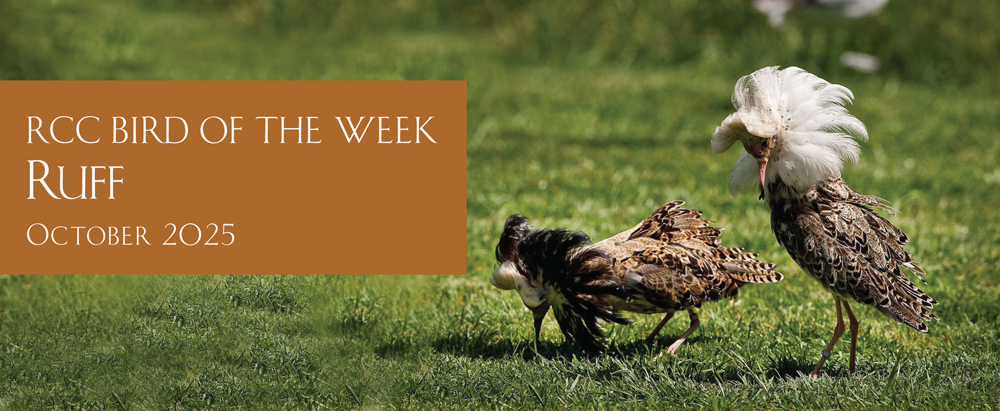
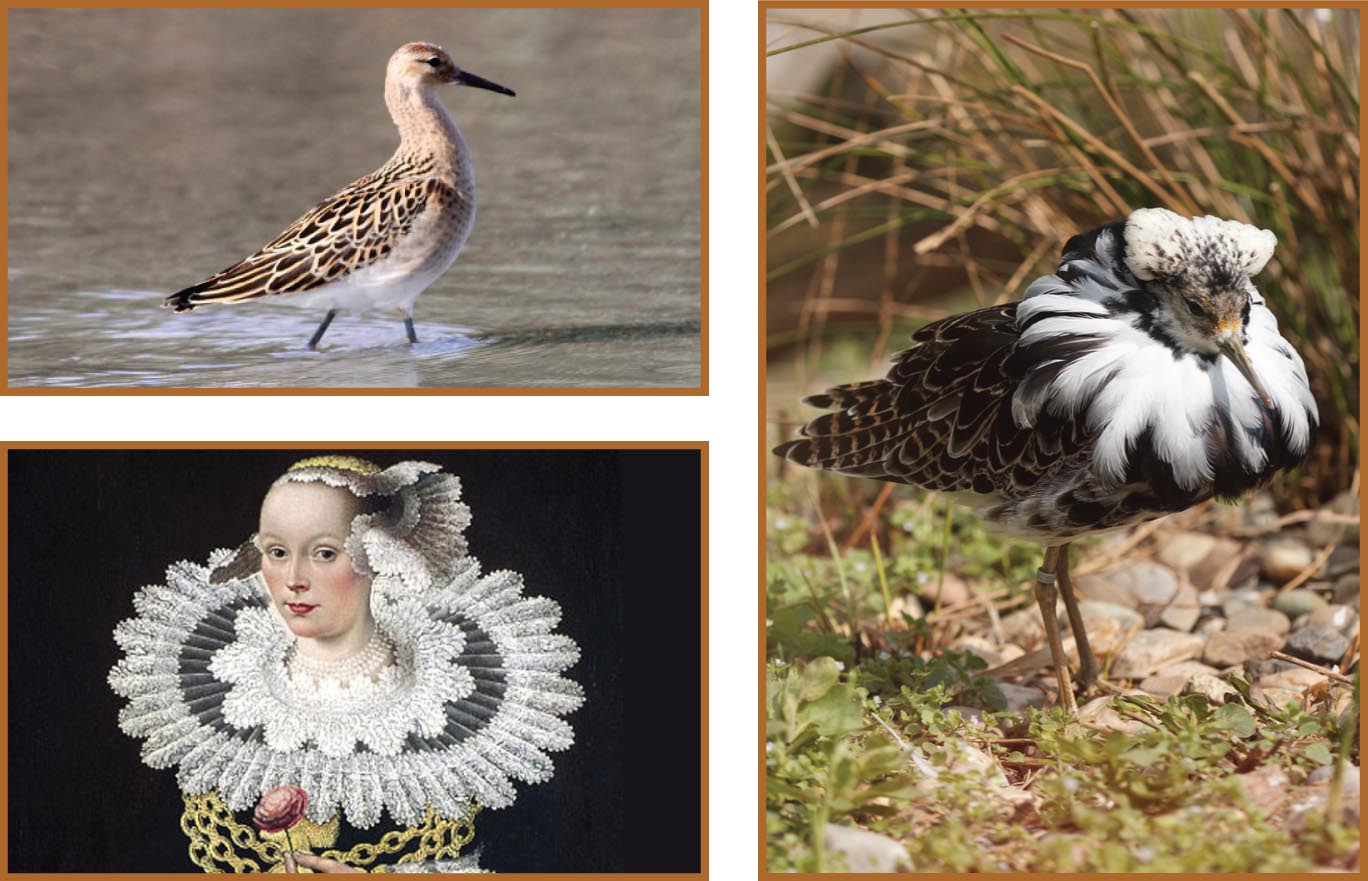
Ruff - Ross Feldner This Elizabethan looking shorebird lives mostly in Eurasia but is an uncommon visitor to United State’s coasts and Alaska. Widely known for its strange looking courtship plumage and rituals, the male in spring has wildly varied colorations and patterns on their neck ruffs and head feathers. Males display during the breeding season at a lek (A lek is an assembly area where animals carry on display and courtship behavior). The Ruff is one of the few lekking species in which the display is primarily directed at other males rather than to the females. Ruffs are a migratory sandpiper that breed in marshes and meadows sometimes forming enormous flocks in their wintering grounds which include Europe, Africa, Australia and southern Asia. Their nest is a shallow ground scrape lined with grass leaves and stems, and concealed in tall grass or marsh plants. Incubation is by the female alone with chicks hatching in about 20 days. Ruffs feed on insects and their larvae. During migration in addition to insects, they will feed on mollusks, spiders, seeds, frogs and small fish. They are highly gregarious when migrating, travelling in flocks that can contain hundreds or thousands of birds. The breeding population has been shifting northwards, most likely as a response to global warming. Ruffs face many predators including ravens, falcons, crows, skuas, foxes and feral cats. | |