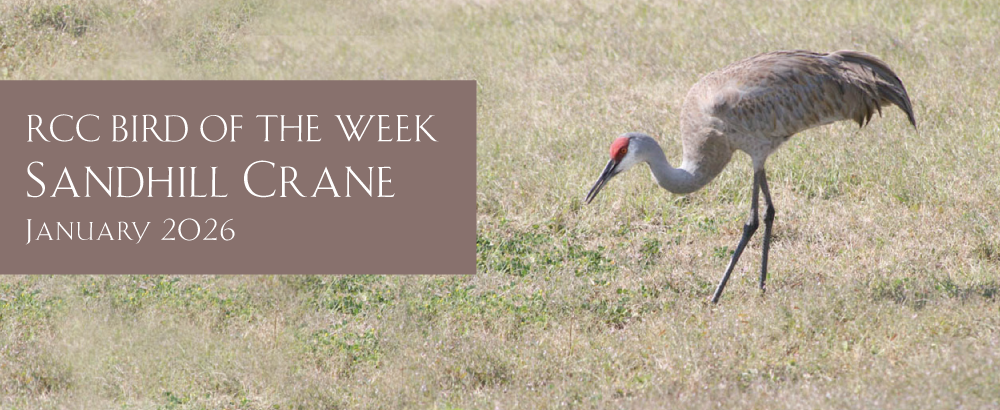
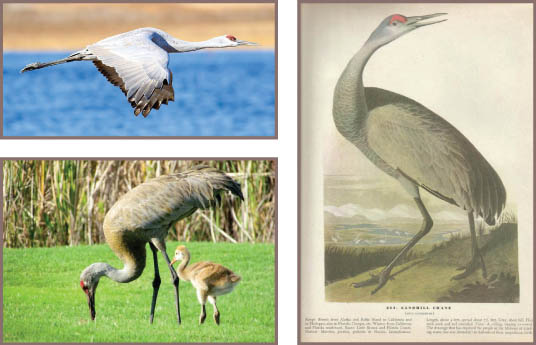
Sandhill Crane - Ross Feldner This stately bird gets its common name from its habitat such as Nebraska’s Sandhills on the great plains of America. They are well known for their loud, trumpeting call that can be heard from a great distance. Mated pairs will do “unison calling” where they stand close together and call in a synchronized and complex duet. Sandhill Cranes are skilled, soaring birds with a enormous wingspan reaching close to 8 feet! They can stay aloft for hours riding thermals for lift with only occasional flapping of their wings. They migrate south in the winter often forming huge flocks of over 10,000 individuals at some their wintering grounds. Sandhill Cranes live in pairs and family groups throughout the year with unrelated cranes forming “survival groups” that roost and forage together for seeds and vegetation, keeping their bills down to the ground as they root around for food. Sandhill Cranes are also fond of cultivated foods such as corn, wheat, cottonseed, and sorghum. Like most conspicuous ground-dwelling species, Sandhill Cranes are at risk from predators. Corvids, such as ravens and crows, gulls, jaegers, raptors, and mammals such as foxes, coyotes, and raccoons feed on young cranes and eggs. | |