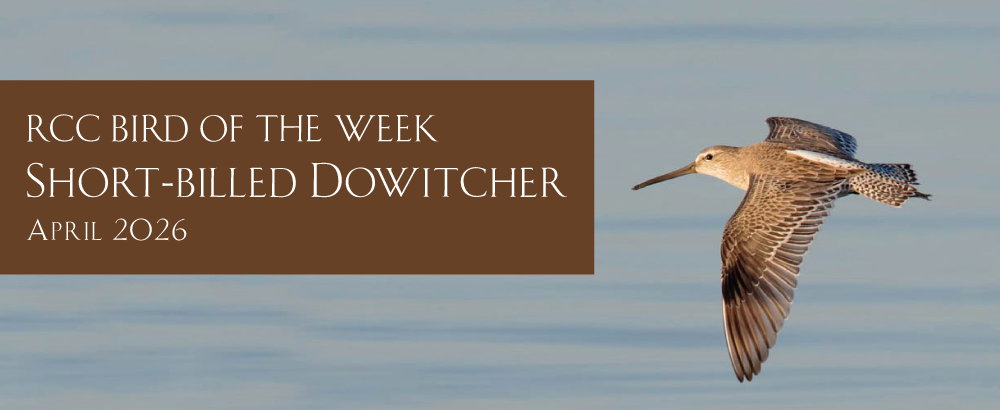
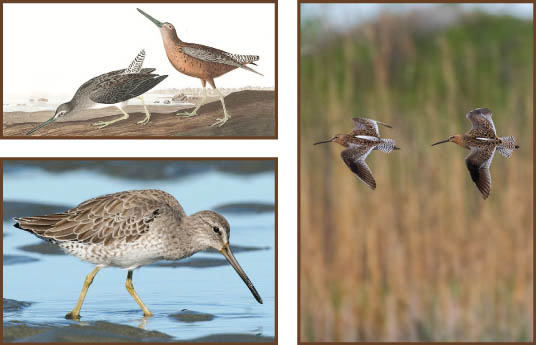
Short-billed Dowitcher - Ross Feldner When this stocky dowitcher feeds in ponds and mudflats it looks like an avian sewing machine, rapidly probing its bill up and down into water and mud looking for insects, mollusks, crustaceans and marine worms. The Short-billed Dowitcher’s breeding habitat is bogs, tidal marshes, and mudflats in northern America and as far north as Alaska. They migrate to the southern United States and even as far south as Brazil. Short-billed Dowitchers are a long-distance migrant. They leave their wintering grounds from March to May and arrive on their breeding grounds from mid-May to early June. They build their nests on the ground, usually near water. The nest is a shallow depression in clumps of grass or moss lined with grass, twigs and leaves. After arriving on their breeding grounds, male Short-billed Dowitchers immediately begin re-establishing their territories from previous years. Singing to advertise a claimed territory is usually enough to deter intruders. The best way to distinguish the Short-billed Dowitcher from its long-billed cousin is by voice. The flight call of the Short-billed Dowitcher is a medium-pitched, repeated “tututu.” That of the Long-billed Dowitcher is a single, high-pitched “keek.” Major threats include habitat loss and unregulated hunting throughout large portions of the nonbreeding grounds. | |