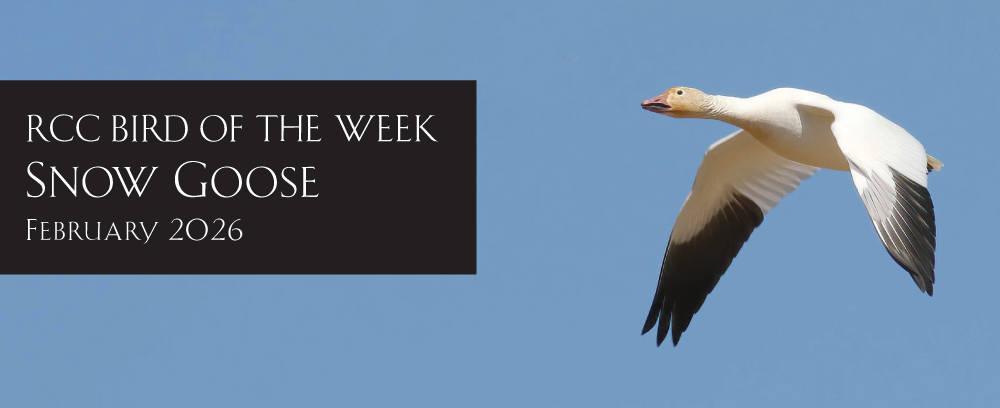
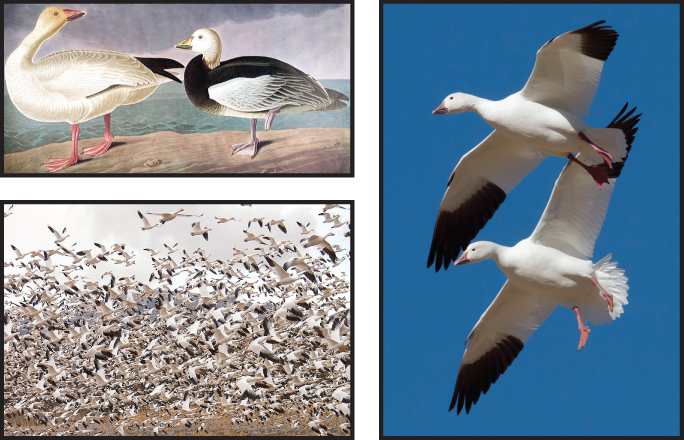
Snow Goose - Ross Feldner I first saw a flock of Snow Geese driving home from Chincoteague, VA. The geese were circling down and flocking in unfathomable numbers. It seemed like I was inside a giant snow (goose) globe or watching an oncoming blizzard. Named for its typically white feathers this goose is one of the most abundant waterfowl in North America, breeding north of the tree line in Canada and Alaska and wintering in the warm areas of North America. Snow Geese usually form long-term pair bonds in the second year, with breeding starting in the third year. Females return to the place they hatched to breed. Snow Geese often nest in colonies with the female selecting the nest site and building the nest on an area of high ground. The nest itself is a shallow depression lined with plant material and is often reused from year to year. After the female lays the eggs, she lines the nest with down. They migrate in massive flocks, often visiting traditional stopover habitats in spectacular numbers. In winter Snow Geese are adapted for digging up and feeding on the roots of various marsh plants, often walking in family groups for hours in search of food. In the past century or so, they have diversified into eating leftover grain in crop fields and other agricultural grain waste, as well as fields of rice, wheat, and corn. While the flock feeds, lookouts keep an eye out for eagles and other predators. | |