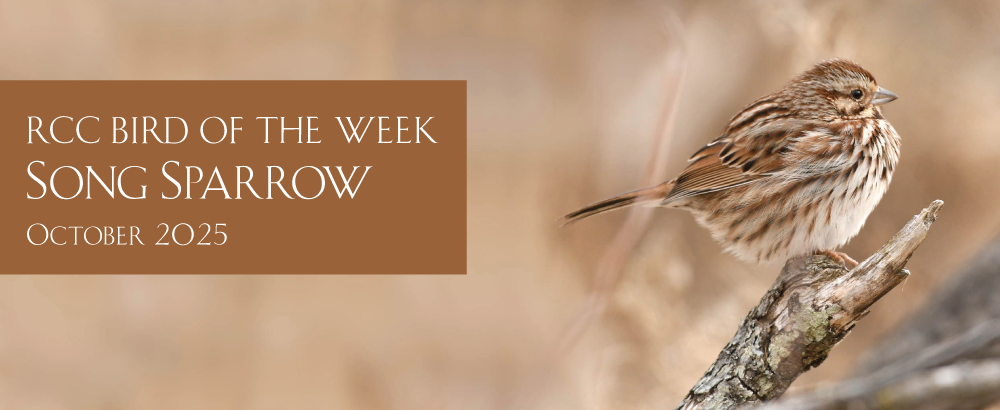
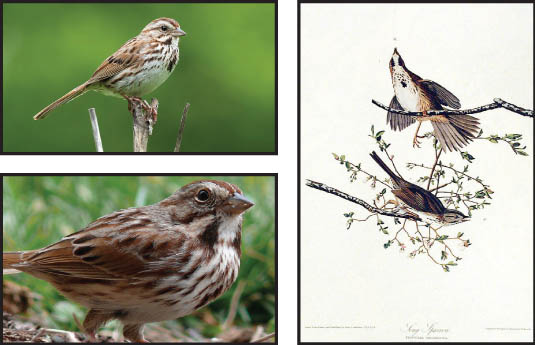
Song Sparrow - Ross Feldner What makes this little bird so remarkable? It is the most common and widespread sparrow native to North America. Of all the native sparrows in North America it is the most abundant, variable, and adapable. It derives it name from its beautiful repertoire of songs. Males use their complex song to declare ownership of territory and naturally to attract a mate. Their singing is crisp and clear and although one bird may know many songs, up to 20 tunes they have been known to have as many as 1,000 variations on the basic theme! A 2022 study by Duke University found that male song sparrows memorize a 30-minute long playlist of their songs. One of the songs often heard in suburban locations closely resembles the opening four notes of Ludwig van Beethoven's Symphony No. 5. The Song Sparrow favors marshes and brushland but also has thrived in human dominated areas like suburbs and farms. In the southern half of their range they are permanent residents while the northern populations migrate to the southern US and Mexico. Eating mainly insects and seeds, they forage on the ground, in brush and sometimes in shallow water looking for small crustaceans. The Song Sparrow recognizes enemies by both instinctual and learned patterns, and adjusts its future behavior based on its own experiences and watching other birds interact with their enemies. Comparisons of experiments with hand-raised birds to observation of birds in the wild suggest that the fear of owls and hawks is instinctual, but fear of cats is learned. | |