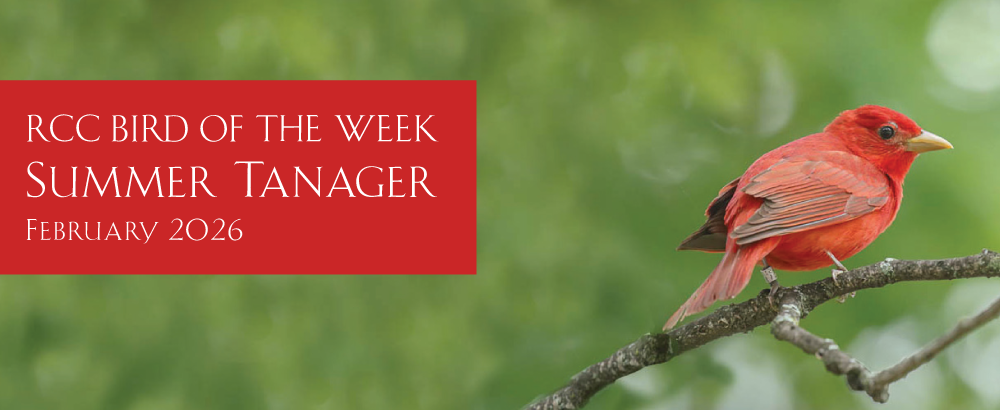
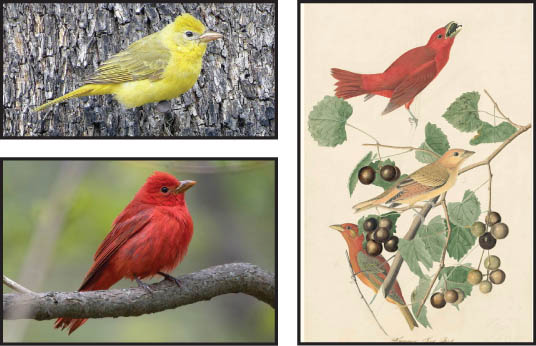
Summer Tanager - Ross Feldner Unique in its territory, the Summer Tanager is the only completely red bird in North America and though visually, stunning, it is often out of sight, foraging high in trees, spending much of its time flying out to catch insects in flight. The female’s plumage is almost the opposite of the males, a pale mustard-like yellow. Its diet is primarily large, flying insects such as cicadas, beetles, dragonflies as well as caterpillars and spiders. It also supplements its diet with fruits and berries like mulberries and blackberries, especially during migration and the cold months of winter. Summer Tanagers prefer open deciduous forests with oak, hickory, or pine living in forest edges, parks, and fruiting trees for both shelter and food. The Summer Tanager is a bee and wasp specialist catching these insects in flight and killing them by beating them against a branch. Like many forest songbirds, the best way to find them is to listen. One of their songs has been likened to a “drunk robin.” They also have a very distinctive, muttering pit-ti-tuck call note. The female builds the shallow cup-nest of dried or fresh grasses, weed stems, and lines it with fine grasses and rootlets. The nest is usually placed in a fork on a horizontal branch far from the trunk. Nest heights are often 50 feet above the ground! |