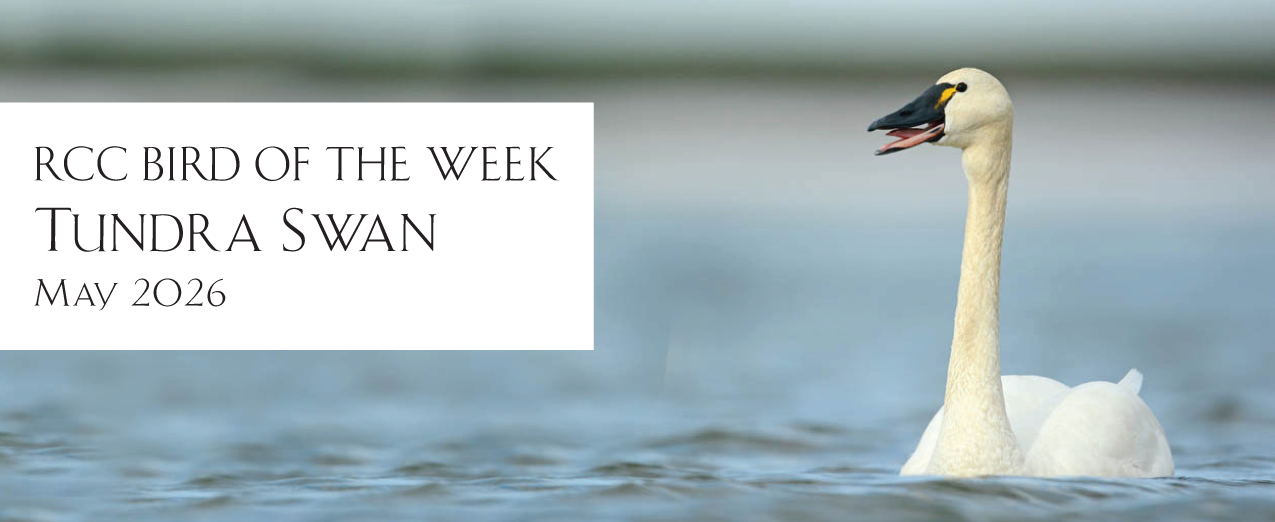
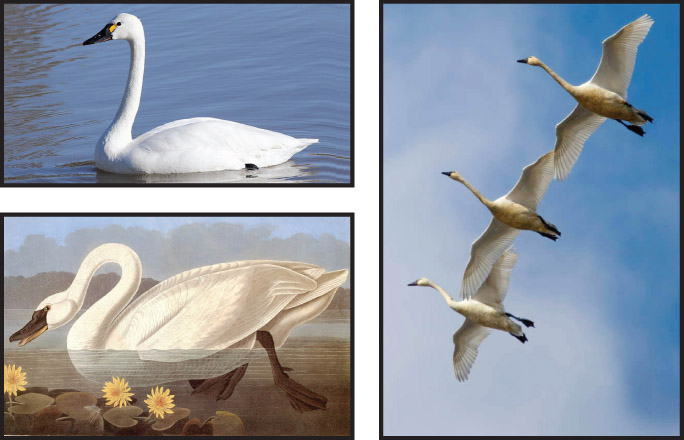
Tundra Swan - Ross Feldner This elegant bird gets its name from it breeding location, the arctic tundra, where they live in shallow pools, lakes and rivers. During winter North America’s most numerous swan moves to grasslands and marshlands. Foraging by day, Tundra Swan’s diet is mostly aquatic vegetation like pondweeds and marine but they will also dine on grass growing on land. Oddly, Tundra Swans that winter in the Chesapeake Bay feed on clams they dig out from the mud. They have a host of predators but adults will typically stand their ground to chase off Arctic foxes and other birds like gulls and jaegers. One serious nest predator is the brown bear, which even the brave Tundra Swan cannot match. In fact, brown bears are a primary cause of nesting failure. Tundra Swans mate in the late spring, usually after they have returned to the nesting grounds where they pair monogamously until one partner dies. Should one partner die long before the other, the surviving bird often will not mate again for some years, or even for its entire life! Both male and female build a large mound-shaped nest from plants on an elevated site near open water, and defend a large territory around it. | |