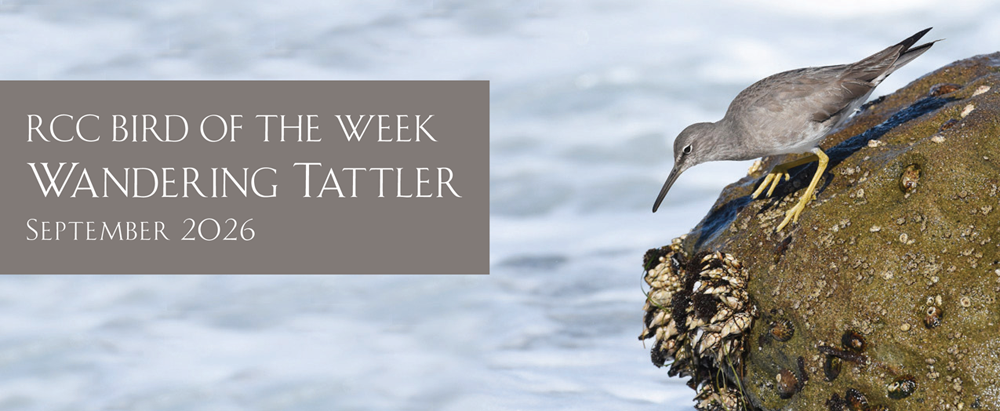
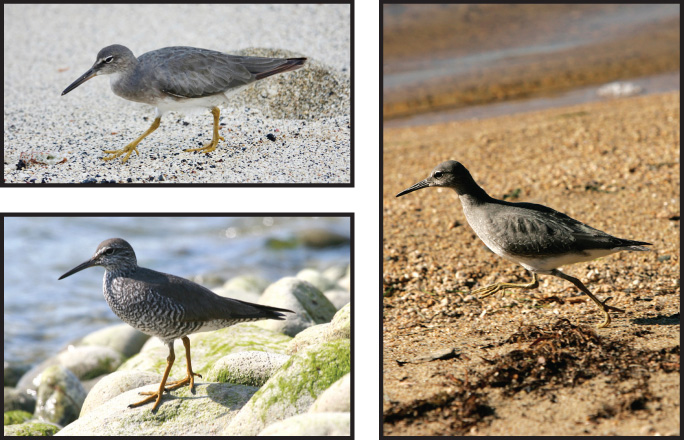
Wandering Tattler - Ross Feldner This medium-sized shorebird really gets around, travelling across vast areas of the Pacific Ocean from the west coast of America all the way to Russia, hence the wandering part of its name. They often travel over 7,500 miles during migration. The tattler part isn’t because it’s a gossip, but rather from its alarm call that it uses to “tattle” on suspected predators. They are known for their complex flight displays over foraging areas but not where they nest. Wandering Tattlers have adapted well to humans on Pacific islands during the winter, hunting on piers, flooded golf courses and even roof tops! They feed on aquatic invertebrates such as crustaceans and marine worms. During breeding season, they also eat insects. While wading, they forage actively, making jerky bobbing movements. They will often return to the same location over short periods of time. They can be seen flying low over a rocky coastline or along a jetty. Because their nesting habitats are so remote in the mountains of Alaska, western Canada and eastern Russia they were a mystery for many years. Despite their wide range, there may be as few as 18,000 Wandering Tattlers left in the world. The nest is a depression in the ground about 5 inches across with a smaller interior cup that is about 2 inches deep and lined with twigs and leaves. It is set in the ground among pebbles, scree or boulders. |